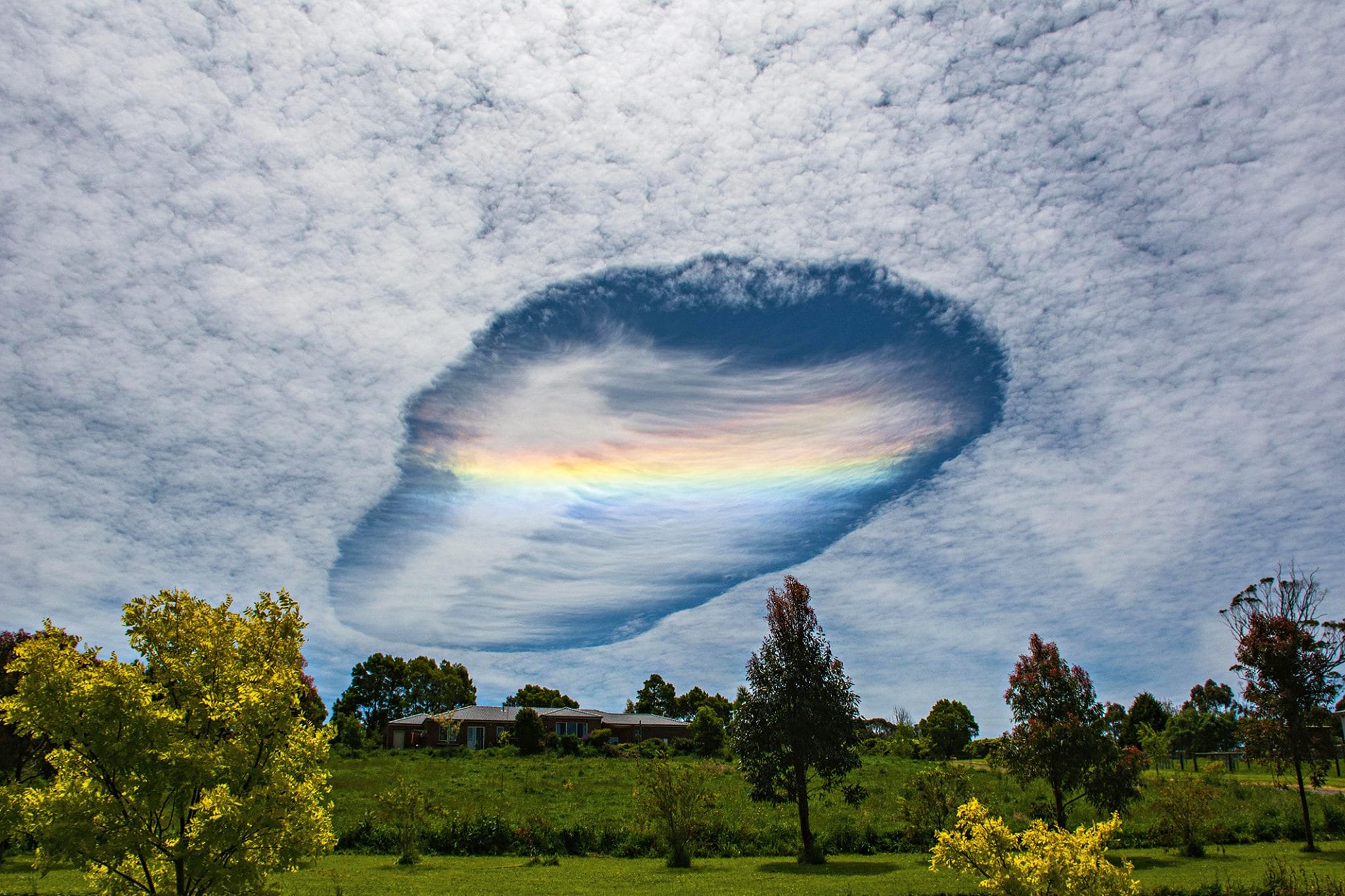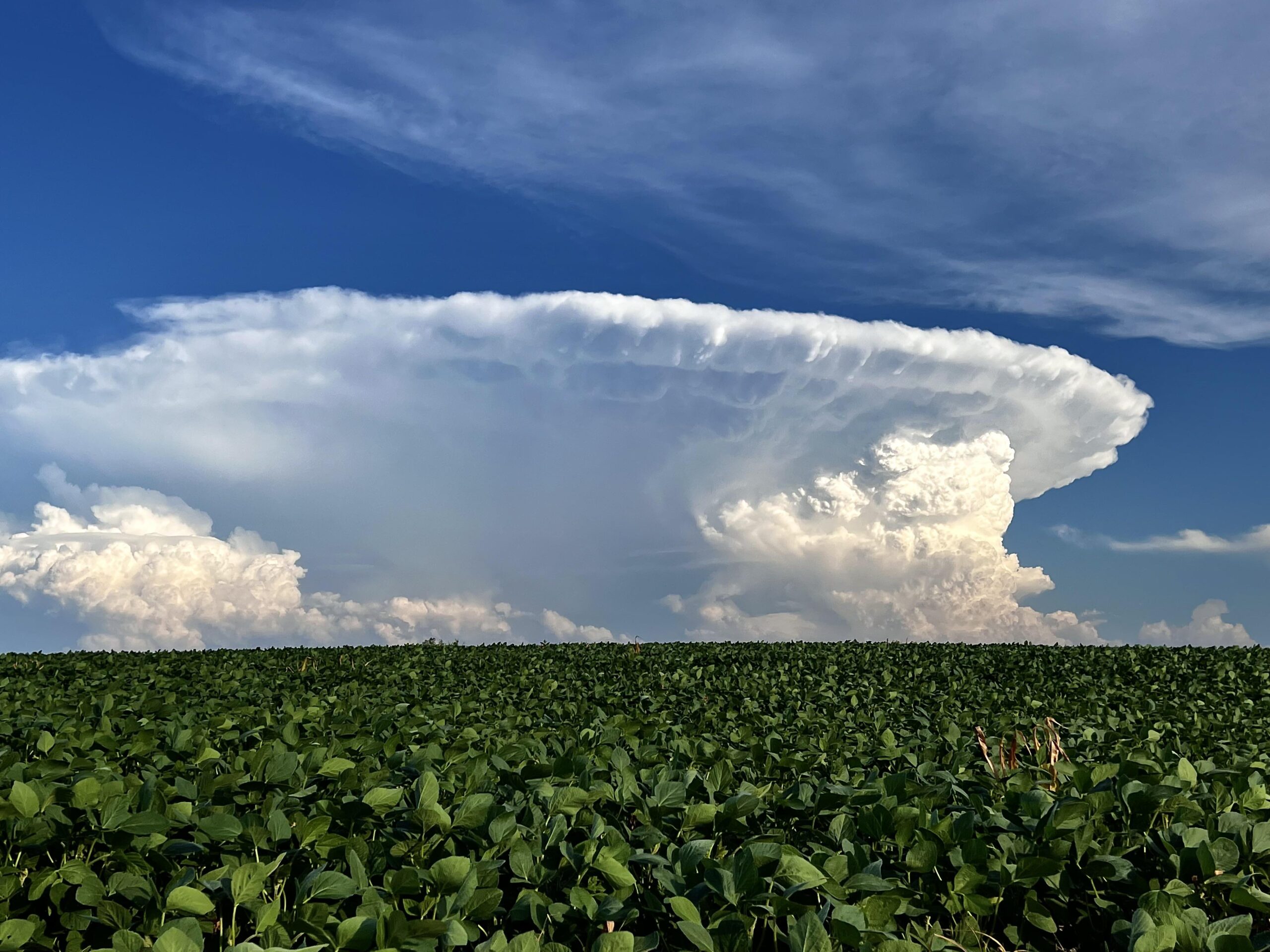
Cumulonimbus Clouds

Cumulonimbus clouds are towering, vertically developed clouds capable of producing heavy rain, hail, lightning, and storms. They combine features of cumulus and nimbus, often with an anvil top of ice crystals.

They form in strongly unstable, moist environments with vigorous convection. Air parcels ascend to great heights and condense as they rise; latent heat release supports continued upward motion.

The anvil forms when the upper levels cap the rising column, spreading ice crystals horizontally.
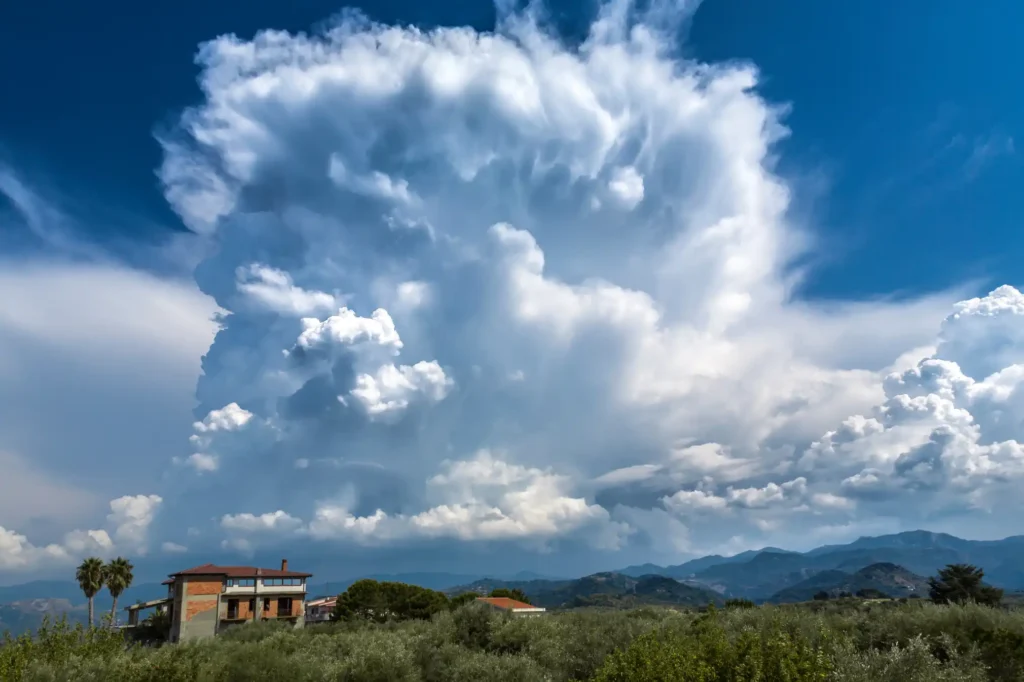
Cumulonimbus Cloud
  • Height: Bases ~2,000–5,000 ft; tops can reach 40,000+ ft
  • Look: Huge, towering columns with anvil-shaped tops
  • Name meaning: Cumulus = heap, Nimbus = rain
  • Rain: Heavy rain, thunderstorms, hail, snow, severe weather

What do Cumulonimbus clouds look like?

They start out like big cumulus clouds but grow taller and taller until they look like massive towers. At the top, strong winds spread the cloud into a flat “anvil” shape that often points in the direction the storm is moving.

How do they form?

Cumulonimbus form when warm, moist, unstable air rises rapidly through the atmosphere. This strong upward motion builds a cloud that stretches through multiple levels of the sky.
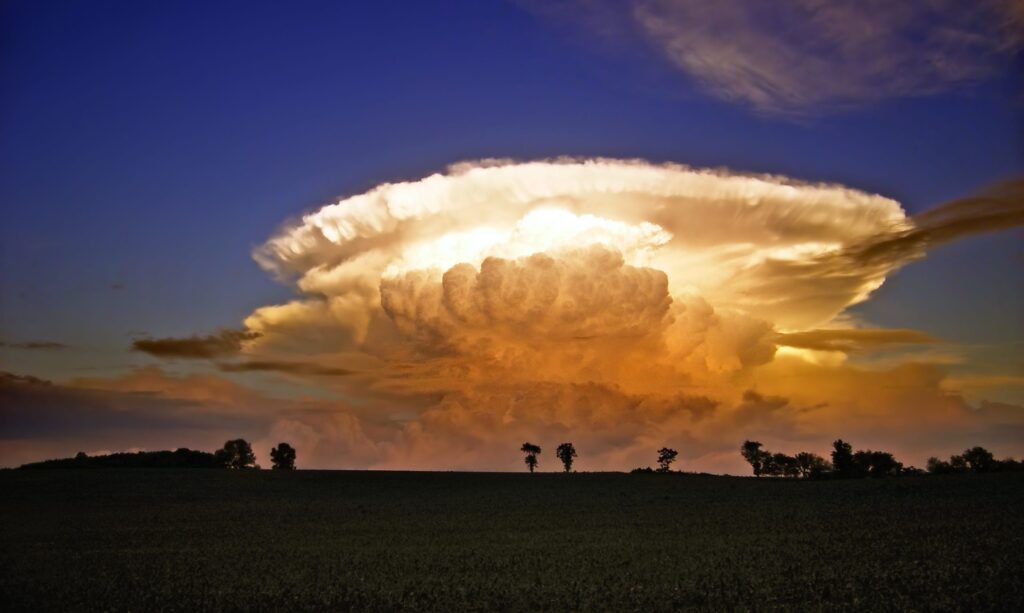
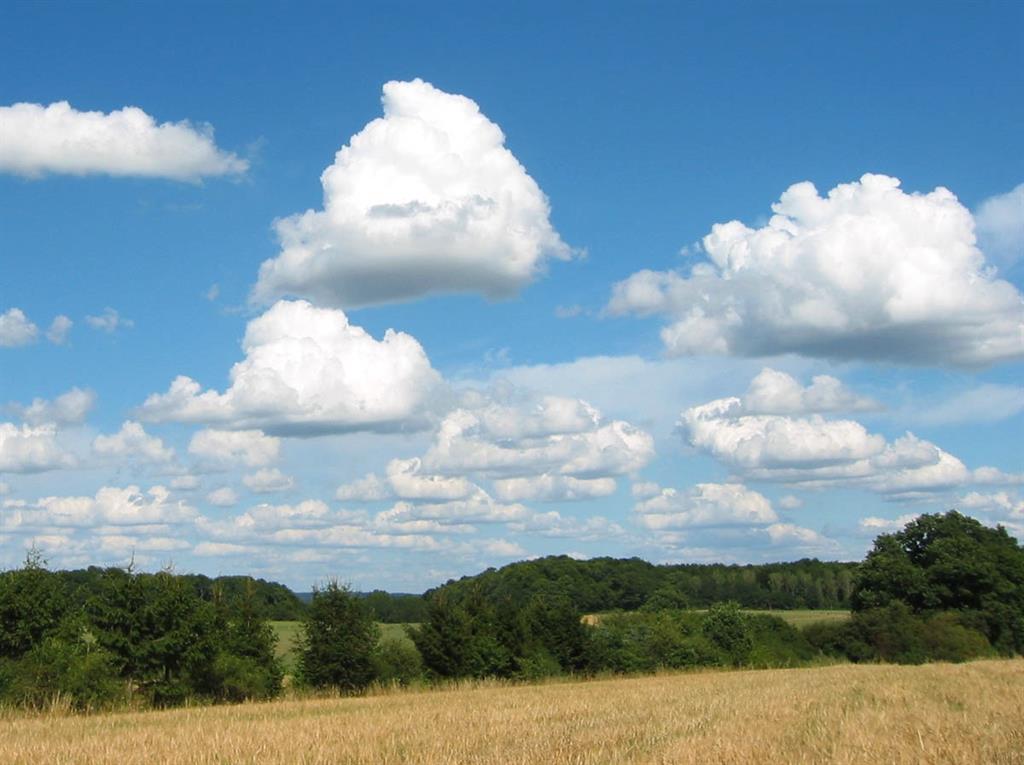
Cumulonimbus Cloud
Cumulonimbus Cloud

What weather do they bring?

These are the storm-makers. Cumulonimbus clouds produce heavy downpours, thunder, lightning, hail, and sometimes severe weather like tornadoes. They’re the most dramatic and dangerous cloud type.

A history of Cumulonimbus clouds

In Howard’s original scheme, “nimbus” was used to denote rain clouds; cumulonimbus is a later combination of cumulus + nimbus in cloud taxonomy. The Cloud Atlas editions formalised it.

In literature and art, thunderheads (i.e. cumulonimbus) are iconic: e.g. J. M. W. Turner’s paintings of stormy skies often depict dramatic cloud towers.

Tony S.
Tony is based in Australia and focuses on how false conspiracy theories spread and harm society, with an emphasis on clear facts and critical thinking.

Related

10 Main Cloud Types

he ten major cloud types are divided into high-level, mid-level, low-level, and clouds with vertical development, reflecting their formation altitude and structure. Each type exhibits distinctive physical and visual characteristics and provides insight into the atmospheric processes at work.

Chemicals Added to Jet Fuel

Adding chemicals to jet fuel to produce “chemtrails” would be impossible from an engineering and chemical standpoint. Modern jet engines operate at extremely high pressures and combustion temperatures exceeding 1,500 °C, which would destroy complex chemicals long before they left the exhaust. Chemicals put in aviation fuel would also cause severe damage to engine components, leading to catastrophic failure.

Noctilucent Clouds

Noctilucent clouds, also called night-shining clouds, are the highest clouds in the Earth’s atmosphere, forming in the mesosphere at altitudes of approximately 76 to 85 kilometres. They are primarily composed of ice crystals.

Altocumulus Clouds

Altocumulus are mid-level, patchy, somewhat convective clouds forming in moist layers with slight instability. They often show patterns or grouping. Their name originated in the 19th-century expansion of cloud classification, though clouds of this sort were long observed in art and literature.

The 4 Core Types of Clouds

The modern understanding of clouds owes much to the early work of Luke Howard, who in 1803 introduced a systematic method for describing and naming them. Howard recognised that clouds could be grouped into four primary forms — cirrus, cumulus, stratus, and nimbus.

When the sky flips a switch: The Physics Behind Stop–Start Contrails

Those broken white lines are ice clouds, not chemicals. They appear and vanish as aircraft cross invisible pockets of cold, humid air high above the weather.

Featured

Counting the Cost of a Nationwide Chemtrail Programme

What would it actually take to run a nationwide US “chemtrail” operation? Our analysis reveals the staggering logistics — 165 aircraft, thousands of workers, and billions of dollars each year. The numbers tell their own story.

Why Contrails Can Linger and Spread

Contrails can linger and spread because they are essentially man-made cirrus clouds formed from ice crystals at high altitude. A cloud is made of water vapour, just like a contrail. Therefore if a cloud can linger, so can a contrail. When an aircraft’s hot exhaust mixes with cold, humid air, the resulting condensation freezes, creating thin white trails.

The Logistics of Secrecy: The Impossible Scale of a Chemtrail Programme

This article examines the chemtrail conspiracy through physics, engineering, and economics. It shows that a nationwide spraying programme would require hundreds of aircraft, thousands of staff, and billions in funding—leaving clear evidence. The science of contrails fully explains the phenomenon without invoking any secret aerosol operation.

The chemtrail conspiracy would collapse within a few years

Physicist David Grimes’s 2016 mathematical model shows that large conspiracies such as Chemtrails inevitably unravel through leaks. His analysis demonstrates that a secret global spraying programme involving thousands of people over decades is statistically implausible.

Cloud Seeding: You can’t Just Make Rain

It is impossible to manufacture rain, which depends on water vapour in the atmosphere. This is supplied by heat and evaporation from the Earth’s surface. Only when moist air cools and condenses into clouds is there potential for rain. Techniques such as cloud seeding cannot create this water; they can only encourage raindrops to form in clouds that are already primed to produce rain.

Cloud Seeding is Not Chemtrails

Cloud seeding and so-called “chemtrails” are fundamentally different, though often confused in conspiracy circles. Cloud seeding is a small-scale, scientifically documented technique in which aircraft introduce minute amounts of silver iodide into existing clouds to encourage rainfall; it does not involve spraying chemicals into clear skies, nor does it leave visible white streaks. Chemtrails.

Popular Categories