
Why Some Think the Sky Looks Different Today — And What the Old Masters Show
Many people today feel the sky looks different. Social media and online forums are full of claims that something is being sprayed into the atmosphere, altering clouds and leaving unusual streaks in the sky.
These beliefs often link to conspiracy theories about “chemtrails” or secret weather manipulation programs. But both historical evidence and modern meteorology tell a different story. Paintings from centuries past show clouds and skies very similar to what we see today. Changes in appearance are more likely caused by natural atmospheric processes, increased air traffic, or perception, rather than secret operations.
In this article, we examine why people feel the sky looks different, contrast it with historical art evidence, explore meteorological science, and present diagrams and tables to clarify cloud formation, contrail persistence, and natural variations in sky appearance.
Conspiracy Claims About the Sky
Conspiracy theorists argue that aircraft are spraying chemicals into the atmosphere for hidden purposes: weather modification, population control, or other covert objectives. They often point to persistent white trails following planes and unusual cloud patterns, interpreting them as artificial.
The argument relies on observation: if people see something “new” in the sky—long streaks, rippled clouds, hazy layers—they conclude it must have a novel cause. Social media amplifies this perception. Frequent photos, videos, and discussions make rare natural occurrences seem common, creating the impression of a changed sky.
Historical Evidence from Art
John Constable (1776–1837)
Constable created detailed studies of the sky:
- Study of Altocumulus Clouds (1821)
- Study of Cirrus Clouds (c.1822, V&A Museum)
- Cumulus Clouds over a Landscape (1822)
His notes describe wind, cloud movement, and light effects, confirming dynamic skies and complex cloud structures have existed for centuries.
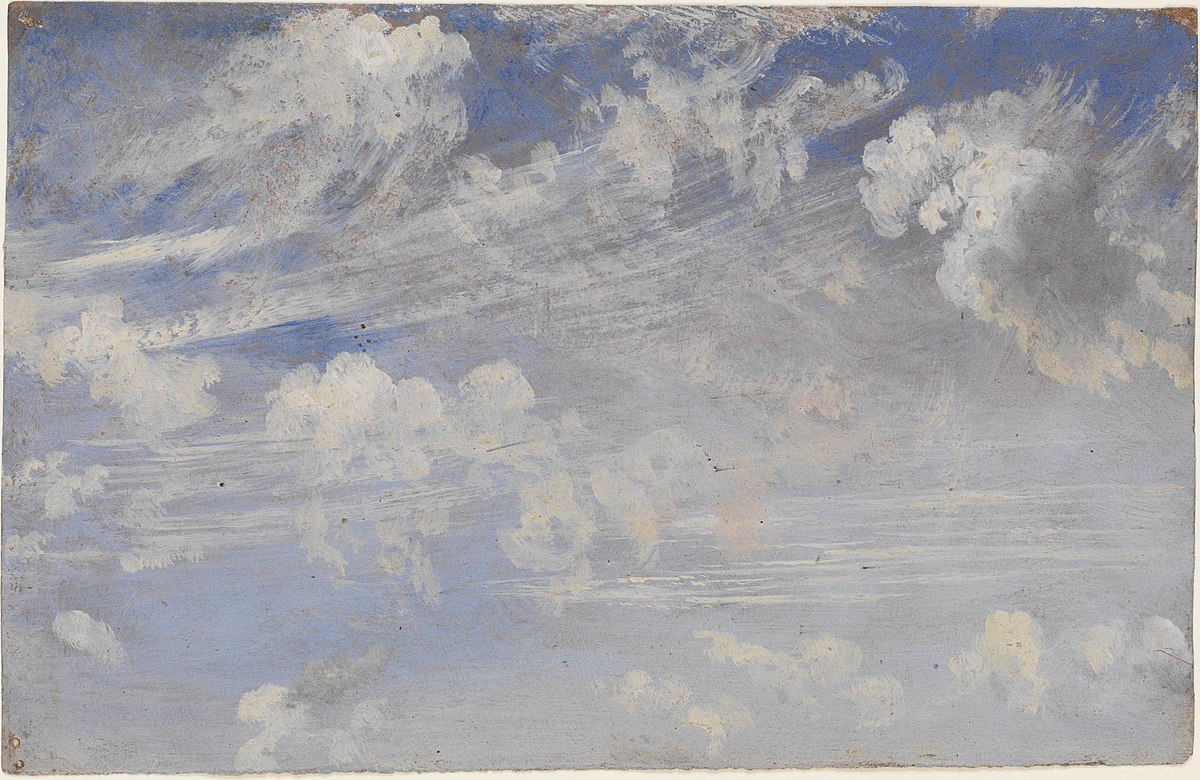
“Study of Cirrus Clouds” by English artist John Constable (c.1822, V&A Museum)
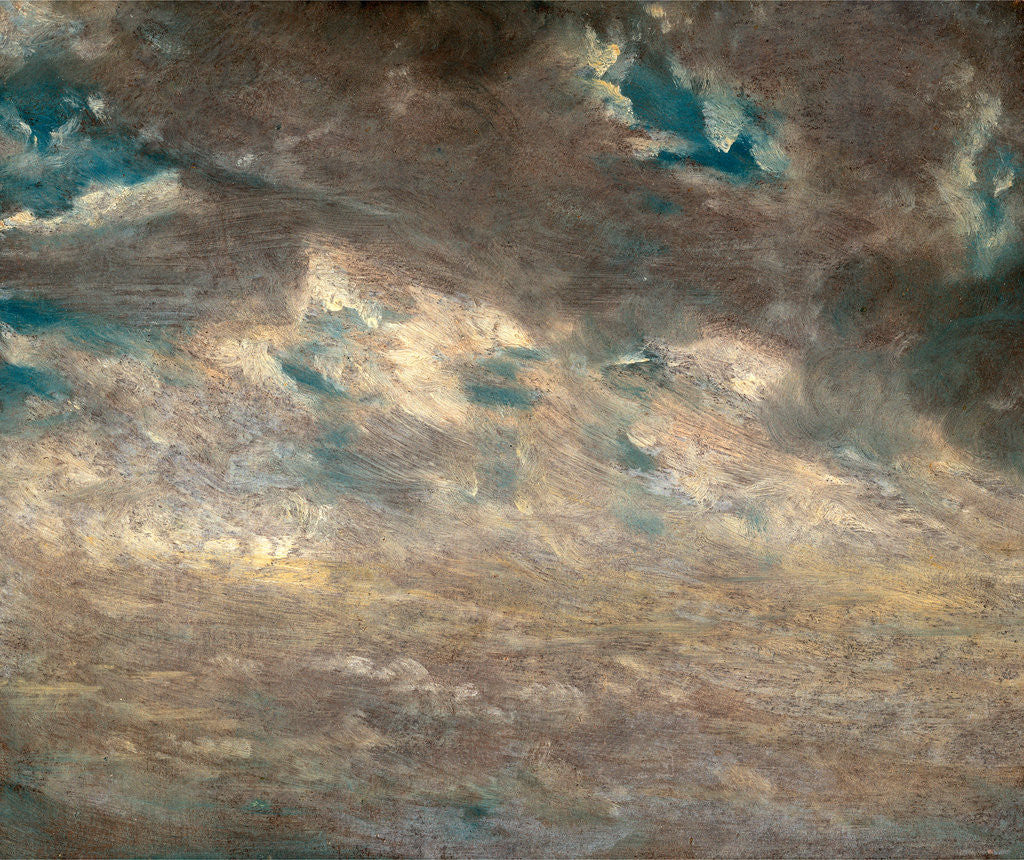
“Study of Altocumulus Clouds” by English artist John Constable (1821)
Peter Paul Rubens, Autumn Landscape with a View of Het Steen in the Early Morning (1635)
Rubens painted altocumulus cloud patterns in the early morning sky, demonstrating that mid-level tufted layers were observed long before aviation.
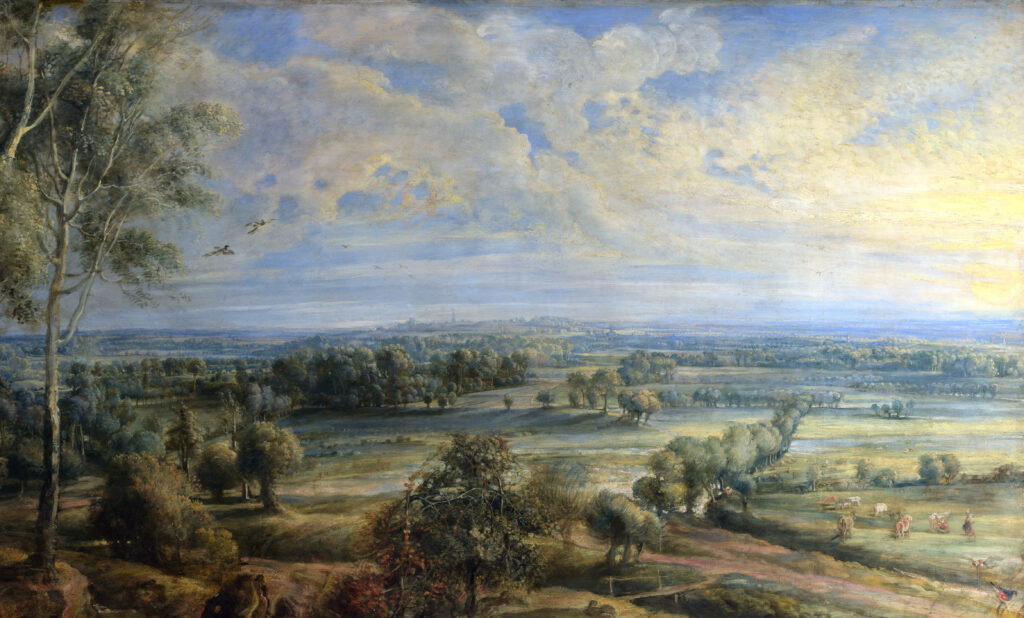
Peter Paul Rubens – A View of Het Steen in the Early Morning (1635)
Table: Cloud Types – Historical vs Modern Observations
| Cloud Type | Formation | Historical Depiction | Modern Observation |
|---|---|---|---|
| Cirrus | Wispy, thin | Constable, 1822 | Same, persistent |
| Altocumulus | Patchy, tufted | Rubens, 1635 | Same, undulating |
| Cumulus | Fluffy, dense | Constable, 1822 | Same, varied shapes |
Contrails, Clouds, and Atmospheric Science
Contrails: Formation and Persistence
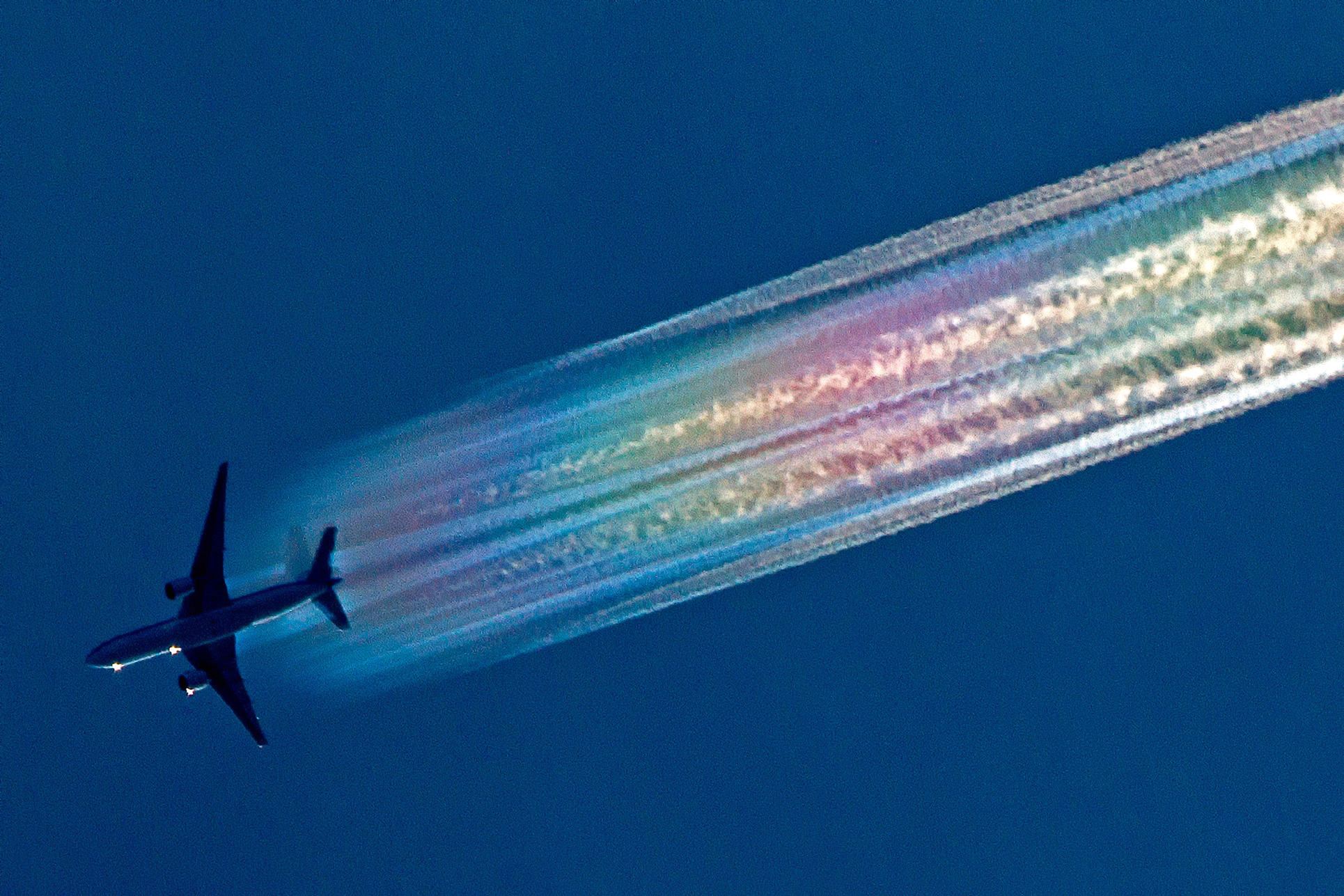
Contrails are condensation trails formed when hot, humid exhaust from aircraft engines meets cold, low-pressure air at high altitudes. Ice crystals condense along the trail, producing a visible streak. Persistence depends on relative humidity, temperature, and atmospheric stability.
- Low humidity: Contrails dissipate quickly.
- High humidity: Contrails can last for hours and spread into cirrus-like clouds.
- Atmospheric stability: Stable layers allow contrails to persist horizontally; turbulence can diffuse them.
Cloud Formation and Microphysics
Cloud formation is a natural process involving evaporation, condensation, and coalescence:
- Evaporation: Water evaporates from oceans, lakes, and soils, gaining latent heat (~2.26 × 10^6 J/kg).
- Rising air: Moist air rises and cools adiabatically.
- Condensation: Water vapor condenses on cloud condensation nuclei (dust, salt, pollen). Latent heat release drives convection.
- Droplet coalescence: Water droplets or ice crystals grow until they fall as precipitation.
Lapse rates (temperature decrease with altitude) affect stability:
- Dry adiabatic: ~9.8°C/km
- Moist adiabatic: ~5–6°C/km
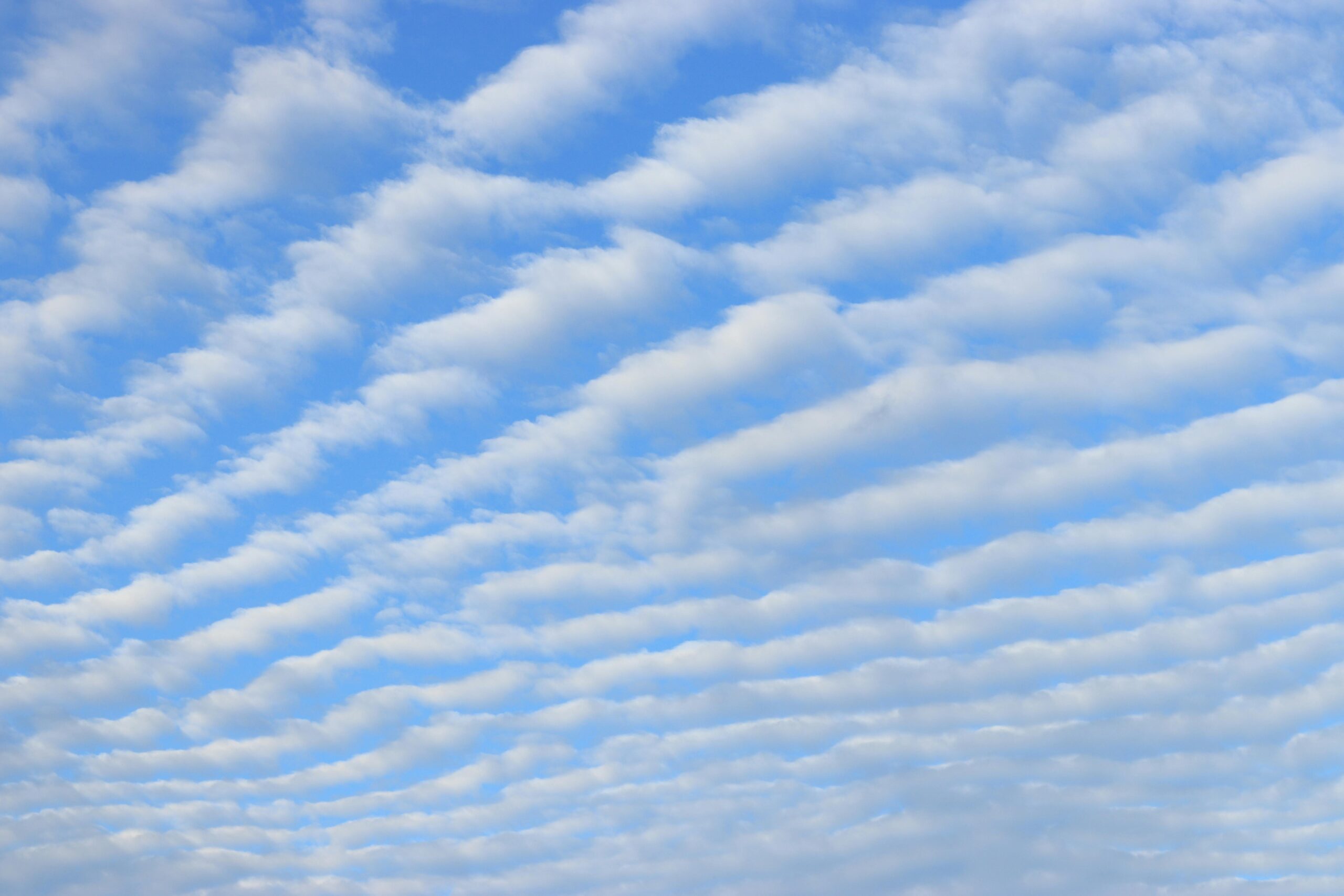
Unstable conditions promote cumulus and cumulonimbus clouds; stable layers may produce wave clouds or layered altocumulus formations.
Why People Feel the Sky Has Changed
Increased Air Traffic
Modern aviation has increased contrail frequency. Persistent contrails are more common due to higher humidity at flight altitudes.
Pollution and Aerosols
Higher aerosol concentrations change light scattering, haze, and sky colour. This may create the perception of a “different” sky.
Climate Change
Changes in moisture content and temperature profiles can make clouds persist longer, appear denser, or form in new patterns.
Observation Bias
With cameras, drones, and social media, people notice and share sky phenomena more than in the past. Patterns previously ignored now attract attention.
Contrail Persistence vs Cloud Patterns
Contrails can merge into natural clouds under the right conditions. Gravity waves and layering explain “rippled” clouds, while mid-level altocumulus undulations are natural. Observers unfamiliar with atmospheric science may mistake these for unnatural formations.
Comparison with Historical Skies
Historical paintings provide a clear reference:
- Constable captured cirrus and cumulus clouds with movement, shading, and structure.
- Rubens depicted altocumulus and layered skies.
- These forms are consistent with modern observations, demonstrating no fundamental change.
Scientific Data Supporting Natural Origins
- CCN concentration: Natural particles are sufficient for cloud formation.
- Humidity thresholds: Relative humidity >70% needed for persistent contrails.
- Gravity waves: Explain ripples in clouds.
- Energy scales: Evaporating water to form clouds requires far more energy than human activity can provide.
Observational Limitations
Artists may stylise clouds. Modern perception is influenced by awareness, photography, and social media. Minor changes in pollution or climate do not indicate manipulation.
People believe the sky is different due to contrail frequency, haze, climate change, and observational bias. Historical paintings by Constable, Rubens, and others show cloud types and patterns have existed for centuries.
Scientific understanding of clouds, contrails, and atmospheric physics supports the conclusion that modern skies remain fundamentally unchanged. There is no credible evidence of secret weather manipulation programs altering cloud formation.
References
- Constable, John. Study of Altocumulus Clouds, 1821, V&A Museum.
- Constable, John. Study of Cirrus Clouds, c.1822, V&A Museum.
- Constable, John. Cumulus Clouds over a Landscape, 1822, National Trust / Fenton House.
- Rubens, Peter Paul. Autumn Landscape with a View of Het Steen in the Early Morning, 1635.
- Gedzelman, Stanley. Sky Art: Clouds in Historical Painting, 2020.
- NASA. Contrails and Cirrus Clouds, 2023.
- Wallace, John M., Hobbs, Peter V. Atmospheric Science: An Introductory Survey, 3rd Edition, 2006.
- European Space Agency. Atmospheric Aerosols and Cloud Formation, 2022.