
Understanding the Science: Cloud Seeding vs. Chemtrails
Contrary to popular misconceptions, cloud seeding does not involve spraying large quantities of chemicals or leaving visible trails in the sky. Cloud seeding is a scientifically recognised open and documented practice and should not be conflated with Chemtrails. They are completely different in every way.

Cloud seeding is not a conspiracy
It has been openly discussed and documented since it’s inception. Nobody has ever tried to cover it up nor do it in secret.

Cloud seeding does not leave lines
Cloud seeding does not produce visible white lines or trails in the sky. Seeding agents are released in very small quantities, just 0.5 to 2 kg per 100 square kilometres

Cloud seeding is done inside clouds
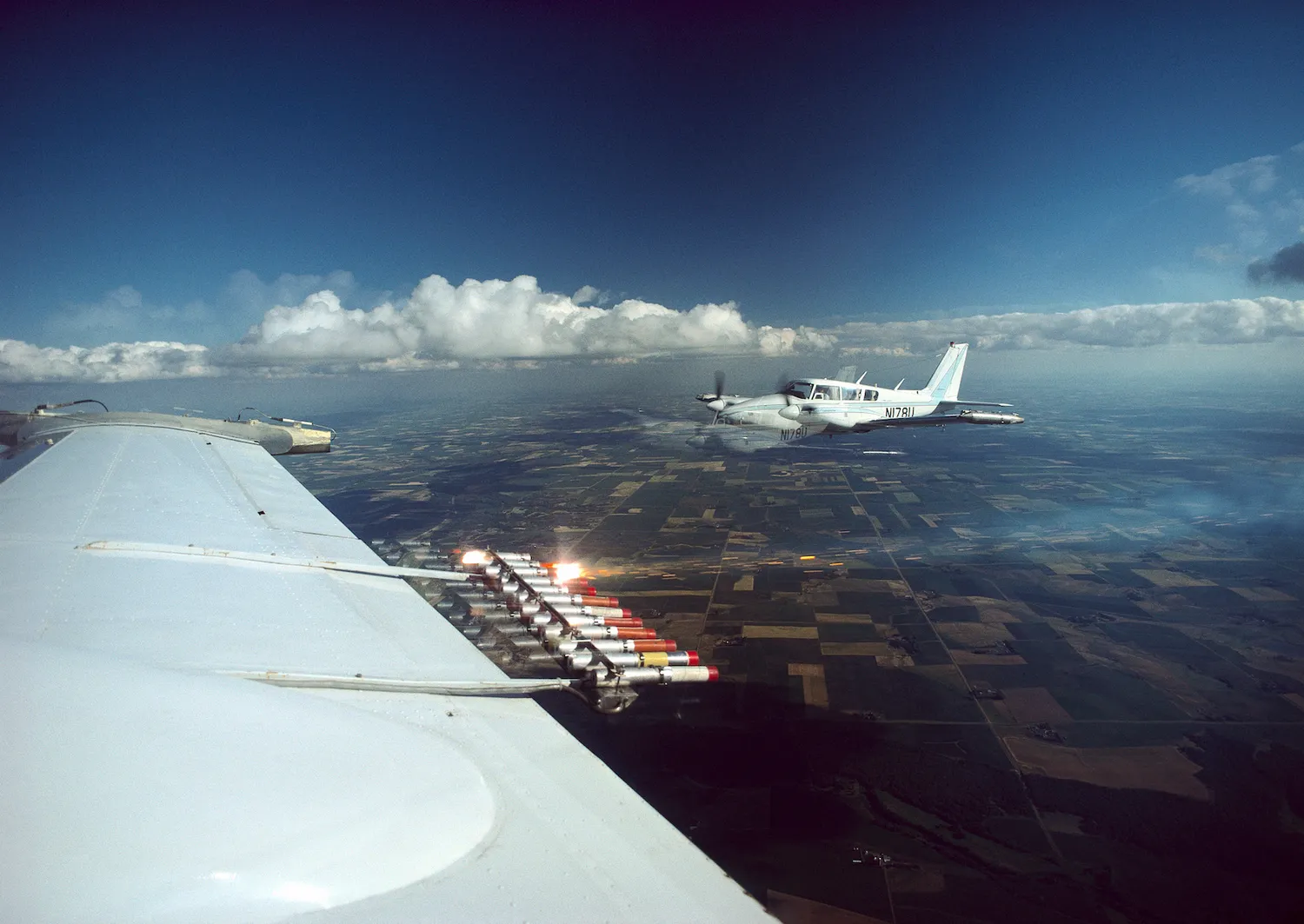
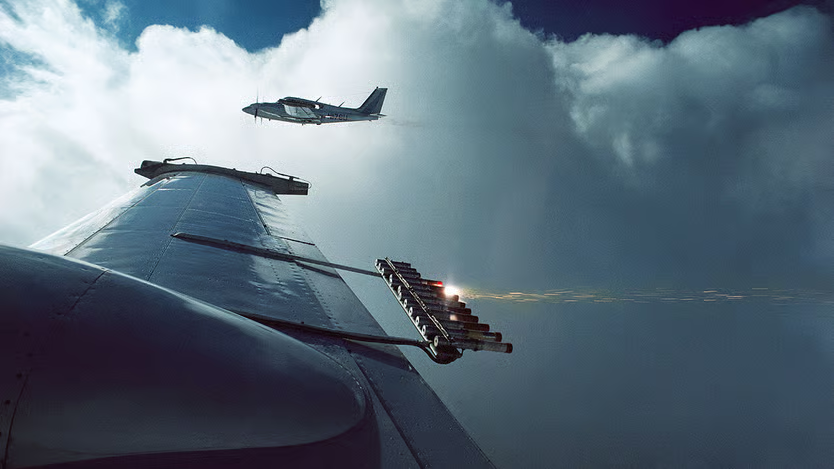
Aircraft conducting cloud seeding fly directly into clouds at lower altitudes, and the chemicals are dispersed internally within the cloud rather than forming streaks in clear air.
Cloud seeding can’t ‘make’ rain
Cloud seeding can only be performed with existing clouds to encourage them to release their moisture. It cannot make clouds or make rain from nothing.
What Is Cloud Seeding?
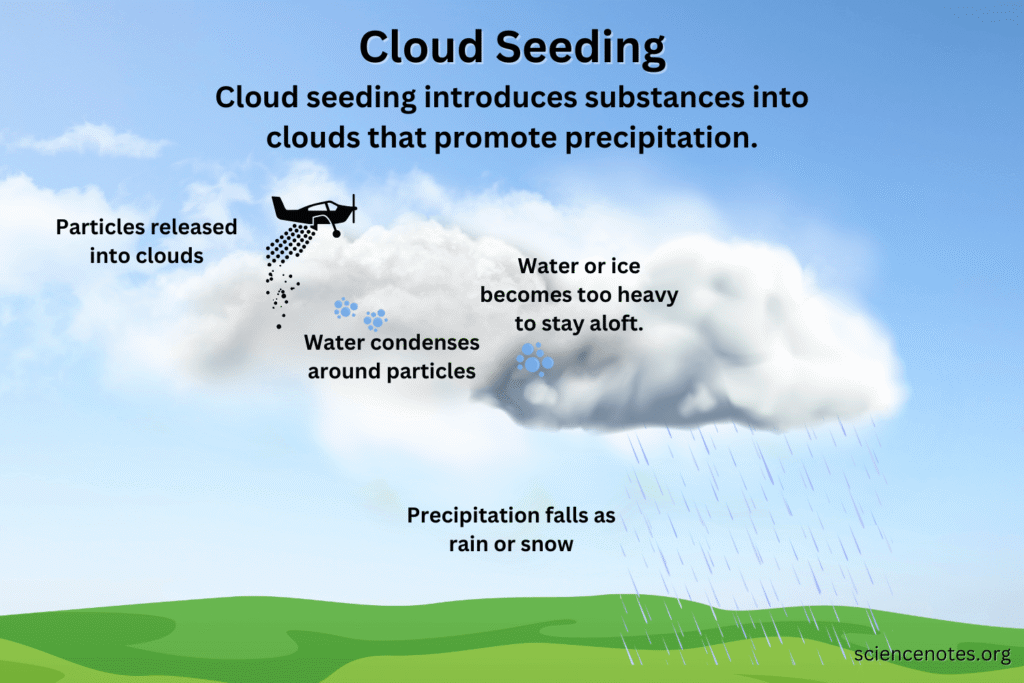
Cloud seeding is a scientifically recognised method of weather modification that aims to enhance precipitation in clouds that already contain sufficient moisture.
The process involves introducing substances into clouds to encourage the formation of ice crystals or water droplets, thereby increasing rainfall or snowfall.
Aircraft used for seeding may carry pyrotechnic flares or aerosol generators that release chemicals directly into targeted clouds at altitudes ranging from 1,500 to 10,000 metres.
The primary agents used in cloud seeding are:
- Silver Iodide (AgI): A compound that serves as an ice nucleus in supercooled clouds.
- Sodium Chloride (NaCl): Common table salt, used in warmer clouds to promote droplet formation.
- Potassium Chloride (KCl): Similar to sodium chloride, used for the same purpose.
- Dry Ice (Solid CO₂): Used in some operations to cool the cloud and promote ice formation.
These substances are dispersed into the clouds via aircraft or ground-based generators. The amount of seeding agent used is minimal, typically ranging from 0.5 to 2 kilograms per 100 square kilometers per operation, depending on the cloud conditions and desired outcome.
Understanding Chemtrails: The Conspiracy Theory
The term “chemtrail” is a portmanteau of “chemical” and “trail,” referring to the belief that aircraft are intentionally releasing chemicals into the atmosphere for purposes such as weather modification, population control, or mind manipulation.
Proponents of this theory point to persistent contrails, long-lasting streaks left by aircraft in the sky, as evidence of this alleged spraying.
However, scientific studies have shown that these persistent contrails are simply condensation trails formed when hot, humid air from aircraft engines mixes with the colder, low-pressure air at high altitudes.
The water vapor in the exhaust condenses into tiny water droplets or ice crystals, forming visible streaks that can persist depending on atmospheric conditions. There is no credible evidence to support the existence of “chemtrails.”
Cloud Seeding Methods and Equipment
Cloud seeding uses aircraft, ground generators, and drones to disperse materials like silver iodide or salt into moisture-rich clouds. These particles act as nuclei, helping existing water vapour condense and form precipitation.
Small Fixed Wing Aircraft
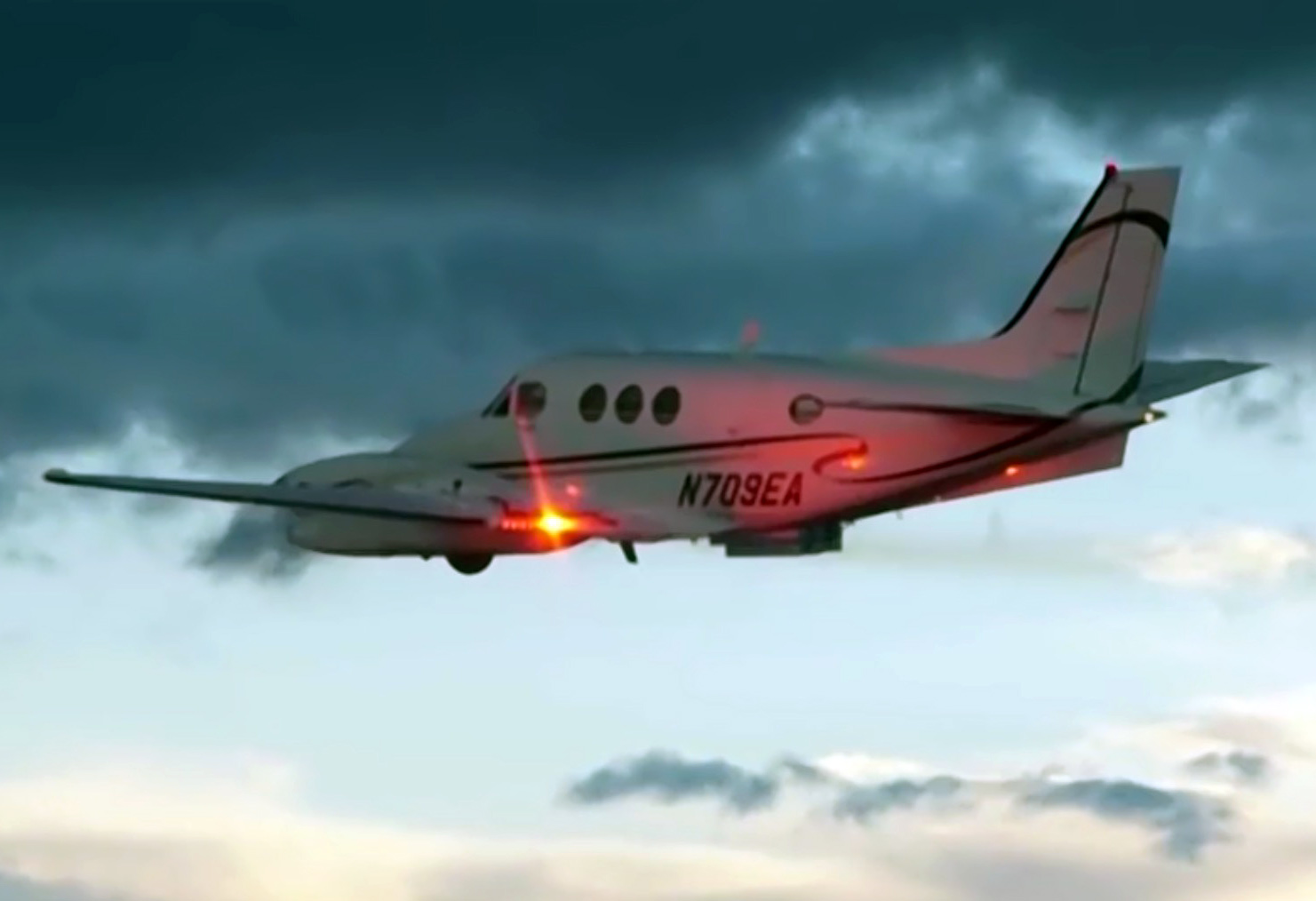
Single-engine planes like the Cessna 172 or Piper Navajo remain one of the most common and flexible platforms for cloud seeding. These aircraft are equipped with wing-mounted flares, pyrotechnic racks, or pressurised flares that release silver iodide or other agents directly into the target cloud at specific altitudes.
Depending on the goal, warm-cloud or cold-cloud seeding, pilots may inject substances into supercooled liquid regions or near the cloud base. Onboard instrumentation, including temperature, humidity, and cloud particle sensors, ensures accurate targeting and verification. Aircraft seeding provides precision and mobility but requires skilled operation and favourable flight conditions.
Ground-Based Generators
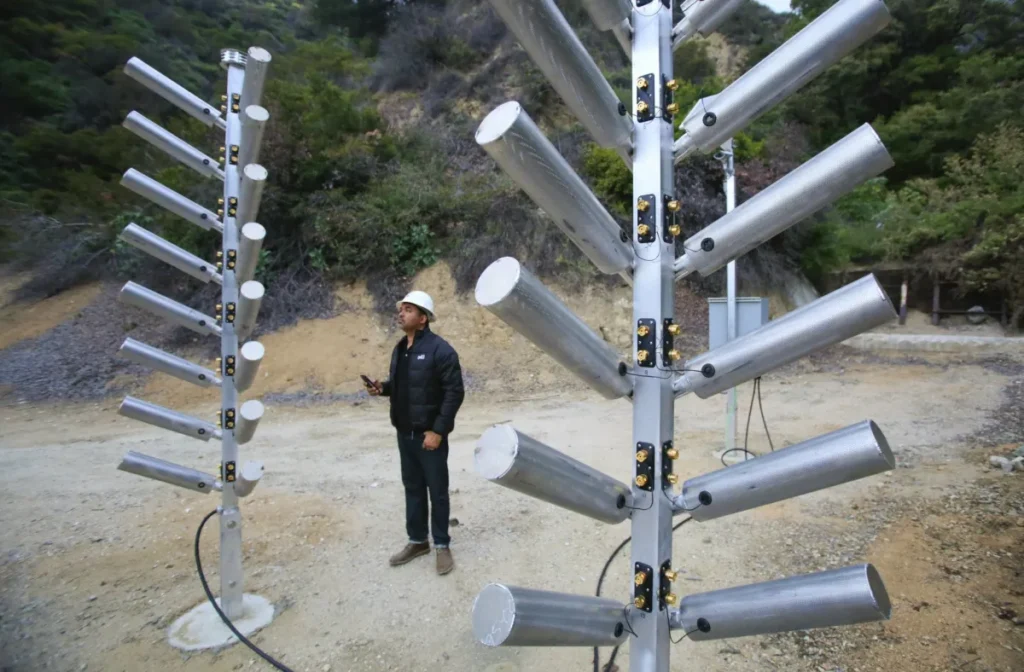
In some cases, ground-based generators are used to release seeding agents into the atmosphere, relying on updrafts to carry the substances into the clouds.
Ground-based cloud seeding systems use stationary generators positioned on elevated terrain, such as mountain slopes or ridgelines, to release seeding agents into the atmosphere. These generators typically burn a solution containing silver iodide, sodium chloride, or calcium chloride in acetone, producing microscopic particles that rise with air currents into suitable cloud layers.
Modern installations are often remotely operated, allowing meteorologists to activate or adjust the burn rate based on wind direction, humidity, and cloud base height. The particles serve as condensation or ice nuclei, encouraging droplet or crystal formation that enhances precipitation. Ground systems are cost-effective and capable of long-term, unattended operation, though their reach is limited to specific wind and topographic conditions.
Drone-Based Cloud Seeding
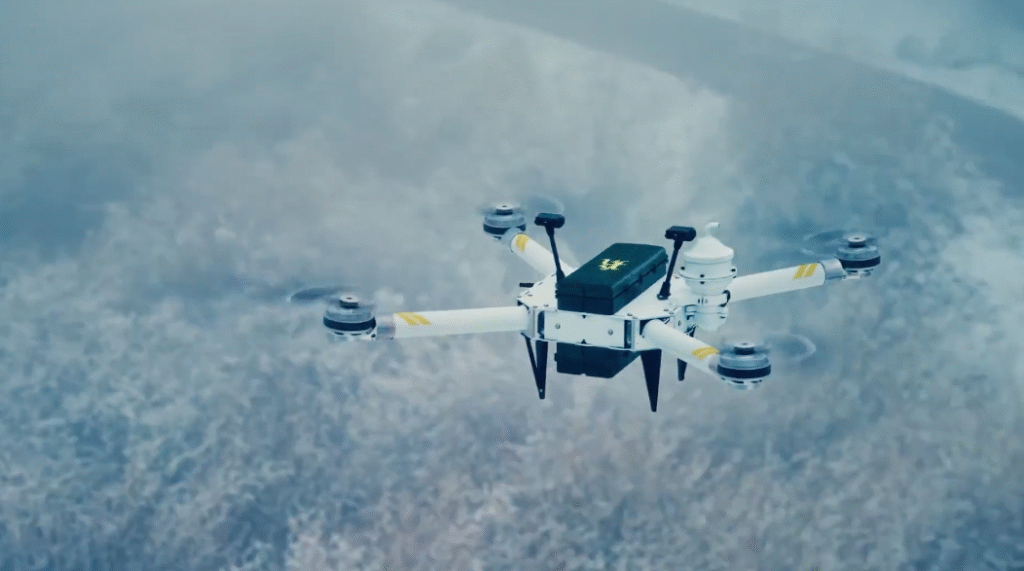
Unmanned aerial vehicles (UAVs) or drones are a recent innovation in cloud seeding, offering greater safety and operational flexibility than manned aircraft. Drones can carry miniature flare dispensers or aerosol generators to release silver iodide, potassium chloride, or dry ice into smaller or lower-level cloud systems.
Equipped with real-time sensors and GPS-guided flight control, drones can operate autonomously or semi-autonomously in synchronisation with radar data. Some designs integrate electrostatic sprayers or ultrasonic nebulisers to disperse seeding materials efficiently while minimising payload weight.
Their ability to access regions unsafe for crewed aircraft, combined with precise atmospheric data collection, makes drones increasingly valuable for experimental and localised seeding operations.
Chemical Usage: Quantity and Composition
Cloud Seeding Chemicals
The amount of chemicals used in cloud seeding is minimal and carefully regulated to minimize environmental impact. For instance:
- Silver Iodide: Approximately 0.5 to 2 kilograms per 100 square kilometers per operation.
- Sodium Chloride and Potassium Chloride: Similar quantities are used, depending on the specific requirements of the operation.
These substances are dispersed into the clouds in small amounts, and their environmental impact is closely monitored. Studies have shown that the concentrations of silver iodide in the environment following cloud seeding operations are well below levels that would pose a risk to human health or the environment.
Chemtrail Conspiracy Claims
Chemtrail proponents allege that large quantities of harmful chemicals are being dispersed into the atmosphere. However, there is no scientific evidence to support these claims. The substances purportedly involved, such as barium, aluminum, and strontium, are not found in the concentrations suggested by conspiracy theorists.
Also, the persistence of contrails is entirely explainable through atmospheric science, with no need to invoke the existence of chemtrails.
Visible Trails: Persistence and Composition
Cloud Seeding Operations
Cloud seeding dispersal does not produce visible white lines or trails in the sky. The seeding agents, such as silver iodide, sodium chloride, or dry ice, are released in very small quantities (typically just 0.5 to 2 kilograms per 100 square kilometres) and quickly mix with the moisture already present in clouds.
Unlike the persistent contrails formed by high-altitude jet engines, which are composed of condensed water vapour and ice crystals, cloud seeding particles are invisible once dispersed and do not linger.
Aircraft conducting cloud seeding fly directly into or near clouds at lower altitudes, and the chemicals are dispersed internally within the cloud rather than forming streaks in clear air, meaning there is no long-lasting visual signature in the sky.
Chemtrail Conspiracy Theories
Chemtrail theorists often point to persistent contrails as evidence of chemical spraying. However, as previously discussed, these contrails are a natural result of aircraft exhaust mixing with cold, low-pressure air at high altitudes.
The persistence of contrails depends on specific atmospheric conditions, including humidity and temperature, and does not indicate any intentional chemical release.
Scientific Consensus and Debunking the Myths
The scientific community has consistently debunked the chemtrail conspiracy theory. Studies by atmospheric scientists, meteorologists, and environmental agencies have found no evidence of large-scale chemical spraying operations. For example:
- The Royal Aeronautical Society has published articles explaining that persistent contrails are a natural phenomenon resulting from aircraft operations and are not evidence of chemical spraying.
- The Environmental Protection Agency (EPA) has issued statements clarifying that contrails are simply water vapor and that there is no intentional release of chemicals into the atmosphere for weather modification or other purposes.
These findings are supported by decades of atmospheric research and monitoring, which have found no credible evidence to support the existence of chemtrails.
To Sum Up
In conclusion, cloud seeding is a legitimate weather modification technique that involves the careful and minimal use of chemicals to enhance precipitation in clouds that already contain sufficient moisture. The aircraft used in cloud seeding operations are small to medium-sized planes equipped with specialized equipment to disperse seeding agents into the clouds. These operations do not involve the intentional release of harmful chemicals into the atmosphere.
The chemtrail conspiracy theory, on the other hand, is based on misconceptions and a misunderstanding of atmospheric science. The persistent contrails observed in the sky are a natural result of aircraft exhaust mixing with cold, low-pressure air at high altitudes. There is no credible scientific evidence to support the existence of chemtrails.
Understanding the science behind these phenomena is crucial in dispelling myths and ensuring that public discourse is based on accurate information. By distinguishing between legitimate weather modification techniques and unfounded conspiracy theories, we can foster a more informed and scientifically literate society.