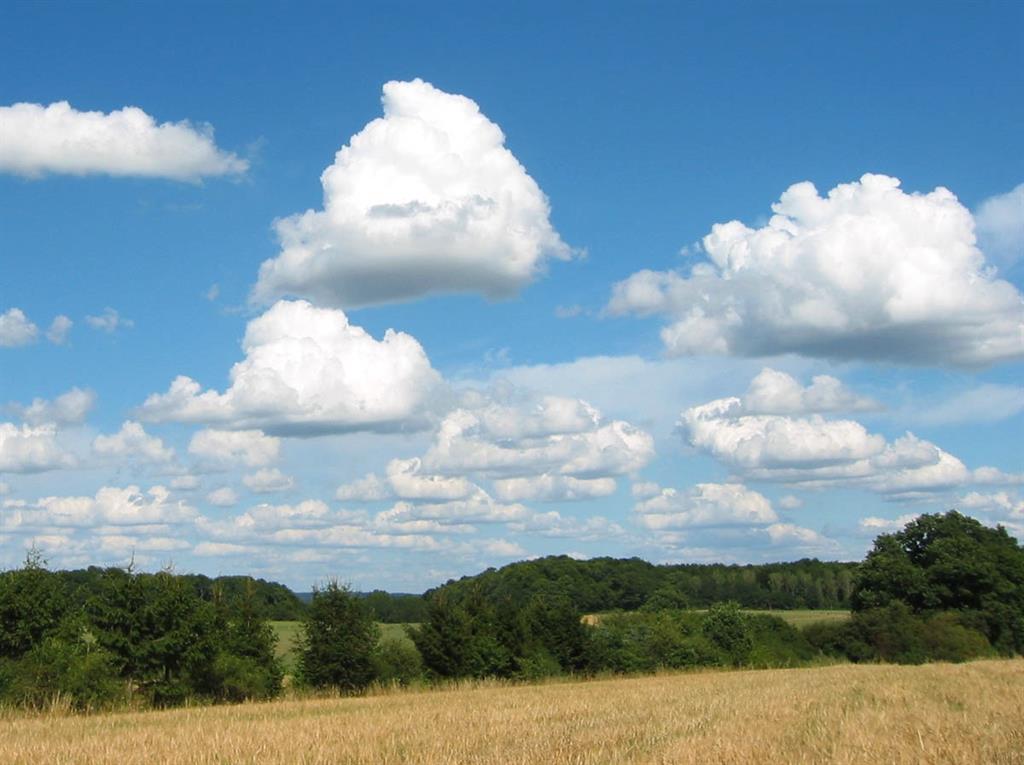

Cumulus clouds are low- to mid-level clouds that are often described as puffy or heaped, resembling cotton or cauliflower in appearance.
They are among the most recognizable cloud types and form in unstable atmospheric conditions, where rising parcels of warm, moist air condense as they ascend.
Cumulus clouds vary in size and shape, from small, scattered clouds to towering formations associated with thunderstorms. They are an important indicator of convective activity in the atmosphere.
Detailed Characteristics
Height
Cumulus clouds generally form at low altitudes, with base heights ranging from 1,000 to 2,500 metres (3,300–8,200 feet) above ground level.
In unstable conditions, their tops can extend much higher into the atmosphere, sometimes reaching 6,000 metres or more in the case of cumulonimbus development.
Appearance
Cumulus clouds are characterised by distinct, rounded tops and relatively flat bases, with a sharply defined outline against the sky.
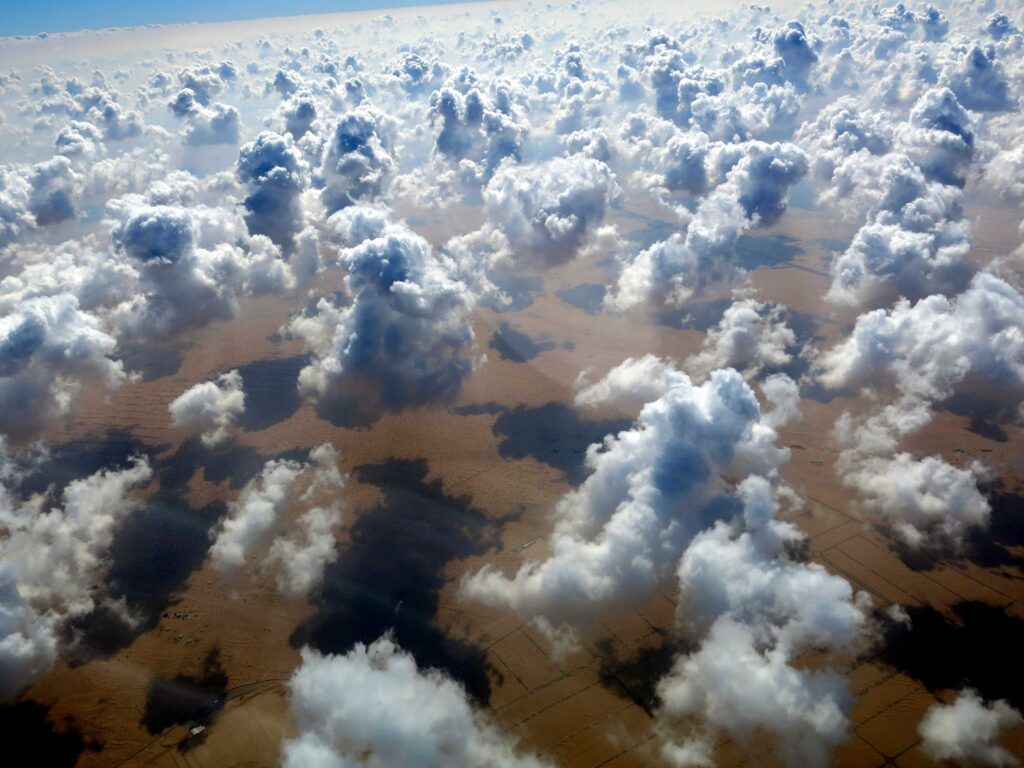
Smaller clouds are usually isolated and scattered, while larger clouds can merge into extensive cloud fields.
They appear bright white in sunlight and may display shading on the underside when the sun is above them.
Name Meaning
The term cumulus comes from Latin, meaning “heap” or “pile”, reflecting their characteristic piled or heaped structure.
Rain
Small cumulus clouds generally produce no precipitation, though larger formations, particularly cumulus congestus, can produce light showers.
When they develop into cumulonimbus clouds, they may produce heavy rain, hail, or even severe thunderstorms.

Formation and Dynamics
Cumulus clouds form through convective processes, where warm air at the surface rises due to heating or mechanical lifting.
As the air rises, it cools adiabatically, and water vapour condenses into cloud droplets once it reaches the lifting condensation level.
The cloud base corresponds to this level, while the top extends into regions of continued convection.
The growth of cumulus clouds is influenced by atmospheric stability, moisture content, and wind shear.
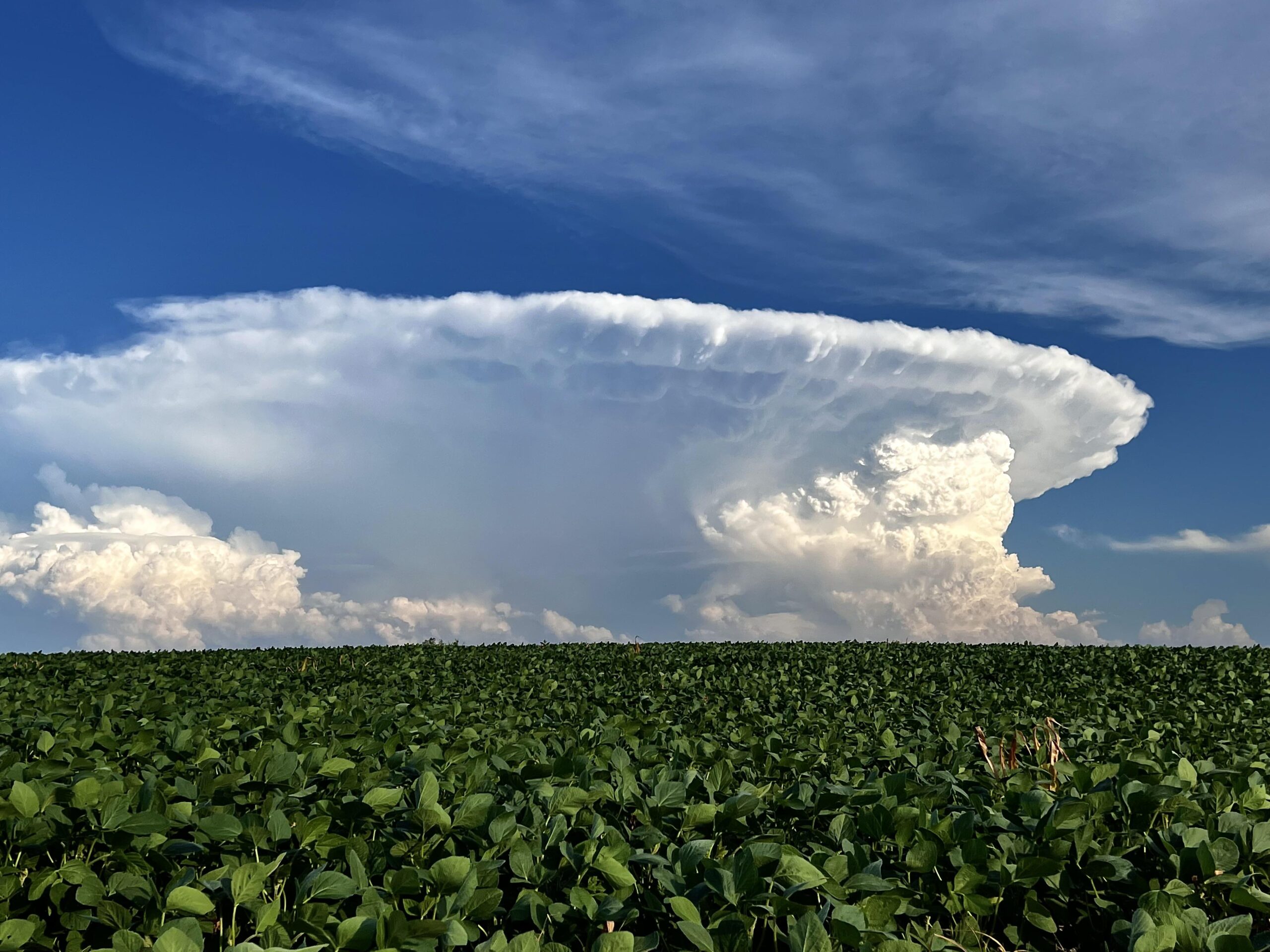
In highly unstable conditions, cumulus clouds can grow vertically into towering cumulus or cumulonimbus clouds, which may lead to thunderstorms.
Historical Context
Cumulus clouds have been observed and described since antiquity due to their distinct and familiar appearance.
They were first scientifically classified in the 19th century as part of the tropospheric cloud taxonomy.
Their study has been central to understanding convective processes, weather prediction, and storm formation.
Luke Howard in 1802 coined cumulus (Latin for “heap”) in his classification. That naming is foundational to modern cloud taxonomy.
In literature and culture, cumulus clouds are among the most common sky images. For example, the poet Wordsworth occasionally refers to “white clouds” in his works, though not always with the formal name.

Observations and Phenomena
Cumulus clouds are a common feature in many climates and can indicate fair weather when small and scattered, or convective activity when tall and well-developed.
They often display features such as mushroom-like tops, billowing edges, or glaciated upper sections as they develop vertically.
Cumulus clouds may also serve as the parent cloud type for other phenomena, including virga, towering convective clouds, or thunderstorm cells.
Observations of their development help meteorologists assess atmospheric instability and forecast potential precipitation.
Small cumulus are fair-weather clouds and don’t produce rain. But if they keep growing vertically, they can turn into towering cumulus congestus or even cumulonimbus—storm clouds.
Distinguishing Cumulus from Similar Clouds
Cumulus clouds differ from stratus clouds, which form in uniform horizontal layers and lack vertical development. They are also distinct from cirrus clouds, which are high-altitude ice-crystal clouds with wispy, filamentous forms.
Towering cumulus or cumulonimbus clouds are an advanced stage of cumulus development and are associated with severe weather.
Further Information
Cumulus clouds play a crucial role in the Earth’s energy balance by reflecting sunlight and affecting convective heat transfer.
They are widely studied in meteorology and climatology to understand cloud dynamics, precipitation processes, and convective storm development.
Cumulus clouds are a fundamental cloud type that exemplifies convective processes in the troposphere.
Their characteristic shapes, heights, and development patterns provide insight into atmospheric conditions, moisture content, and potential for precipitation, making them an essential focus of weather observation and study.