
The Science, Limitations, and Misconceptions around Cloud Seeding
Cloud seeding is not a conspiracy. It has been openly discussed and documented since it’s inception. Nobody has ever tried to cover it up or do it in secret.
Cloud seeding has been a weather modification technique since the mid-20th century, applied to enhance precipitation in regions experiencing drought or low rainfall.
Popular imagination often exaggerates its capabilities, suggesting it can generate rain from clear skies or even trigger large-scale floods.
These misconceptions surfaced prominently after extreme weather events in Texas (2025) and Dubai (2024), where conspiracy theories incorrectly attributed heavy rainfall to human intervention.
You can’t Just Make Rain
Cloud seeding cannot create rain from nothing; it can only enhance or accelerate precipitation if the atmospheric conditions are already favourable.
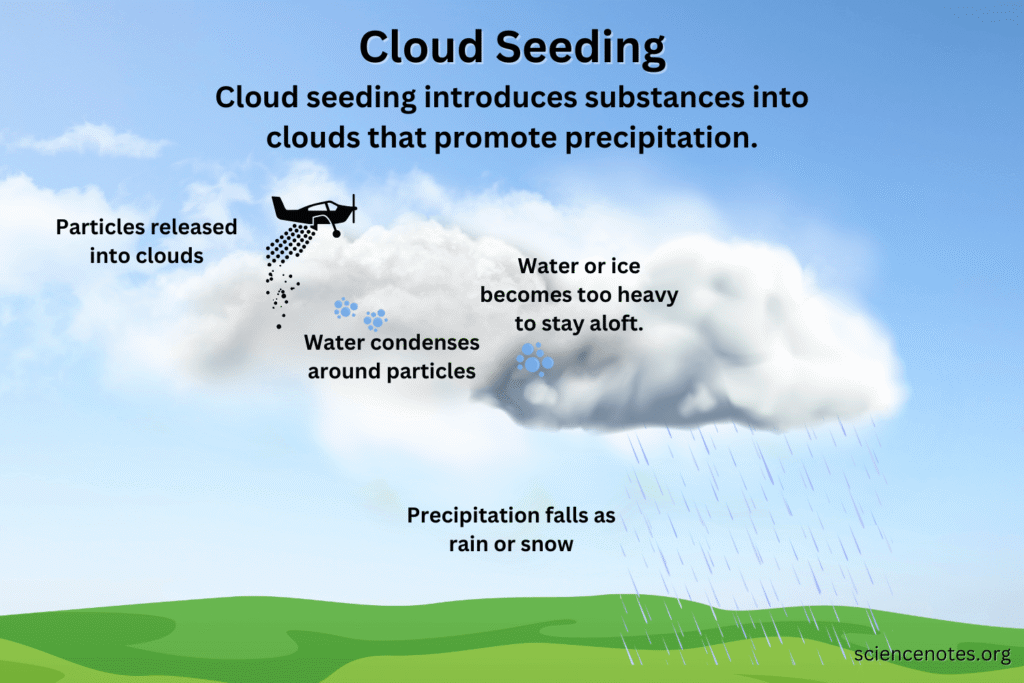
For rain to form, a cloud must contain sufficient supercooled water droplets or moisture at appropriate temperatures and altitudes. Cloud seeding agents such as silver iodide or salt particles act merely as nuclei that encourage existing water vapour to condense or freeze.
If the air mass lacks adequate humidity, vertical motion, or cloud development, there is no moisture available for seeding to influence. In other words, cloud seeding cannot generate water — it simply provides a catalyst for natural processes that are already underway.
The effectiveness of seeding therefore depends entirely on meteorological conditions, including cloud type, temperature profile, and atmospheric stability.
The reality is that cloud seeding is constrained by the fundamental physics of the atmosphere. Without moisture-rich clouds, no chemical intervention can induce rainfall.
At its core, cloud seeding does not create clouds from clear skies. It is a method intended to enhance precipitation in clouds that are already present and contain sufficient water vapor. Without moisture in the cloud, cloud seeding is ineffective.
Cloud Seeding Does Leave Visible Lines in the Sky
Contrary to popular misconceptions, cloud seeding does not involve spraying large quantities of chemicals or leaving visible trails in the sky.
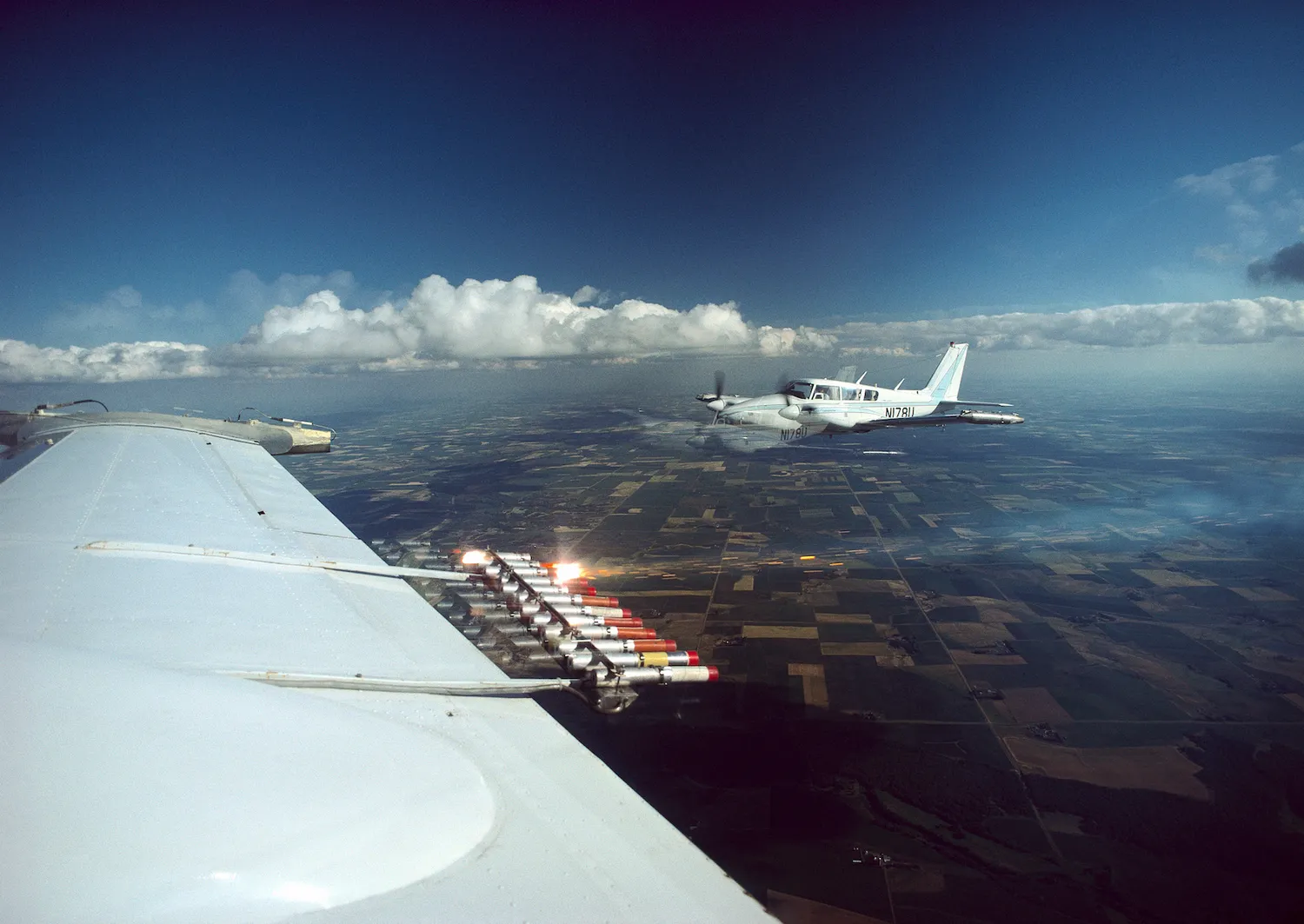
Aircraft used for seeding may carry pyrotechnic flares or aerosol generators that release chemicals directly into targeted clouds at altitudes ranging from 1,500 to 10,000 metres.
These dispersals are localized and subtle, and the chemicals rapidly mix with cloud water, leaving no persistent visual signature. As such, the wispy streaks sometimes attributed to “chemical spraying” are unrelated to cloud seeding and are instead natural condensation trails from jet engines, which are formed by water vapor and not by seeding chemicals.
Cloud seeding is a targeted weather modification technique designed to enhance precipitation in clouds that already contain sufficient moisture. The process involves dispersing tiny quantities of chemical agents, such as silver iodide or sodium chloride, into a cloud to encourage the formation of ice crystals or water droplets.
Silver iodide is particularly effective in supercooled clouds because its crystalline structure closely resembles that of ice, providing a nucleus around which ice can form.
In operational cloud seeding programs, the amount of silver iodide used is surprisingly small. Estimates vary depending on cloud type, temperature, and seeding method, but typical figures are:
Aircraft-based seeding:
Approximately 0.5 to 2 kilograms per 100 square kilometres of silver iodide per seeding run.
Ground-based generators:
Often slightly higher, around 2 to 5 kilograms per 100 square kilometres, because dispersal relies on upward transport by wind and convection.
To put this in perspective, even a single storm cloud contains millions of kilograms of water, so the silver iodide represents an infinitesimal fraction, just enough to provide nuclei for droplet or ice formation. This is why cloud seeding cannot create rain from dry clouds or leave visible chemical trails.
Read more about the differences between cloud seeding and chemtrails.
The Journey of Water Into the Atmosphere
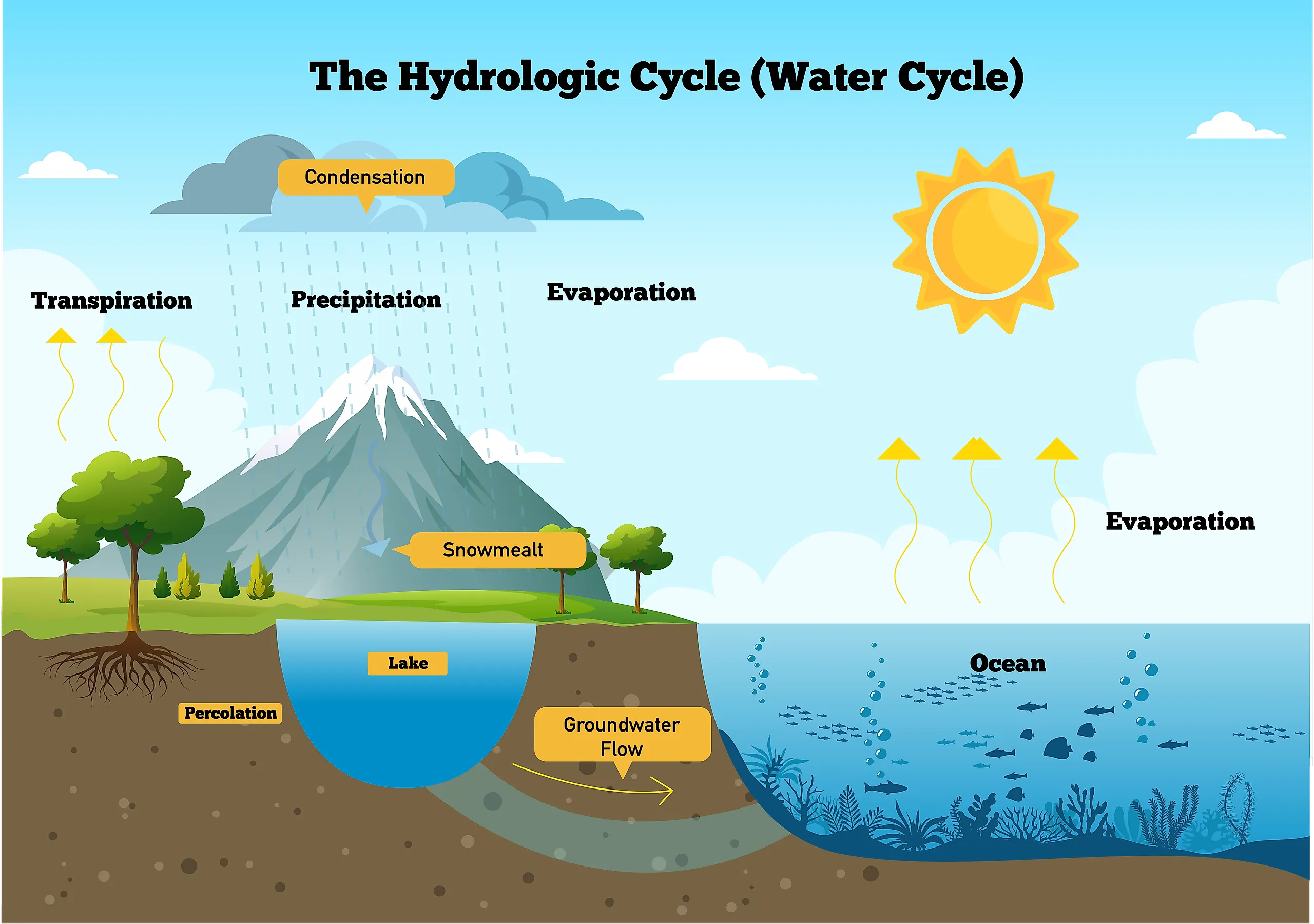
Rain begins with the movement of water from Earth’s surface into the atmosphere. Understanding this process is essential to grasp the limitations of cloud seeding.
Evaporation and Energy Requirements
Water evaporates from oceans, lakes, rivers, and soils when molecules gain enough energy to transition from liquid to gas. The energy required for this process, the latent heat of vaporization, is approximately 2.26 × 10^6 joules per kilogram of water.
To illustrate the scale: a single thunderstorm producing 50 millimetres of rain over 100 square kilometres involves roughly 500 million cubic metres of water. Evaporating this volume requires approximately 1.13 × 10^15 joules of energy, equivalent to the detonation of hundreds of kilotons of TNT. Human technologies, including cloud seeding, cannot supply anywhere near this energy.
Condensation
Once water vapour rises, it cools to its dew point, leading to condensation. Condensation occurs around microscopic particles called cloud condensation nuclei (CCN), which can include dust, salt, or even biological particles. This process releases latent heat, which helps drive convection currents in the atmosphere.
Cloud Formation and Growth
Clouds form when billions of droplets coalesce. Their potential to produce rain depends on:
- Water content: Clouds with high liquid water content are more likely to yield precipitation.
- Vertical development: Cumulonimbus clouds reaching altitudes of 10–15 km can produce heavy rain, hail, and thunderstorms.
- Atmospheric dynamics: Updrafts, wind shear, and temperature gradients influence droplet growth.
Rainfall Initiation
Droplets must reach sufficient size to overcome air resistance. Typical raindrops are 0.5–5 mm in diameter. Droplets smaller than 0.1 mm remain suspended, while larger droplets fall as rain. This coalescence process is entirely natural, and chemical agents in cloud seeding merely provide additional nuclei to accelerate it.
The Physics of Floods
To understand why cloud seeding cannot generate floods, it is necessary to consider the scale of water involved.
Example: Texas Floods 2025
- Area affected: ~5,000 km²
- Rainfall: ~250 mm (0.25 m)
- Total water volume: 5,000,000,000 m² × 0.25 m = 1.25 × 10^9 m³
A single cloud seeding operation releases 1–2 kg of silver iodide over a few square kilometres, affecting perhaps 1–10 m³ of water droplets. This is an infinitesimal fraction (1 part in 10^8) of the water volume in a natural flood event.
Energy Considerations
Generating 1.25 × 10^9 m³ of rainfall requires:
- Mass of water: 1.25 × 10^12 kg
- Energy for evaporation: 1.25 × 10^12 kg × 2.26 × 10^6 J/kg ≈ 2.83 × 10^18 J
No human technology, including aircraft-based cloud seeding, can provide this energy.
How Cloud Seeding Works
Seeding Chemicals
Cloud seeding primarily uses:
- Silver iodide (AgI): Used in cold cloud seeding; provides ice nuclei for supercooled clouds.
- Sodium chloride (NaCl) and potassium chloride (KCl): Used in warm cloud seeding to promote droplet coalescence.
- Dry ice (solid CO2): Lowers local temperatures to initiate freezing in clouds.
The quantities are small relative to the mass of water in clouds—typically 1–10 kg per operation.
Cloud Seeding Delivery Methods
Cloud seeding uses aircraft, ground generators, and drones to disperse materials like silver iodide or salt into moisture-rich clouds. These particles act as nuclei, helping existing water vapour condense and form precipitation.
Small Fixed Wing Aircraft
Single-engine planes like the Cessna 172 or Piper Navajo remain one of the most common and flexible platforms for cloud seeding. These aircraft are equipped with wing-mounted flares, pyrotechnic racks, or pressurised flares that release silver iodide or other agents directly into the target cloud at specific altitudes.
Depending on the goal, warm-cloud or cold-cloud seeding, pilots may inject substances into supercooled liquid regions or near the cloud base.
Onboard instrumentation, including temperature, humidity, and cloud particle sensors, ensures accurate targeting and verification. Aircraft seeding provides precision and mobility but requires skilled operation and favourable flight conditions.

Ground-Based Generators
In some cases, ground-based generators are used to release seeding agents into the atmosphere, relying on updrafts to carry the substances into the clouds.
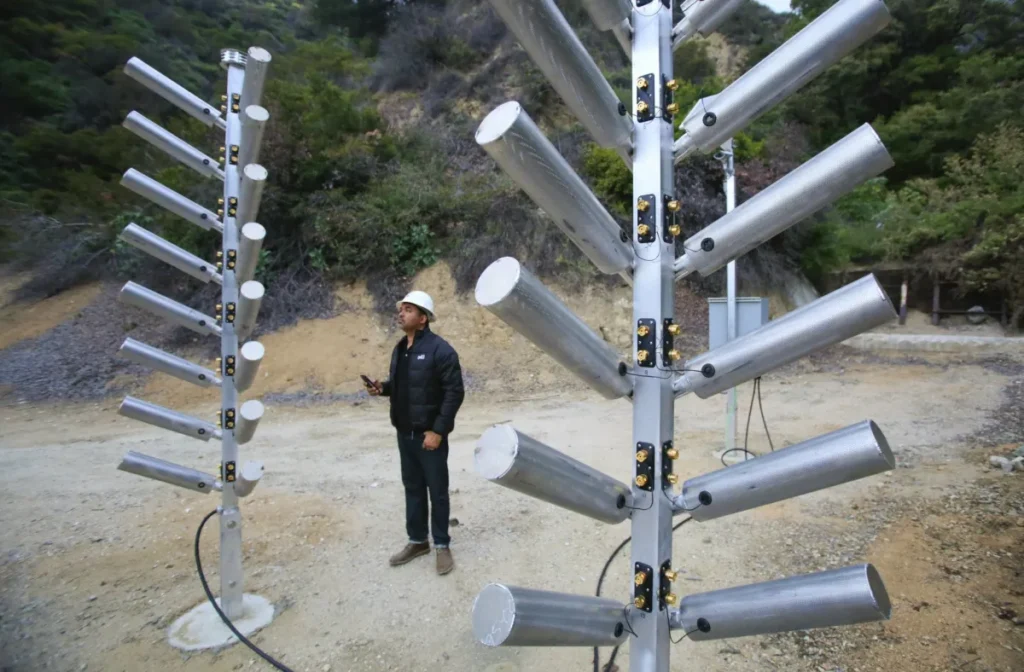
Ground-based cloud seeding systems use stationary generators positioned on elevated terrain, such as mountain slopes or ridgelines, to release seeding agents into the atmosphere.
These generators typically burn a solution containing silver iodide, sodium chloride, or calcium chloride in acetone, producing microscopic particles that rise with air currents into suitable cloud layers.
Modern installations are often remotely operated, allowing meteorologists to activate or adjust the burn rate based on wind direction, humidity, and cloud base height. The particles serve as condensation or ice nuclei, encouraging droplet or crystal formation that enhances precipitation.
Ground systems are cost-effective and capable of long-term, unattended operation, though their reach is limited to specific wind and topographic conditions.
Drone-Based Cloud Seeding
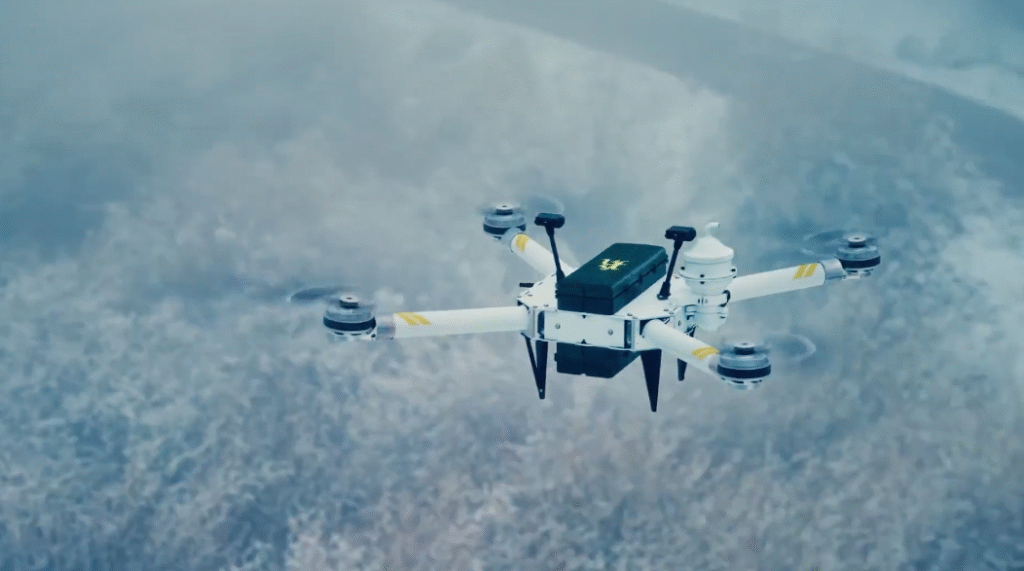
Unmanned aerial vehicles (UAVs) or drones are a recent innovation in cloud seeding, offering greater safety and operational flexibility than manned aircraft. Drones can carry miniature flare dispensers or aerosol generators to release silver iodide, potassium chloride, or dry ice into smaller or lower-level cloud systems.
Equipped with real-time sensors and GPS-guided flight control, drones can operate autonomously or semi-autonomously in synchronisation with radar data. Some designs integrate electrostatic sprayers or ultrasonic nebulisers to disperse seeding materials efficiently while minimising payload weight.
Their ability to access regions unsafe for crewed aircraft, combined with precise atmospheric data collection, makes drones increasingly valuable for experimental and localised seeding operations.
Cloud Seeding Mechanisms in Action
- Warm cloud seeding: Salt particles act as hygroscopic nuclei, encouraging droplet growth.
- Cold cloud seeding: Silver iodide induces ice crystal formation. Ice crystals grow and fall, melting into raindrops.
The process accelerates natural precipitation but cannot create rain from clouds lacking moisture.
Scientific Limitations
Moisture Dependence
Cloud seeding requires pre-existing water droplets or supercooled liquid. Dry clouds cannot be induced to produce rainfall, no matter the quantity of seeding chemicals.
Cloud Seeding Scale Limitations
Seeding affects localized areas (1–10 km²) while floods occur over hundreds to thousands of km². The scale disparity makes human-induced floods impossible.
Environmental Concerns
Silver iodide has low toxicity, but widespread, repeated use raises ecological questions. Sodium chloride and dry ice are environmentally benign but limited in effect.
Cloud Seeding Case Studies
Texas Floods 2025
The Texas floods were caused by stalled low-pressure systems drawing moisture from the Gulf of Mexico. Cloud seeding was not deployed. The volume of rainfall far exceeds what any seeding program could influence.
Dubai Floods 2024
Dubai experienced unprecedented convective rainfall. Meteorological analysis shows these were natural events. Cloud seeding operations were not conducted. Extreme precipitation was enhanced by regional climate patterns and global warming effects.
Conclusion
Cloud seeding can enhance precipitation in existing clouds, but it has fundamental physical and operational limitations:
- Cannot create clouds from clear skies
- Cannot generate rainfall in dry clouds
- Operates on a scale orders of magnitude smaller than floods
- Dependent on natural atmospheric dynamics
Floods such as those in Texas and Dubai are natural events driven by massive weather systems. Cloud seeding is a minor perturbation, not a flood-generating technology.
References
- National Oceanic and Atmospheric Administration (NOAA). (2023). Cloud Seeding and Weather Modification.
- National Center for Atmospheric Research (NCAR). (2024). Principles of Cloud Seeding and Precipitation Enhancement.
- World Meteorological Organization (WMO). (2022). Weather Modification: Scientific Assessment.
- PolitiFact. (2025). Cloud seeding can cause rain but not floods.