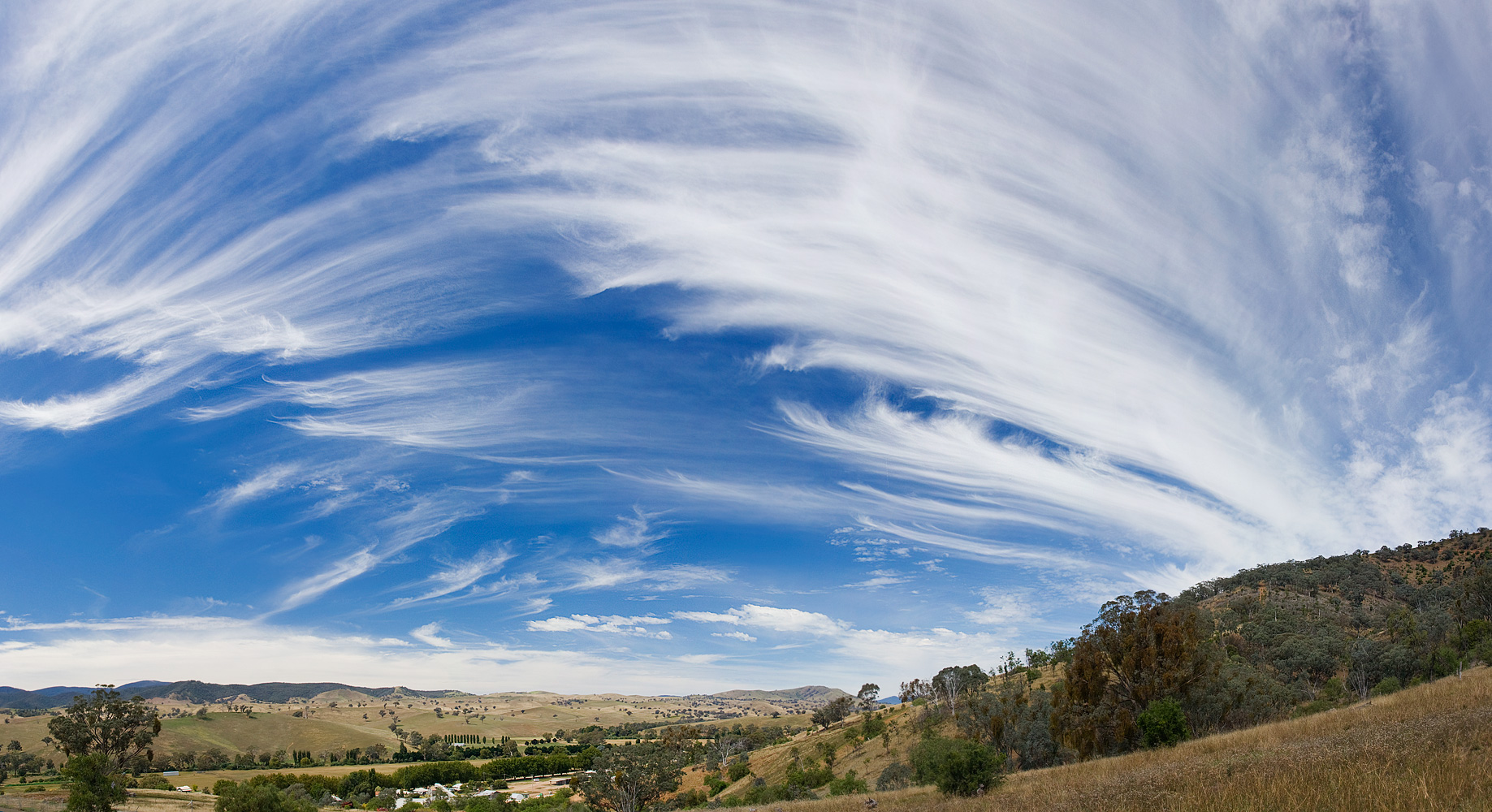

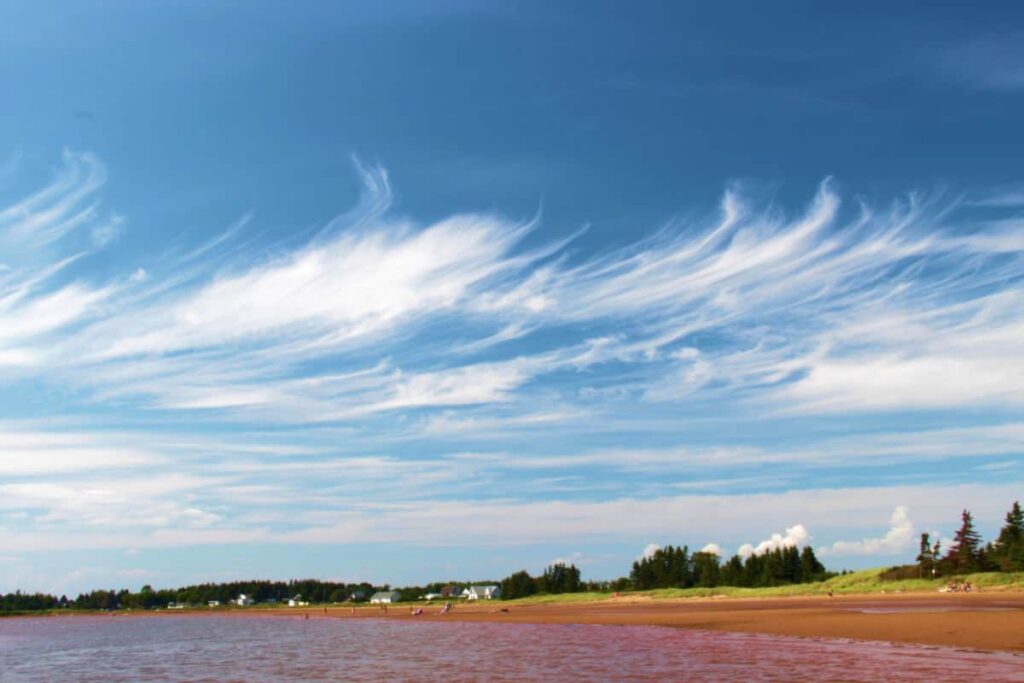
Cirrus clouds are high-altitude, thin, wispy clouds composed almost entirely of ice crystals. They often appear as streaks or filaments, sometimes looking like horse tails in the sky.
Because they are composed of ice, they are generally semi-transparent and delicate in appearance.
Characteristics of Cirrus Clouds
- Base Altitude: Cirrus clouds form at high altitudes, typically between 6,000 and 13,000 metres (20,000–43,000 feet), within the upper troposphere.
- Top Altitude: Their vertical extent is generally limited to a few hundred metres, although in some cases the clouds can stretch higher within strong convective or jet stream-influenced regions.
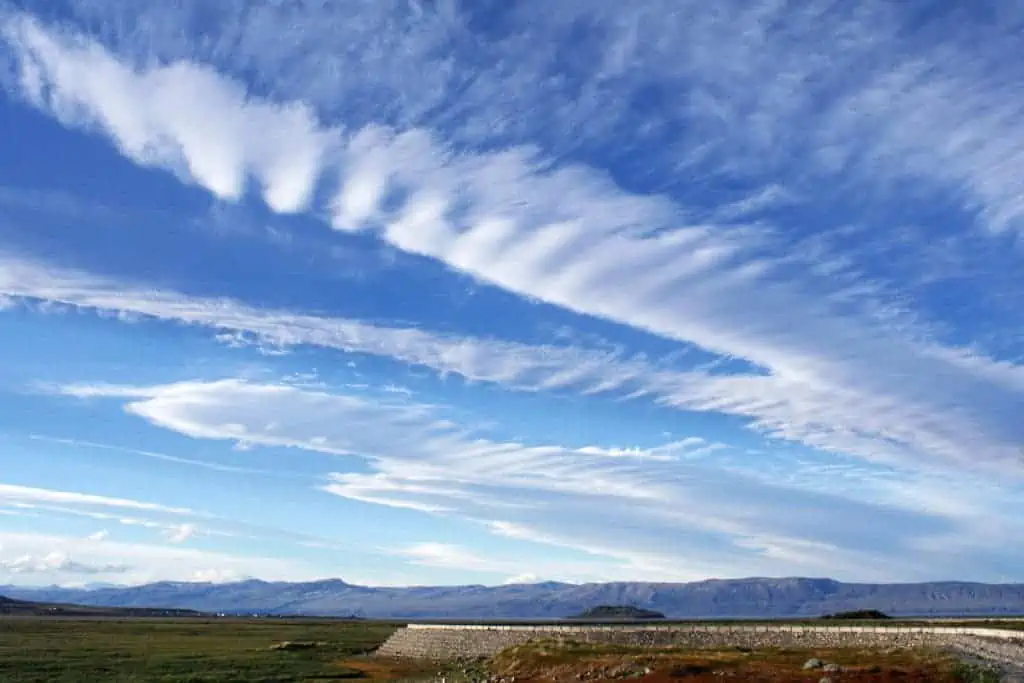
- Shape: Cirrus clouds are thin, wispy, and filamentous, often appearing as streaks, hooks, or curls across the sky. They frequently form long, linear bands aligned with upper-level winds.
- Texture: They have a delicate, feathery texture composed of ice crystals, giving them a translucent appearance.
- Colour: Cirrus clouds are usually white or very pale grey, brightened by sunlight; they rarely exhibit any significant coloration except at sunrise or sunset.
- Etymology: The word cirrus comes from Latin, meaning “curl” or “fringe”, describing the cloud’s fine, hair-like strands.
- Precipitation: Cirrus clouds do not produce surface precipitation. The ice crystals may fall as virga, evaporating or sublimating before reaching the ground due to the dry air below.
What do cirrus clouds look like?
Cirrus clouds are thin, silky, and often look like tufts or streaks of hair spread across the sky. In the daytime, they’re the brightest white clouds you’ll see.
At sunrise or sunset, they can turn vivid shades of red, orange, or pink, catching the colours of the sun.
How do they form?
Cirrus forms when dry air rises and the little bit of water vapour in it freezes straight into ice crystals. Because they’re made entirely of ice, they look so white and wispy.
Just like cirrostratus, cirrus can also form from plane contrails. Those long jet trails in the upper atmosphere can spread out and turn into cirrus, cirrostratus, or cirrocumulus.
What kind of weather do they mean?
Cirrus usually shows up before a warm front moves in. When you see them streaking across the sky, it often means the weather is going to shift; rain or snow could be on the way within a day or so.
They technically do produce precipitation, but it evaporates before reaching the ground. That creates something called virga; streaks that hang below the cloud and fade away mid-air.
Types of Cirrus clouds
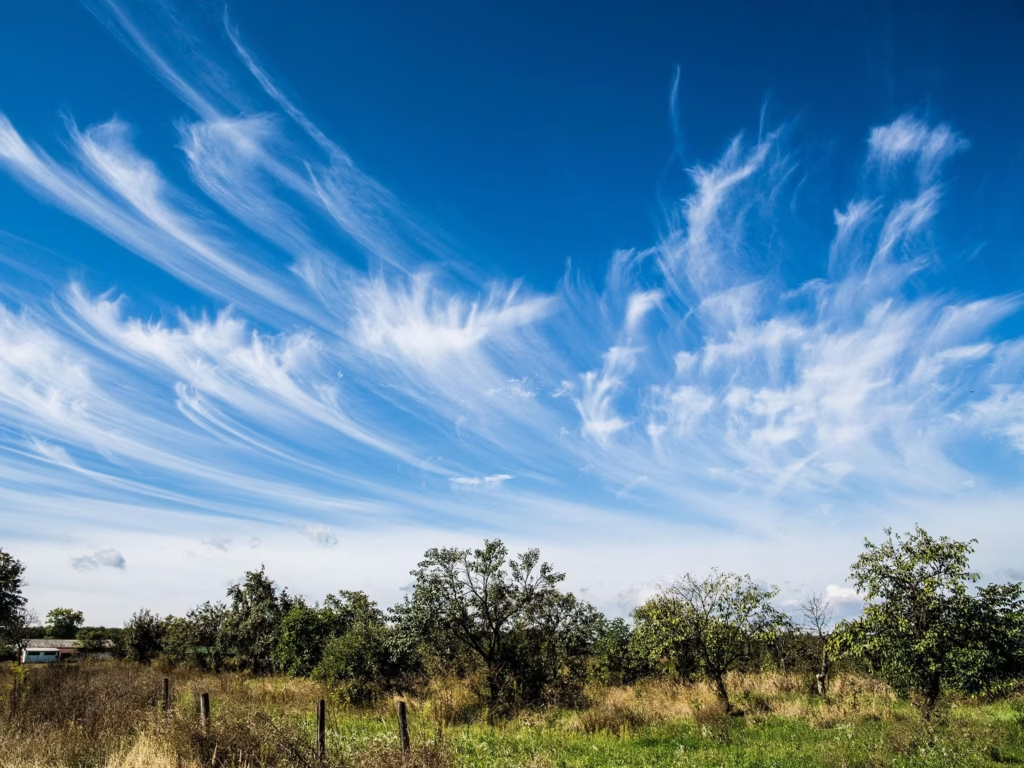
There are a few different “species” of cirrus, each with its own look:
Cirrus castellanus
Taller than they are wide, with little turret-like tops rising upward.
Cirrus fibratus
Thin, fibrous strands lined up with the wind, often forming white streaks across the sky. The most common type.
Cirrus uncinus
The classic “horse’s tail” cloud, with a little hook or flick at the end of each strand.
Cirrus spissatus
Thick and dense, often covering a lot of the sky. These usually form from passing warm fronts or the leftovers of big storm clouds.
Cirrus floccus
Ragged, cotton-wool-like patches, larger than cirrocumulus floccus.
The history of Cirrus clouds
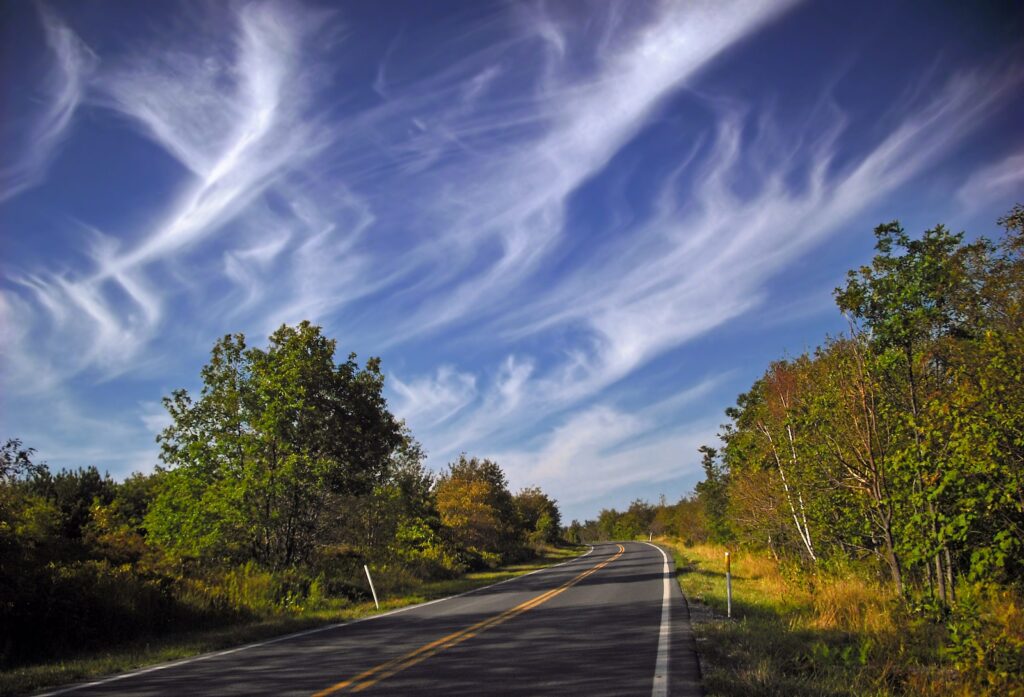
In terms of formal scientific classification, Luke Howard’s scheme of 1802 gave the name cirrus (Latin for “curl” or “fringe”) and he is credited with naming the principal cloud forms (cirrus, cumulus, stratus).
The first appearance of the term in meteorological literature is in Howard’s works in the early 19th century.
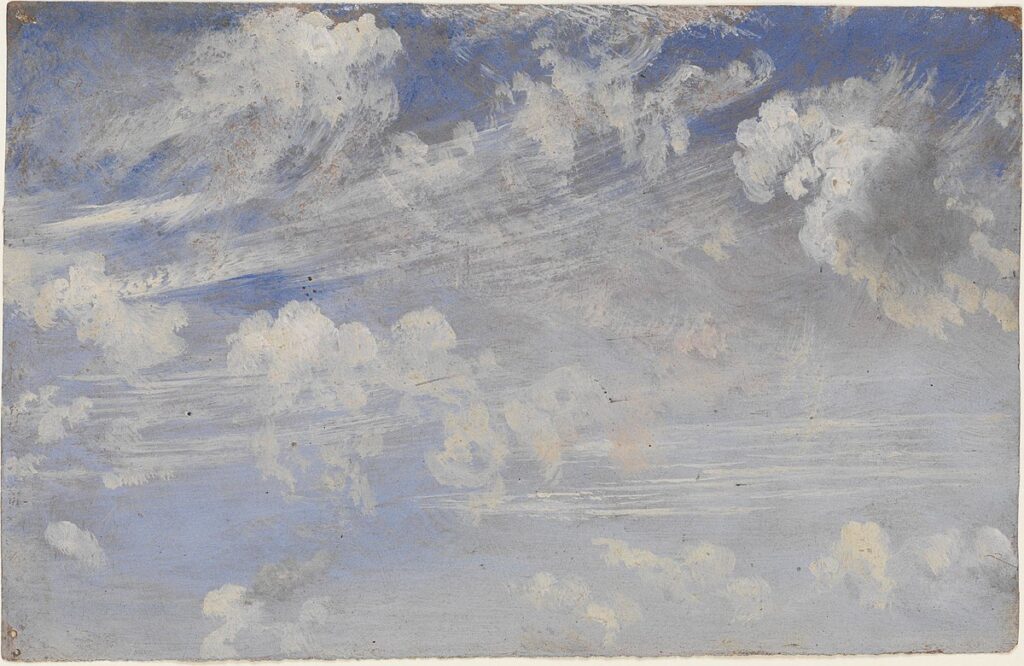
As for colloquial or artistic mention, cirrus clouds have long been painted (for instance in Romantic landscape art) and discussed in poetry.
An 1822 painting named “Study of Cirrus Clouds” by English artist John Constable hangs in the Victoria and Albert Museum in London.