
Ballast Tanks and the Chemtrail Myth: Understanding How Test Aircraft Work
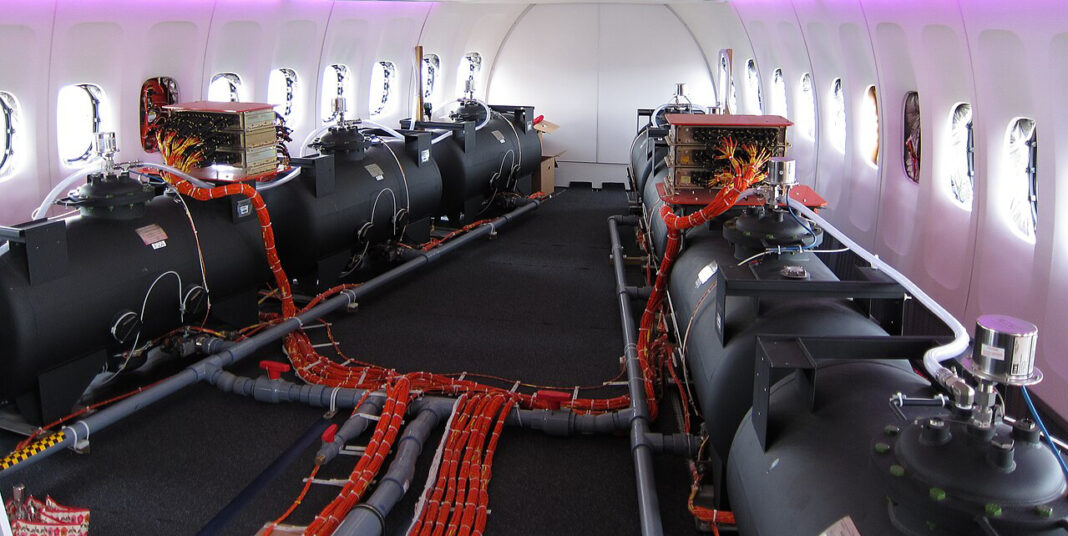
Among the most widely circulated images within chemtrail communities are photographs showing large cylindrical ballast tanks arranged inside the fuselage of an aircraft. These tanks, often labelled “ballast barrels”, are essential equipment in professional flight-test programmes.
They hold water, tubing and pumps that allow engineers to simulate shifting loads and changing aircraft weight during certification testing.
To the aviation industry, such images are entirely ordinary. To the conspiracy theorist, they are taken as supposed proof of a global spraying programme.
Lets take a look at ballast systems, the engineering logic behind them, and why their presence has nothing to do with covert atmospheric modification.
The Purpose of Ballast Systems in Aircraft Testing
A commercial aircraft undergoes extensive testing before it can carry passengers. Engineers must ensure that the aircraft performs safely and predictably under every operating condition. This includes situations where passenger distribution changes, where cargo loads shift or where fuel burns off during a long flight.
Instead of placing human subjects in potentially hazardous test flights, engineers use ballast systems to replicate weight variations in a controlled and measurable way.
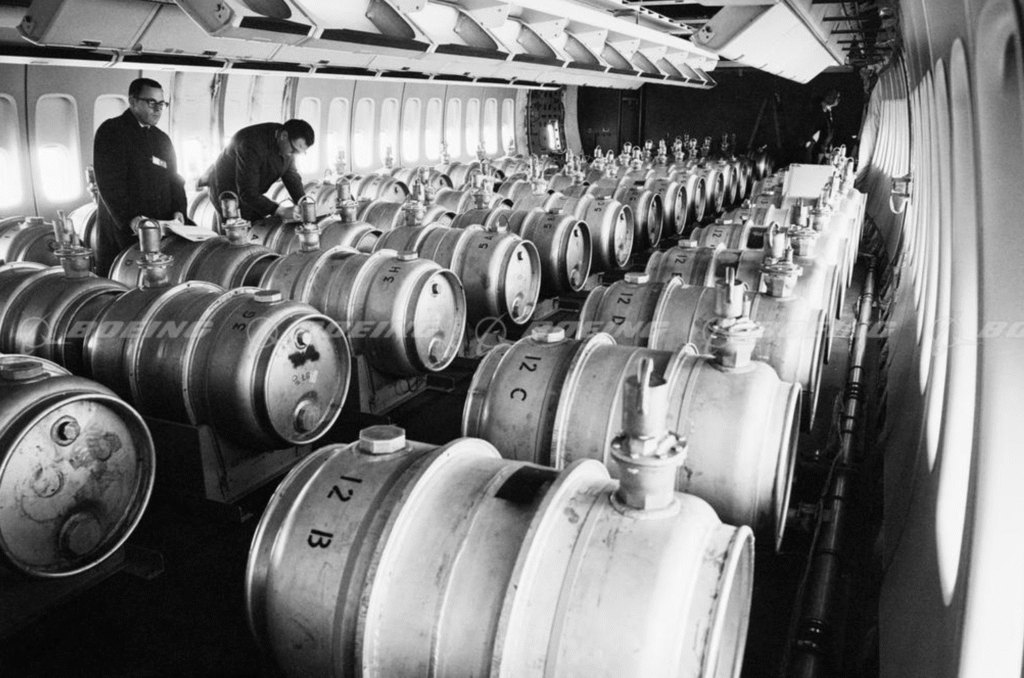
Ballast tanks are the simplest and safest means to achieve this. They typically consist of metal barrels or composite containers connected by pumps, valves and manifolds.
Engineers can move hundreds or thousands of kilograms of water from the front to the rear of the aircraft during flight. This allows them to study how the airframe behaves under different centres of gravity, an essential factor for certification.
Because water is easily available, non flammable and non toxic, and because its weight can be controlled precisely, it is the ideal test material.
Why Water Ballast Is Essential for Certification
Every major airframe manufacturer uses ballast systems, including Boeing, Airbus, Embraer and Bombardier.
The location of mass within an aircraft dramatically affects stability and handling. During normal airline operations, weight changes continually as fuel is burned, cargo is offloaded and passengers move about the cabin. Engineers must therefore validate how the aircraft responds to all realistic combinations of load and balance.
Ballast tanks allow flight-test crews to shift weight forward or aft while airborne. The test aircraft is fitted with pumps that transfer water between the tanks to change the centre of gravity. With this capability, engineers can study the aircraft’s stall behaviour, pitch response, trim requirements and fuel-burn characteristics under precisely controlled conditions. This is critical for establishing safe operating envelopes and performance charts used by pilots.
The process is governed by aviation authorities including EASA, the FAA and the ICAO. Certification cannot proceed without full documentation of how the aircraft behaves under these variable loading cases. Ballast systems are therefore integral to aviation safety and are never used for any operational purpose outside flight testing.
Why Ballast Tanks Cannot Be Spraying Equipment
The claim that ballast tanks are evidence of chemtrail activity rests upon misunderstandings of engineering and physics. Several facts illustrate why the idea is untenable.
Ballast tanks are sealed systems
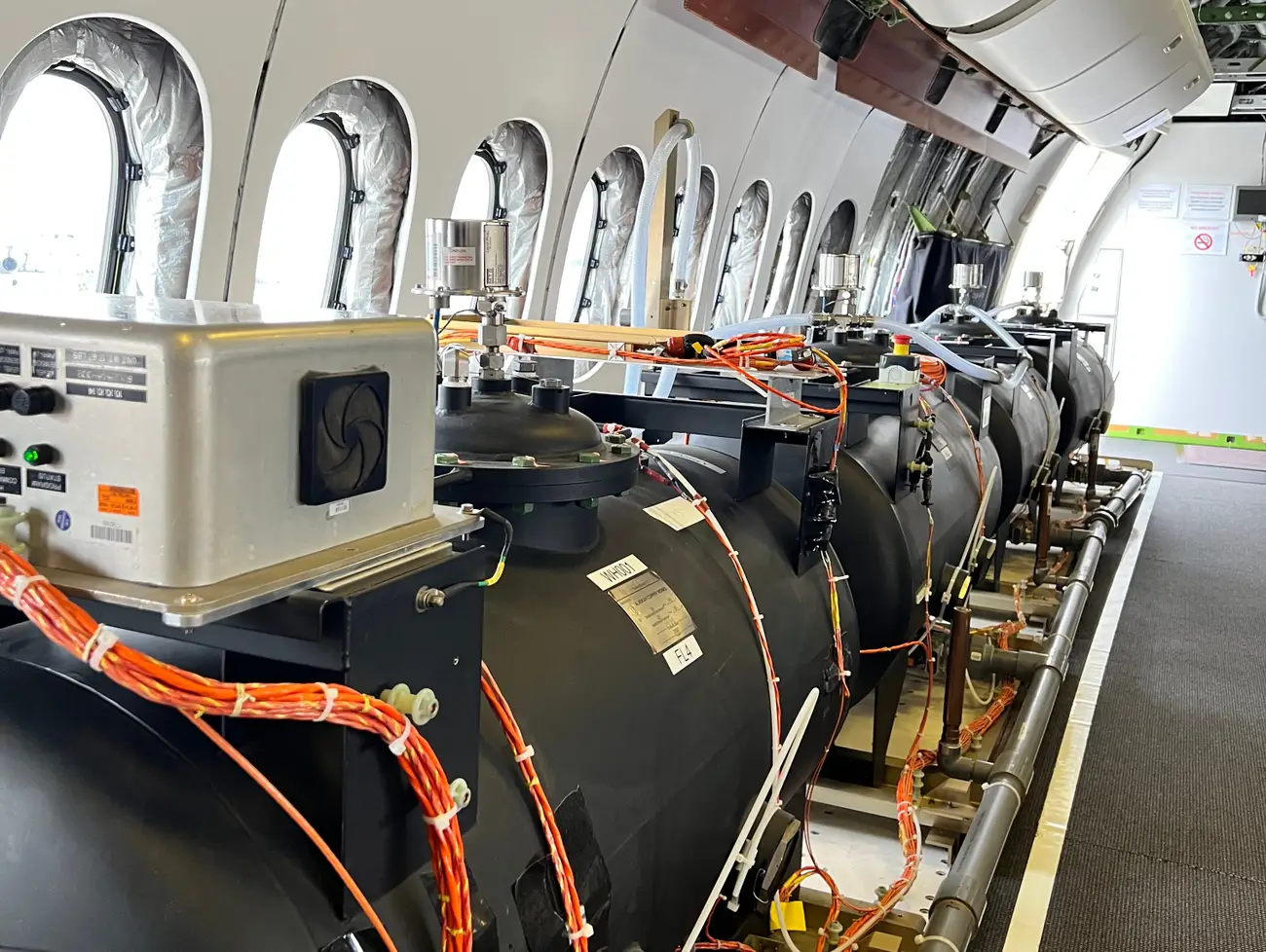
The tanks are designed to hold water securely and to withstand dynamic loads during takeoff, manoeuvres and landing. They are pressure-tested and do not connect to the exterior of the aircraft.
There are no spray nozzles
Photos circulated online never show external spray mechanisms, external plumbing or chemical dispersal systems. Flight-test aircraft do not have them. Engineers confirm that such features would be immediately visible on any disassembled fuselage or during routine maintenance.
The pumps are internal
Ballast pumps are engineered only to move water between tanks. They are not capable of atomisation or dispersal. Converting them for spraying would require an entirely new system, including pressurised lines, pumps, manifolds, metering controls and external nozzles. No such systems exist on ballast-equipped aircraft.
The water is inert
Using water ensures safety. Replacing it with hazardous materials would violate every aspect of test-flight safety protocols. Engineers and flight-test crews would not permit toxic chemicals inside the fuselage without extensive protective measures, which are absent from all ballast-tank photography.
The tanks are temporary
Once the aircraft is certified, ballast equipment is removed and the interior is fitted with seats, insulation, wiring and cabin furnishings. No airline aircraft carries ballast systems in normal operation.
How Misinterpretation Began
The earliest known examples of ballast tanks being misrepresented as chemtrail systems date back to the mid-2000s.
Photographs from Airbus and Boeing test programmes were circulated without context. Chemtrail websites claimed that the images showed “chemical dispersal tanks” even though the manufacturers had publicly described them as water ballast barrels.
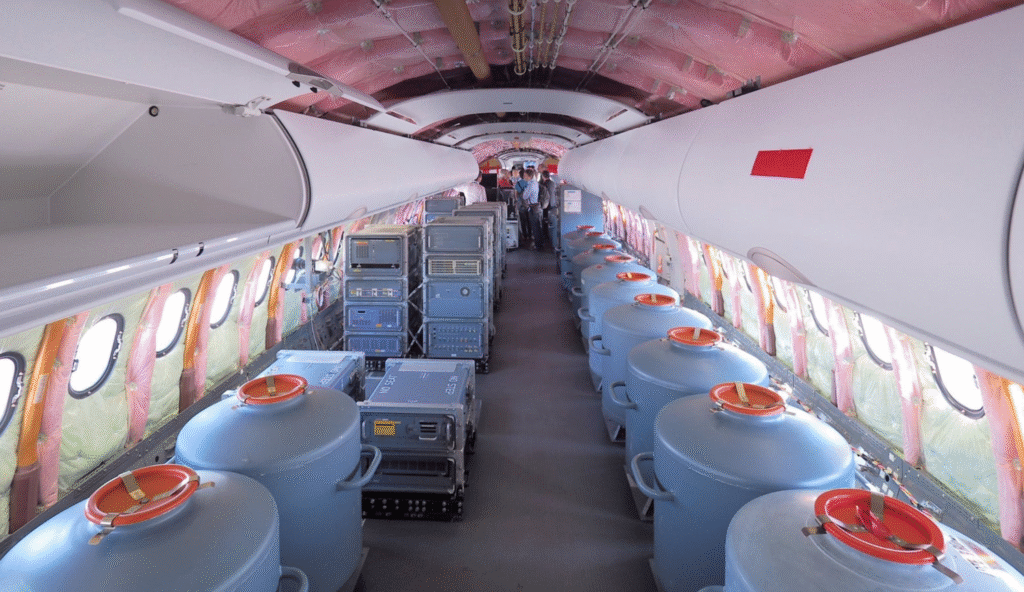
One widely shared photograph from an Airbus A380 test flight shows orange barrels connected by blue piping. Airbus explained that the system allowed engineers to shift 1.8 tonnes of water to simulate passenger movement.
The explanation was ignored by conspiracy theorists, who instead claimed that the colour coding indicated different “chemical types”. The idea spread rapidly online.
This pattern has repeated with every major new airliner release. Each time new ballast images emerge, they are repurposed as supposed evidence of secret spraying. In every case, aerospace engineers, test pilots and manufacturers have publicly corrected the record.
The Engineering Transparency Behind Test Aircraft
Every test aircraft is extensively documented. Airframe manufacturers publish details about load cases, wing flex tests, flutter trials and certification campaigns.
Aviation journalists are routinely invited on demonstration flights, and photographs of test interiors are widely available.
Regulatory oversight is strict. Onboard instrumentation, data-acquisition systems, high-fidelity sensors and test racks are present on these aircraft, and nothing is hidden. Independent aviation authorities have full access to all equipment during certification. If any aircraft carried a covert spraying system, it would be discovered immediately.
Safety protocol also requires that clear diagrams and system descriptions be produced. Engineers, technicians, regulators and pilot-instructors all handle these materials. A hidden programme would require thousands of aviation professionals to participate in a deception. This alone violates mathematical models of conspiracy sustainability, such as the Grimes calculations showing that large covert programmes fail rapidly through leakage.
Why Chemtrail Narratives Use Ballast Tanks
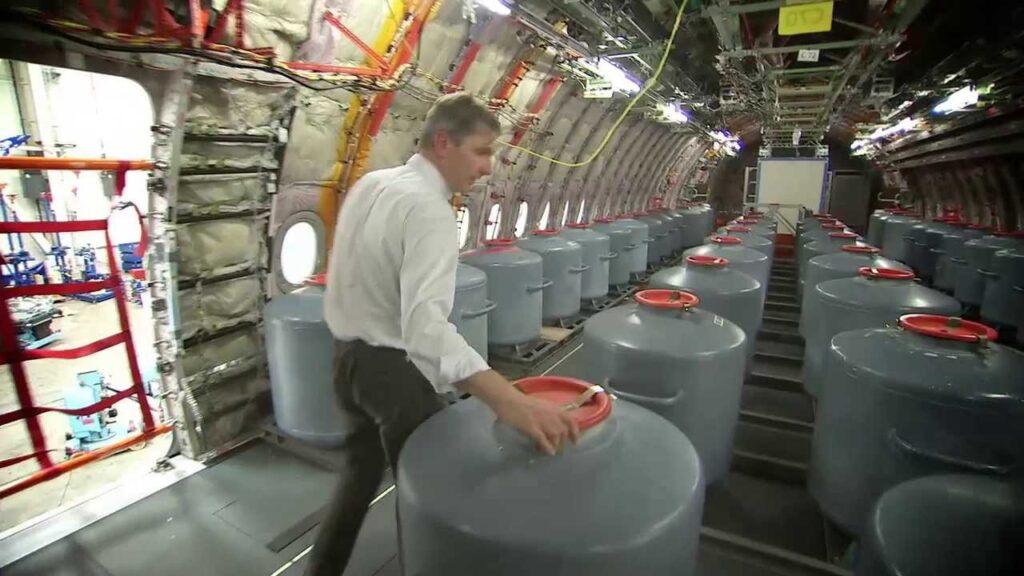
Ballast systems are visually striking. Rows of bright tanks connected by complex piping appear unusual to the layperson. Without technical context, they resemble something designed for mixing or distributing liquids. This creates fertile ground for misinterpretation.
The chemtrail narrative depends on reinterpreting ordinary aviation phenomena as sinister. For believers, ballast tanks become symbolic objects confirming a pre-existing suspicion. The photos offer what appears to them as physical equipment. This makes them more compelling than abstract speculation.
Psychological Reasons the Misinterpretation Persists
Several psychological drivers help explain why ballast-tank images maintain such strong traction in conspiracy communities.
Pattern seeking
Humans are naturally predisposed to seek patterns, especially when feeling uncertain about complex technologies. The visual similarity between tanks and industrial fluid-handling systems invites a mistaken inference.
Confirmation bias
Once a person believes that chemtrails exist, ambiguous evidence is interpreted to reinforce that belief. Any unusual aircraft interior is perceived as suspicious.
The allure of secret knowledge
Conspiracy theories often promise access to hidden truths unavailable to ordinary people. Interpreting ballast tanks as “chemtrail equipment” reinforces the idea of possessing special insight.
Emotional investment
Belief in conspiracies becomes part of personal identity for some individuals. Abandoning the idea requires emotional adjustment, which can be difficult.
Distrust of institutions
Historical events, government secrecy in other domains and general scepticism toward authority can amplify suspicion even when the technical explanation is straightforward.
The Regulatory Barriers to Any Unapproved Modifications
Every aircraft modification, even minor changes such as new seat attachments, requires regulatory approval. Adding spray tanks, external nozzles or chemical dispersal hardware would require certified engineering drawings, structural assessments, weight-and-balance analyses, safety audits and compliance submissions.
National and international regulators would evaluate these materials before approving the aircraft for flight. Dozens of engineers and inspectors would examine the system. The idea that a global spraying programme could bypass these processes contradicts how aviation regulation functions.
Why Engineers Speak Openly About Ballast Systems
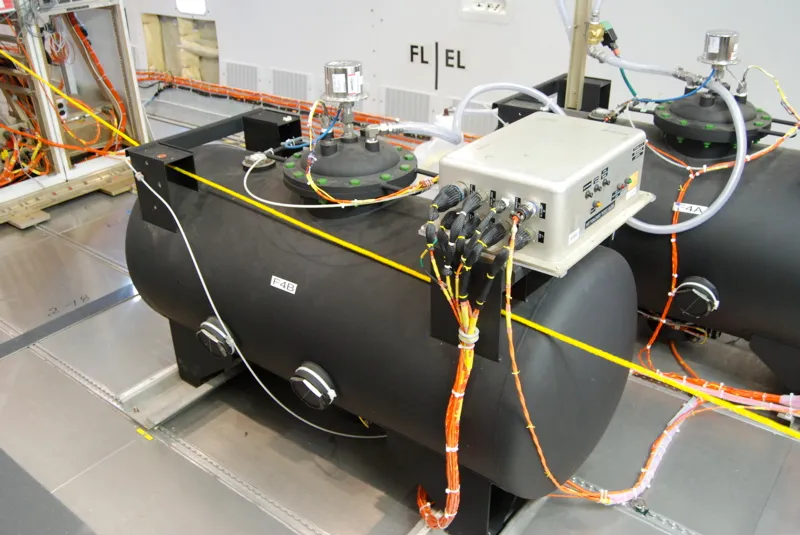
Aerospace engineers regularly participate in public outreach, technical conferences and interviews. They freely describe ballast systems because they are ordinary parts of aircraft testing.
Boeing, Airbus and other manufacturers publish images and videos showing test equipment, including ballast tanks, flutter sensors and structural monitors. Engineers have no reason to hide this information.
If these systems were connected to chemtrail activity, engineers would be required to participate in deception. There is no evidence of this, and the scale of collusion would be incompatible with professional ethics and regulatory oversight.
The Scientific Approach to Understanding Atmospheric Phenomena
A rigorous scientific perspective relies on observable evidence, reproducible mechanisms and established physical principles. Ballast tanks serve a single purpose: to allow engineers to test weight distribution and stability. They have no role in atmospheric chemistry, meteorology or climate modification.
By contrast, chemtrail explanations lack evidence, rely on misinterpreting normal atmospheric conditions and contradict well understood physics. Scientific analysis, satellite monitoring, atmospheric sampling and flight operations data show no evidence of covert spraying.
Why the Myth Continues
The persistence of the ballast-tank myth lies less in the equipment itself and more in the social environment in which the images circulate. The internet creates echo chambers that reinforce shared narratives. When images of ballast systems are removed from their technical context, they become ambiguous symbols upon which people project their anxieties about technology, government and aviation.
The myth also spreads because people seldom see the inside of a test aircraft. Without the familiarity that engineers have, the equipment appears mysterious.
Encouraging Critical Thinking and Scientific Literacy
Understanding ballast tanks provides an opportunity to discuss broader principles of scientific literacy. When technical subjects appear unfamiliar, it is useful to ask:
• What does the equipment do
• Who uses it
• Is there documentation
• Does the explanation align with established engineering practice
• Is the alternative claim plausible given physics, logistics and regulation
Applying these questions to ballast tanks makes the benign reality clear.
Ballast tanks are essential tools for aircraft certification. They allow engineers to simulate variable weights, study handling characteristics and ensure safety under all conditions. Their design, operation and purpose are well documented and entirely transparent.
Misinterpreting ballast systems as “chemtrail dispersal equipment” reveals much about how conspiracy theories form. It shows how visual ambiguity, technical unfamiliarity and psychological predisposition can transform ordinary engineering into imagined secret operations. A careful examination grounded in physics, engineering and evidence dispels the myth completely.
Understanding how ballast systems work not only debunks the chemtrail claim but also reinforces a broader truth. Modern aviation is built upon transparency, regulation and rigorous science. The photographs that conspiracy theorists hold up as proof are, in fact, evidence of the exact opposite. They demonstrate the precision, safety and openness that define contemporary aerospace engineering.