
Cirrostratus clouds are those thin, wispy layers high up in the sky that look like a hazy veil stretching across everything. They’re made of ice crystals and don’t bring rain themselves, but they’re often a clue that the weather is about to change.
- Height: 20,000–40,000 ft
- Look: Flat and spread out
- Name meaning: Cirrus = hairlike, Stratus = spread out
- Rain: None directly
What do Cirrostratus clouds look like?
Cirrostratus clouds are usually so thin that you can still see the Sun or Moon through them, and they’ll often create halos or glowing rings around the light. Sometimes, the halo is the only giveaway that these clouds are there at all.
They can cover the sky for hundreds of miles, sometimes smooth, sometimes with a fibrous, silky look. If you can still see your shadow while the Sun is shining through them, that’s a good clue you’re looking at cirrostratus and not lower-level altostratus.

How do they form?
These clouds form when air rises slowly, often ahead of a warm front. That’s why cirrostratus is a good signal that rain or snow could be on the way in the next day or so.
They can also come from plane contrails. Those streaks left behind by jets can spread out and eventually grow into cirrus, cirrostratus, or even cirrocumulus clouds.
The two main types of Cirrostratus clouds
Cirrostratus clouds don’t produce rain themselves, but they’re like a weather hint in the sky:
- Cirrostratus nebulosus
A flat, featureless veil that can be so faint you might not even notice it’s there. Often means steady rain is on its way within 24 hours. - Cirrostratus fibratus
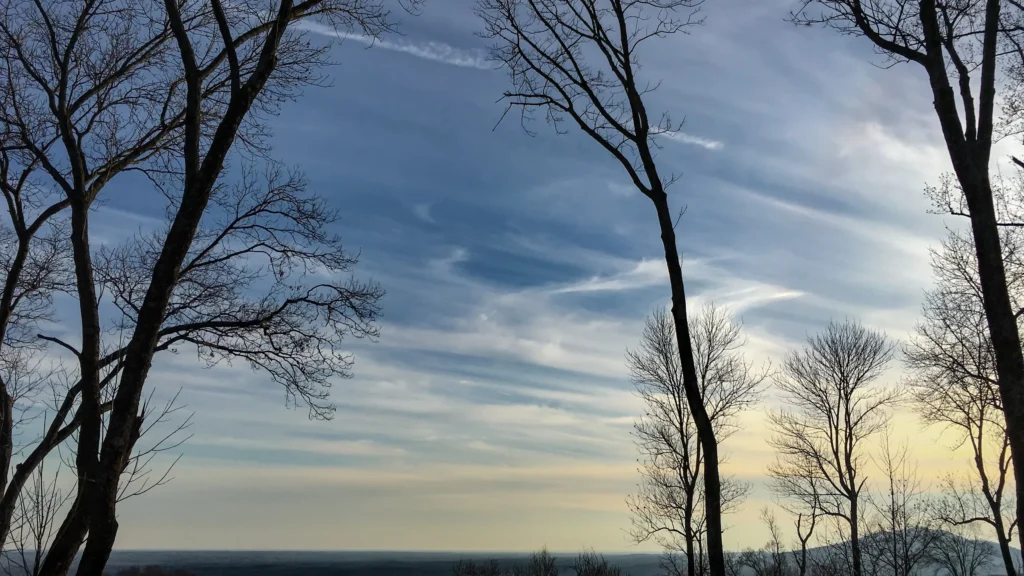
Wispy and streaky, kind of like tangled animal fur. Might show up before stratus clouds, which usually just bring drizzle.
The history of Cirrostratus clouds
The naming also traces to the Howardian tradition, expanded in later cloud atlases. The International Cloud Atlas was first published in 1896, standardising usage.
As for colloquial or artistic mention, the halo effect (a ring around the sun or moon) that these clouds cause appears in historical folk and poetic texts (e.g. “ring round the moon” folklore).