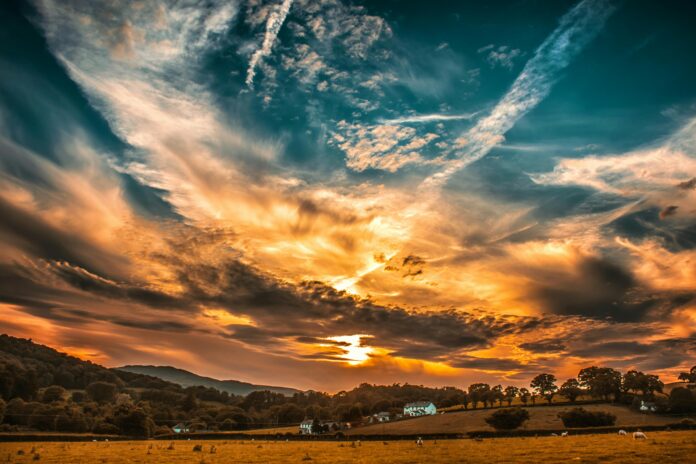
High in the atmosphere, clouds occasionally reveal a subtle, shimmering display of colours that has fascinated observers for centuries.
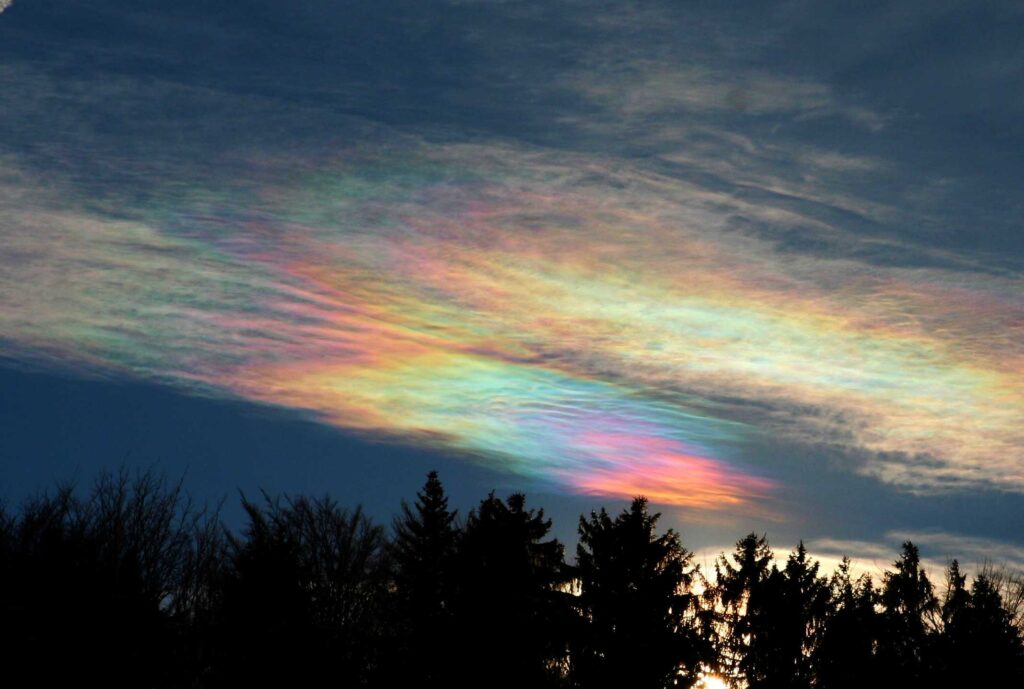
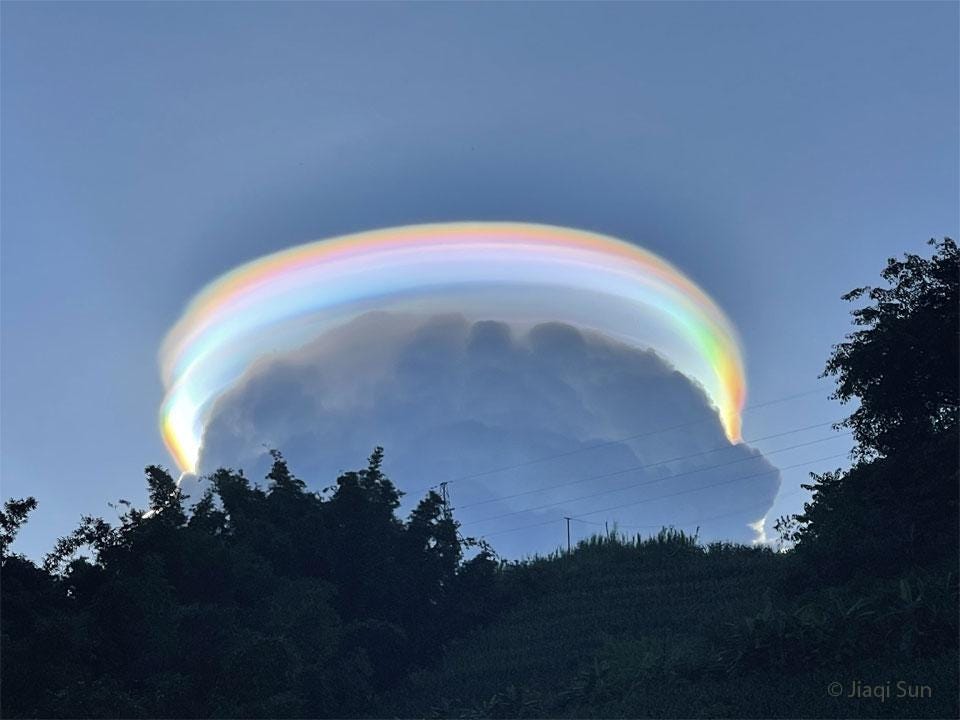
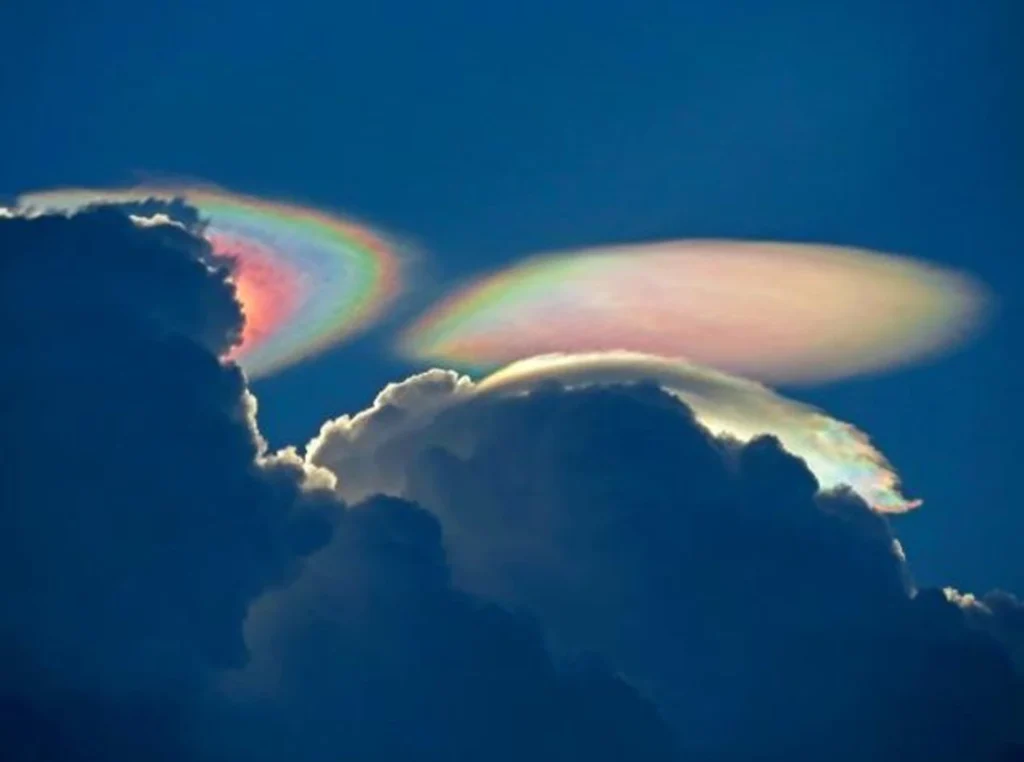
This phenomenon, known as cloud iridescence or irisation, produces pale greens, pinks, blues, and purples along the edges of clouds, often creating ephemeral patterns that appear almost painterly.
Unlike the vivid arc of a rainbow, iridescent clouds are delicate, sometimes flickering in intensity as the observer moves.
Despite their ethereal appearance, these displays are rooted in precise physical processes, revealing much about the interaction of sunlight with the microscopic structure of clouds.

While today we can explain iridescence through atmospheric optics, historically it was often attributed to mystical or poetic forces.
Observers from Renaissance painters to 19th-century meteorologists noted these shimmering clouds, intrigued by their elusive and transient beauty.
Modern scientific instruments allow us to measure and understand the diffraction and scattering responsible, yet the phenomenon remains one of the more subtle yet spectacular spectacles of the sky.
What is Cloud Iridescence?
Cloud iridescence, or irisation, occurs when sunlight interacts with extremely small water droplets or ice crystals in a cloud.
Unlike common white clouds, which scatter sunlight uniformly, iridescent clouds display interference patterns in which light waves combine constructively and destructively.
This produces the pastel or sometimes more vivid colours that observers perceive.
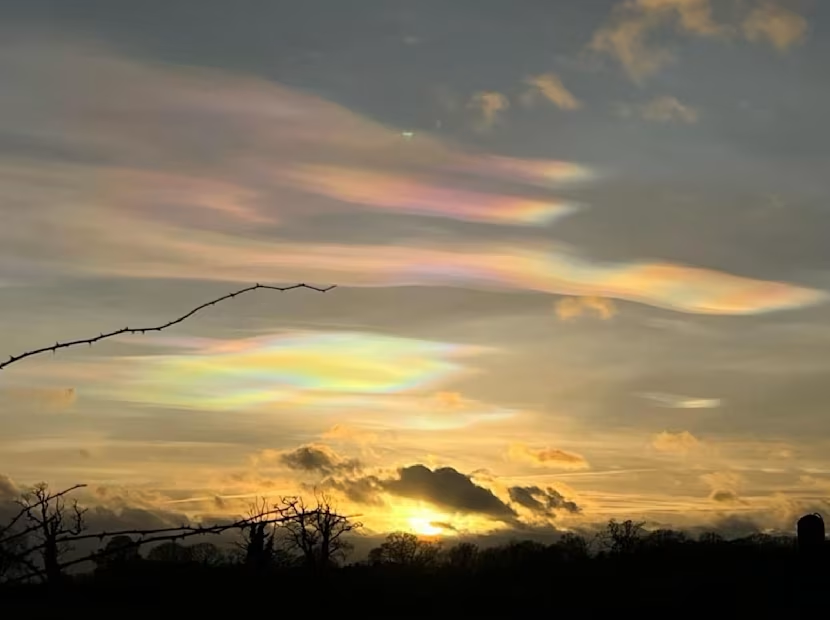
The key characteristics of iridescent clouds are:
- Location: Often along cloud edges, where the droplets or crystals are uniform in size.
- Colouration: Usually pastel, though occasionally stronger hues appear, especially during sunrise or sunset.
- Duration: Generally brief, lasting from a few seconds to several minutes, because clouds are dynamic and constantly evolving.
Iridescent clouds are sometimes mistaken for rare or artificial phenomena. In reality, they are entirely natural, forming under conditions that make their observation both frequent and fleeting.
Some Types of Iridescent Clouds
-
Cloud Iridescence
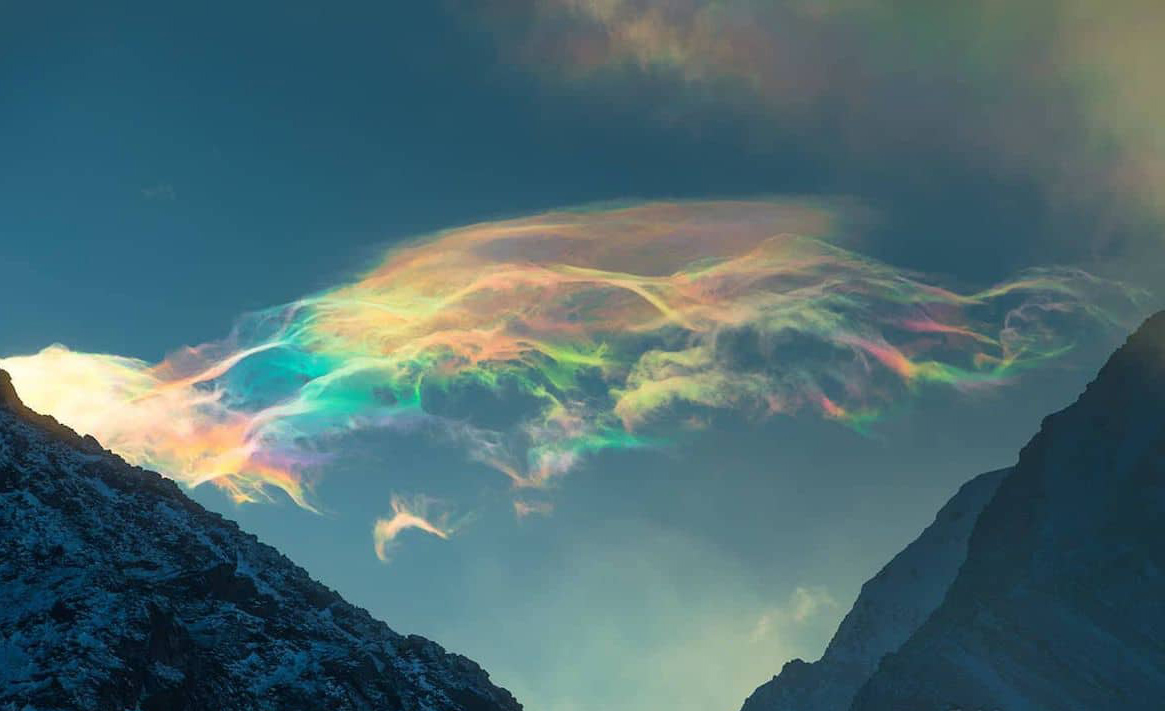
High in the atmosphere, clouds occasionally reveal a subtle, shimmering display of colours that has fascinated observers for centuries. This phenomenon, known as cloud iridescence or irisation, produces pale greens, pinks, blues, and purples along the edges of clouds, often creating ephemeral patterns that appear almost painterly.
-
Nacreous Clouds: Polar Stratospheric Iridescence

Nacreous clouds, also known as polar stratospheric clouds (PSCs), are high-altitude clouds that form in the stratosphere, typically between 15,000 and 25,000 metres above the surface. They are most commonly observed in polar regions during winter months
-
Noctilucent Clouds
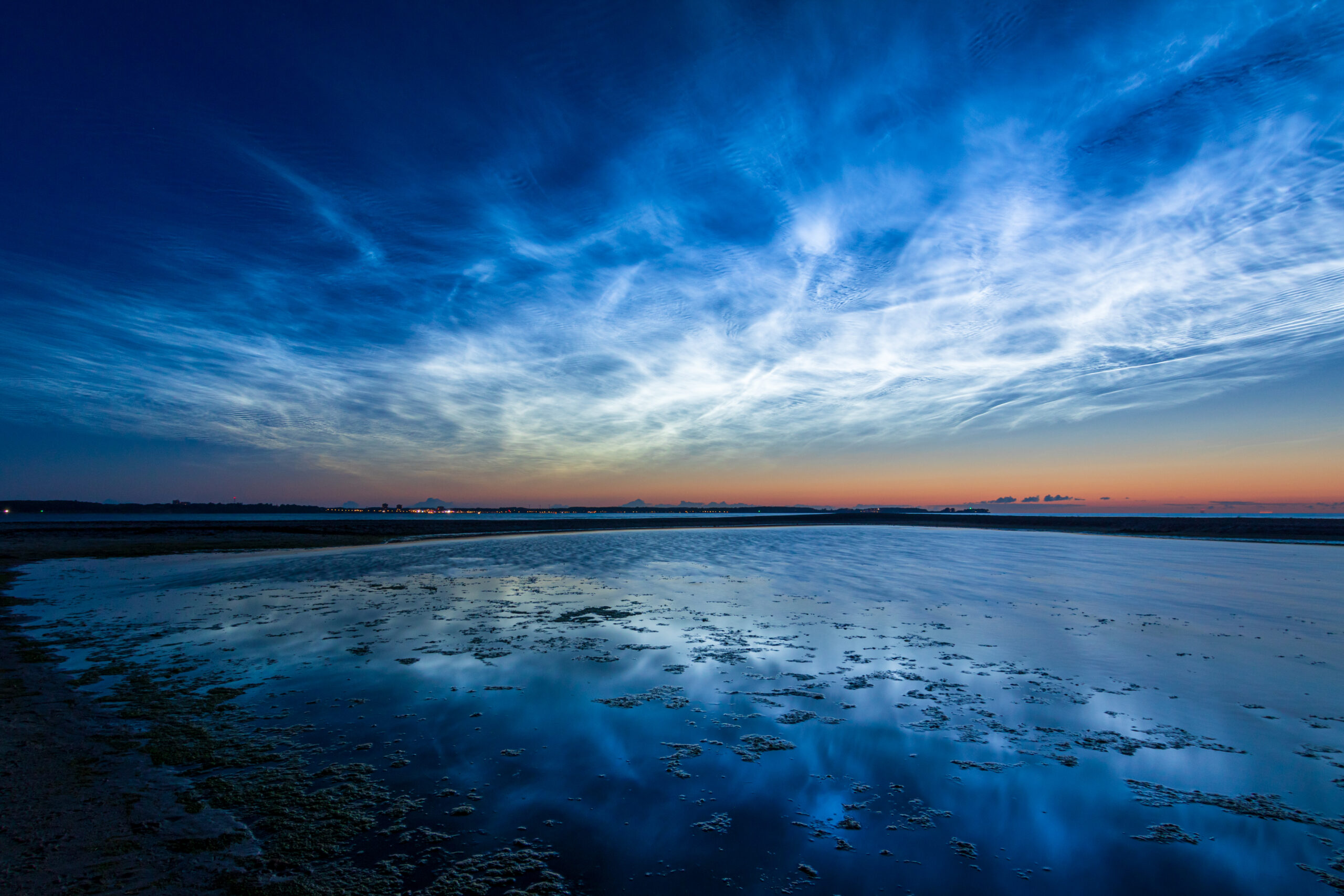
Noctilucent clouds, also called night-shining clouds, are the highest clouds in the Earth’s atmosphere, forming in the mesosphere at altitudes of approximately 76 to 85 kilometres. They are primarily composed of ice crystals.
A Brief History of Cloud Iridescence in Art and Science
Historical records indicate that cloud iridescence has long captured human imagination.
In classical literature, references to rainbow-like colours in clouds appear in Greek and Roman texts, though terminology was often vague, describing “flames of light in the sky” or “heavenly colours.”
By the Middle Ages, some illuminated manuscripts depicted clouds tinged with gold, pink, or green, suggesting awareness of optical effects, though these were often symbolic rather than scientific.
During the Renaissance, artists such as Leonardo da Vinci studied atmospheric phenomena meticulously, including optical effects in clouds.
Da Vinci described the subtle colouring of clouds near the Sun, observing that small droplets could bend light to create “rainbow-like fringes.”
Later, in the 19th century, meteorologists and physicists such as Eugène Chevreul and Lord Rayleigh began to systematically describe diffraction and interference, laying the groundwork for modern atmospheric optics.
Scientific documentation expanded rapidly with the development of photography in the late 19th and early 20th centuries.
Early aerial and ground-based photographs captured the fleeting colour patterns, confirming that these effects were natural and reproducible under specific cloud conditions.
Today, cloud iridescence is recognised as a standard atmospheric optical phenomenon, routinely studied alongside halos, coronas, and rainbows.
The Physics of Light Scattering and Diffraction
Cloud iridescence arises primarily from diffraction and interference of light, two related phenomena in wave optics.
The fundamental requirement is that the particles in the cloud, water droplets or ice crystals, are nearly uniform in size. When sunlight encounters these tiny droplets, light waves are bent slightly around them.
The bent light waves overlap, producing regions where certain wavelengths (colours) amplify each other (constructive interference) and others where they cancel out (destructive interference).
The result is a spectrum of colours, usually appearing as pastel fringes around the cloud edges.
Mathematically, the angular position and intensity of these colours depend on:
- Droplet radius (r): Smaller droplets (around 1–20 micrometres) produce more diffuse, pastel colours.
- Wavelength of light (λ): Visible light ranges from roughly 400–700 nanometres; shorter wavelengths (blue, violet) are diffracted slightly differently than longer wavelengths (red).
- Cloud thickness: Thinner clouds enhance iridescence because light is less likely to be scattered randomly.
When conditions are ideal, iridescence can appear along the entire cloud edge or as isolated patches.
Occasionally, overlapping interference from multiple layers of droplets creates more complex colour patterns, though these are often subtle and difficult to capture with the naked eye.
Meteorological Conditions and Cloud Structure
Not all clouds are capable of displaying iridescence. The phenomenon is most commonly observed in:
- Altocumulus clouds: Mid-level clouds composed of uniform water droplets.
- Cirrocumulus clouds: High-level clouds, typically composed of tiny ice crystals.
- Nimbostratus and thin stratus layers: Occasionally, if droplets are small and uniform.
Key conditions for iridescence include:
- Uniform droplet size: Large variations in droplet diameter scatter light irregularly, washing out colours.
- Thin cloud layers: Dense clouds absorb and scatter sunlight too much, reducing interference.
- Sun angle: Sun must be partially obscured or behind the cloud for edge diffraction to become visible.
- Atmospheric stability: Calm air reduces turbulence, preserving uniformity in droplet size.
Interestingly, iridescence is often observed during sunrise or sunset, when the Sun’s light passes through a longer path in the atmosphere.
The lower solar angle can enhance the intensity of diffraction fringes, making the colours appear more vivid to observers on the ground.
The Role of the Sun’s Position
The Sun’s position relative to the cloud significantly affects visibility. Iridescence is generally seen:
- Within 10–15 degrees of the Sun, often near its edge or slightly offset.
- When the Sun is partially obscured by the cloud, reducing the overwhelming brightness of direct sunlight.
Observers facing directly into the Sun rarely see iridescence, as the intense sunlight masks the subtle colour fringes. Conversely, viewing clouds from an oblique angle can reveal strong colour separation along cloud boundaries.
Researchers use angular measurements to quantify iridescence. Typical diffraction fringes are observed at angular separations of a few degrees, depending on droplet size and uniformity.
For instance, droplets of 10 micrometres in radius can produce noticeable iridescent bands spanning approximately 2–5 degrees in the observer’s visual field.
Why Cloud Iridescence is Not a Rainbow
Despite superficial similarities, cloud iridescence differs fundamentally from rainbows:
- Mechanism: Rainbows are produced by refraction, reflection, and dispersion inside larger water droplets (millimetre scale), whereas iridescence is caused by diffraction and interference in tiny, nearly uniform droplets or ice crystals (micrometre scale).
- Position: Rainbows appear opposite the Sun, whereas iridescence occurs close to the Sun, often along cloud edges.
- Colour pattern: Rainbow colours follow a strict red-to-violet order; iridescence is more pastel, variable, and sometimes patchy.
Thus, while both phenomena involve sunlight interacting with water, their underlying physics and optical geometry are entirely distinct.
Iridescent clouds are not “miniature rainbows” but a separate, naturally occurring atmospheric effect.
Variations, Observation, and Rarity
Cloud iridescence is more common than many assume but often goes unnoticed due to its faintness and transient nature. Observational surveys and citizen science projects indicate:
- Frequency: Observers at mid-latitudes see iridescence several times per year, often when thin altocumulus or cirrocumulus clouds are present.
- Colour intensity: Generally weak; vivid displays require exceptionally uniform droplets and thin cloud layers.
- Whole-cloud iridescence: Rarely, an entire cloud deck may display iridescence, producing near-rainbow coverage; these events are usually short-lived.
Photography, particularly with polarising filters, enhances detection and documentation.
Modern high-resolution satellite imagery also confirms that iridescent clouds occur globally, although the subtleties of colour are often muted in standard satellite photographs.
Natural Beauty and Atmospheric Science
Cloud iridescence demonstrates the intersection of art and science in the sky. Artists and photographers have long captured the delicate pastels, while atmospheric scientists continue to study them for insight into cloud microphysics.
Analysing iridescence allows researchers to estimate droplet sizes, assess cloud uniformity, and understand scattering processes that influence climate models.
Moreover, iridescence is entirely natural, requiring no artificial input. Unlike contrails from aircraft, which are human-made and can persist under certain conditions, iridescent clouds form spontaneously when sunlight meets the right combination of droplet size, cloud thickness, and atmospheric stability.
Conclusion
Cloud iridescence is a subtle yet scientifically rich phenomenon that bridges optical physics, meteorology, and human appreciation for natural beauty.
Observed for centuries in literature and art, it continues to inspire wonder, providing a visual reminder that even ephemeral, fleeting phenomena have precise physical explanations.
By combining history, physics, and observation, we can appreciate that iridescent clouds are not anomalies, nor are they artificial.
They are a natural demonstration of how sunlight interacts with water in the atmosphere, producing delicate, transient colours that enrich our understanding of both clouds and light itself.
Iridescence is a quiet spectacle, often overlooked, yet revealing the sophistication of the natural world.
For scientists, artists, and cloud lovers alike, it remains a compelling intersection of beauty and knowledge, one that encourages closer attention to the ever-changing canvas above.