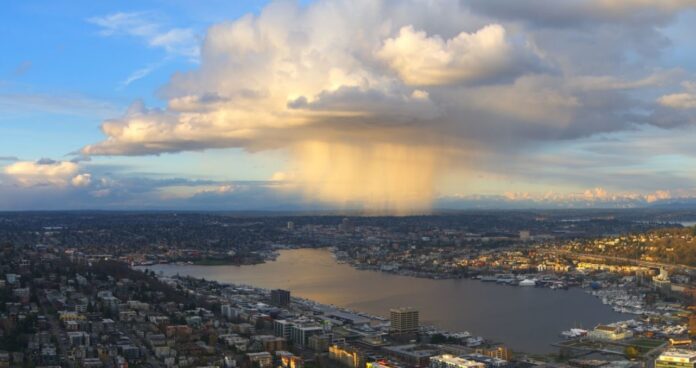
Cirrus Homogenitus Clouds (Contrails)

Overview of Cirrus Homogenitus Clouds (Contrails)

Cirrus homogenitus, more commonly known as contrails, are artificial ice clouds formed by aircraft exhaust in the upper troposphere and lower stratosphere.

These streaks of vapour trail behind jet engines and resemble thin, fibrous cirrus clouds.

Though human-made, they are classified by the World Meteorological Organization (WMO) within the cirrus genus due to their composition and altitude.

Details

Height: Typically between 26,000 and 40,000 feet (8,000–12,000 metres), where temperatures are below −40°C.
Look: Thin, linear streaks that can remain narrow or spread into cirrus-like sheets.
Name meaning: Homogenitus is Latin for “man-made origin.”
Rain: None. Composed of ice crystals too small and dispersed to precipitate.
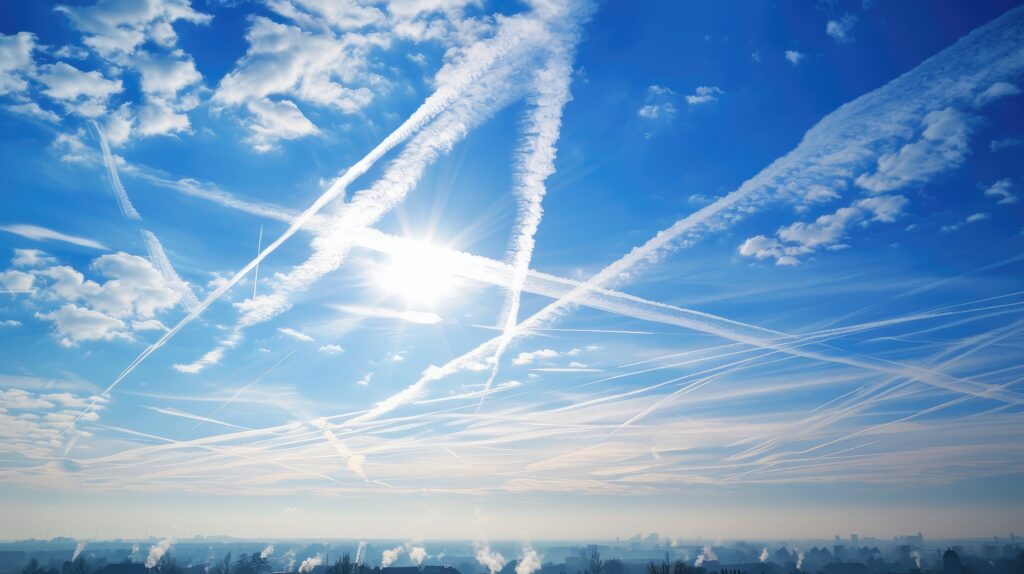
Meteorological and climate indications contrails vs pollution

What Do Cirrus Homogenitus Clouds (Contrails) Look Like

Contrails appear as pencil-thin white lines following aircraft flight paths. Under stable atmospheric conditions, they fade quickly, sometimes within seconds.

When humidity is high, they persist and spread, merging into cirrostratus-type veils.

Their visual texture varies with wind shear and temperature gradients: some remain as sharp, filamented strands while others diffuse into broad, milky layers.

A History of Cirrus Homogenitus Clouds (Contrails)

The earliest reports of persistent contrails came during World War II, when high-altitude bombers produced visible trails that occasionally lingered and spread.

Meteorologists at the time noted that these formations resembled natural cirrus and could alter sky transparency.

The term contrail, a contraction of condensation trail, entered English aviation literature in the 1940s.

In 2017, the WMO formally standardised the name cirrus homogenitus in its updated International Cloud Atlas to distinguish anthropogenic cirrus from natural types.
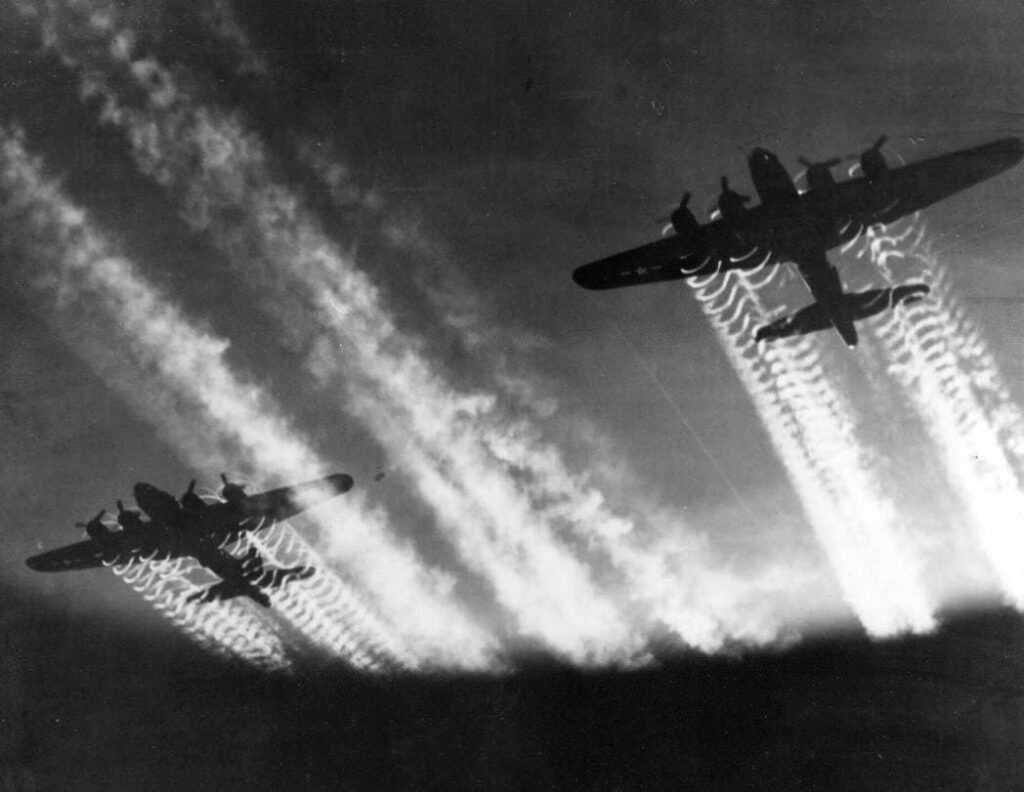
Contrails from WW2
Contrails from WW2

Further Information

Contrails form when hot, moist exhaust gases mix with the extremely cold ambient air. Water vapour condenses on soot and sulphate aerosols, rapidly freezing into ice crystals.

Contrail persistence depends on the relative humidity with respect to ice; if supersaturation exists, the crystals endure and spread.

Studies such as Schumann (2012, Atmospheric Chemistry and Physics) show that persistent contrails can slightly affect regional radiation balance by reflecting sunlight and trapping infrared radiation.

Over time, overlapping contrails may evolve into contrail cirrus, subtly influencing climate on a local scale.

Tony S.
Tony is based in Australia and focuses on how false conspiracy theories spread and harm society, with an emphasis on clear facts and critical thinking.

Related

An Overview of Geoengineering Conspiracy Theories

Geoengineering conspiracy theories range from chemtrail claims to ideas about weather weapons, artificial suns and nanoparticle grids. Although diverse, each misunderstands physics, atmospheric science and energy limits. This article examines the origins and scientific impossibilities behind these narratives to provide a clear evidence based perspective.

Arcus Clouds

Arcus clouds are dramatic, low-level horizontal formations that appear along the leading edges of thunderstorms or gust fronts. They occur in two principal forms: shelf clouds and roll clouds.

Cirrostratus Clouds

Cirrostratus are high, veil-like ice-crystal clouds that spread diffusely and often produce halos around the sun or moon. They form under gentle ascent near warm fronts. Their name solidified in standard cloud atlases from the late 19th century, and they feature in halo folklore.

Fractus Clouds

Fractus clouds are small, irregular fragments that break away from larger cloud masses. They often form beneath precipitating clouds or along gust fronts, moving rapidly and constantly changing shape.

Pileus Clouds

Pileus clouds, often called cap clouds, form as thin, smooth layers over the tops of rapidly growing cumulus or cumulonimbus towers. They signify vigorous updrafts and rapid vertical development in convective systems.

Cumulonimbus Clouds

Cumulonimbus are massive, convective, rain-producing clouds with substantial vertical extent and storm potential. They form in unstable, moist conditions and were formalised in cloud atlases; they appear frequently in art and storm literature.

Featured

Counting the Cost of a Nationwide Chemtrail Programme

What would it actually take to run a nationwide US “chemtrail” operation? Our analysis reveals the staggering logistics — 165 aircraft, thousands of workers, and billions of dollars each year. The numbers tell their own story.

Why Contrails Can Linger and Spread

Contrails can linger and spread because they are essentially man-made cirrus clouds formed from ice crystals at high altitude. A cloud is made of water vapour, just like a contrail. Therefore if a cloud can linger, so can a contrail. When an aircraft’s hot exhaust mixes with cold, humid air, the resulting condensation freezes, creating thin white trails.

Cloud Seeding: You can’t Just Make Rain

It is impossible to manufacture rain, which depends on water vapour in the atmosphere. This is supplied by heat and evaporation from the Earth’s surface. Only when moist air cools and condenses into clouds is there potential for rain. Techniques such as cloud seeding cannot create this water; they can only encourage raindrops to form in clouds that are already primed to produce rain.

Why Humans Cannot Engineer Cyclones

Cyclones, hurricanes and typhoons are among the most powerful natural forces on Earth. Each one releases more energy in a few days than humanity consumes in years. Yet online theories claim that human technology, such as HAARP or directed electromagnetic fields (EMF), could somehow create or steer these vast systems.

The Logistics of Secrecy: The Impossible Scale of a Chemtrail Programme

This article examines the chemtrail conspiracy through physics, engineering, and economics. It shows that a nationwide spraying programme would require hundreds of aircraft, thousands of staff, and billions in funding—leaving clear evidence. The science of contrails fully explains the phenomenon without invoking any secret aerosol operation.

The chemtrail conspiracy would collapse within a few years

Physicist David Grimes’s 2016 mathematical model shows that large conspiracies such as Chemtrails inevitably unravel through leaks. His analysis demonstrates that a secret global spraying programme involving thousands of people over decades is statistically implausible.

Popular Categories

Previous article
Next article