Pileus Clouds

Overview of Pileus Clouds

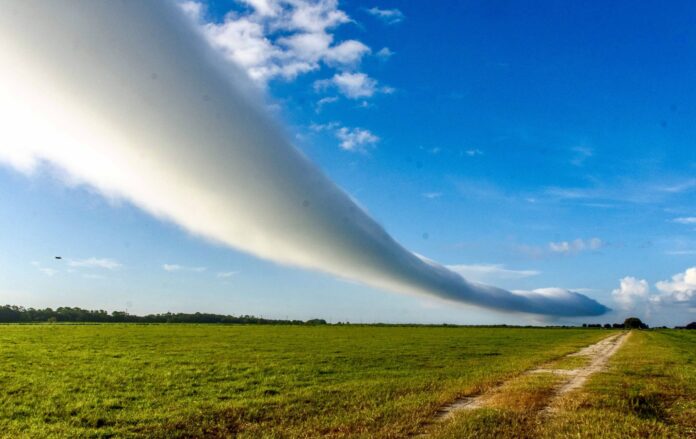
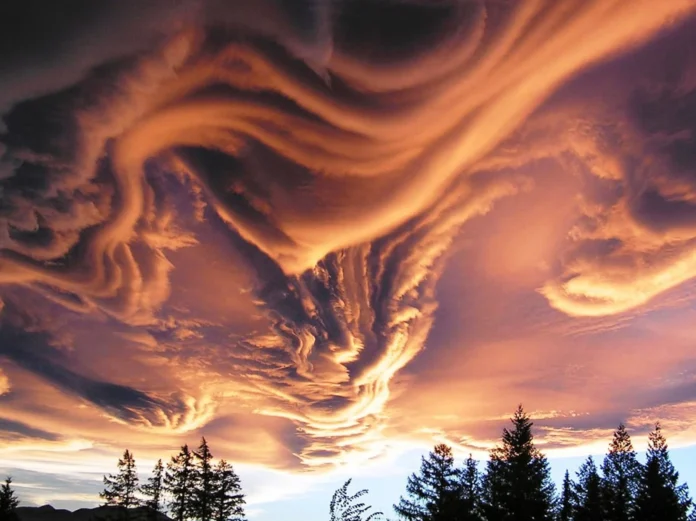
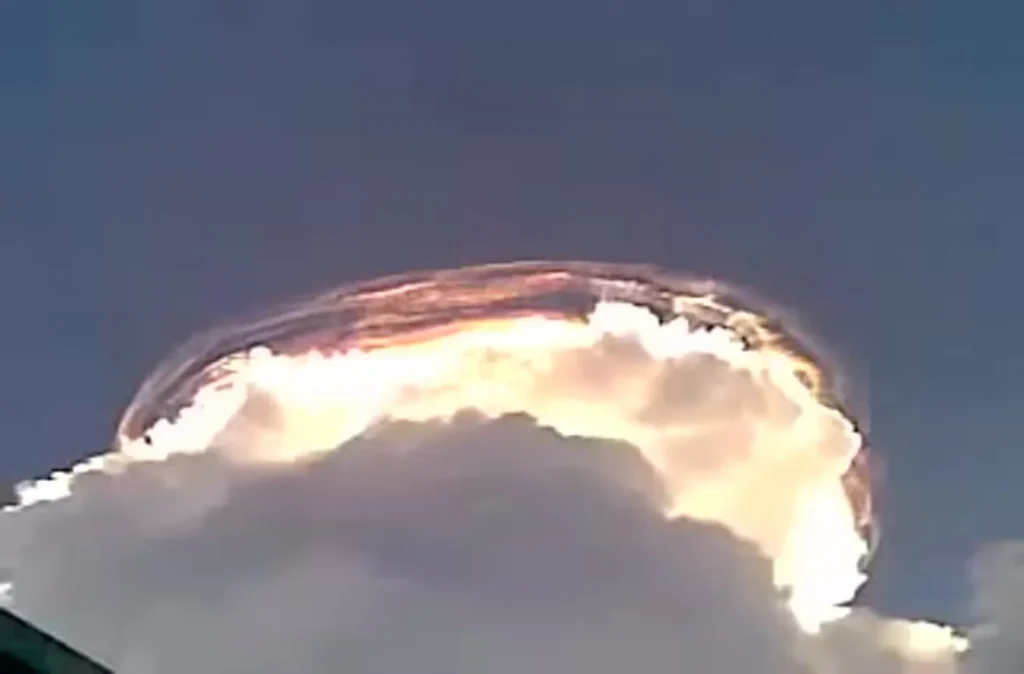
Pileus clouds, often called cap clouds, form as thin, smooth layers over the tops of rapidly growing cumulus or cumulonimbus towers. They signify vigorous updrafts and rapid vertical development in convective systems.
Pileus Clouds

Details

Height: Generally 20,000–40,000 feet (6,000–12,000 metres) for cumulonimbus-associated types, lower for cumulus.
Look: Smooth, silky cap or veil draped over cloud tops.
Name meaning: From Latin pileus, meaning “cap” or “skullcap.”
Rain: None directly; may precede heavy showers from parent cumulonimbus.

What Do Pileus Clouds Look Like

Pileus clouds resemble translucent domes resting atop the cauliflower structure of cumulus towers. As the underlying cloud rises, the pileus may be engulfed or displaced upward.

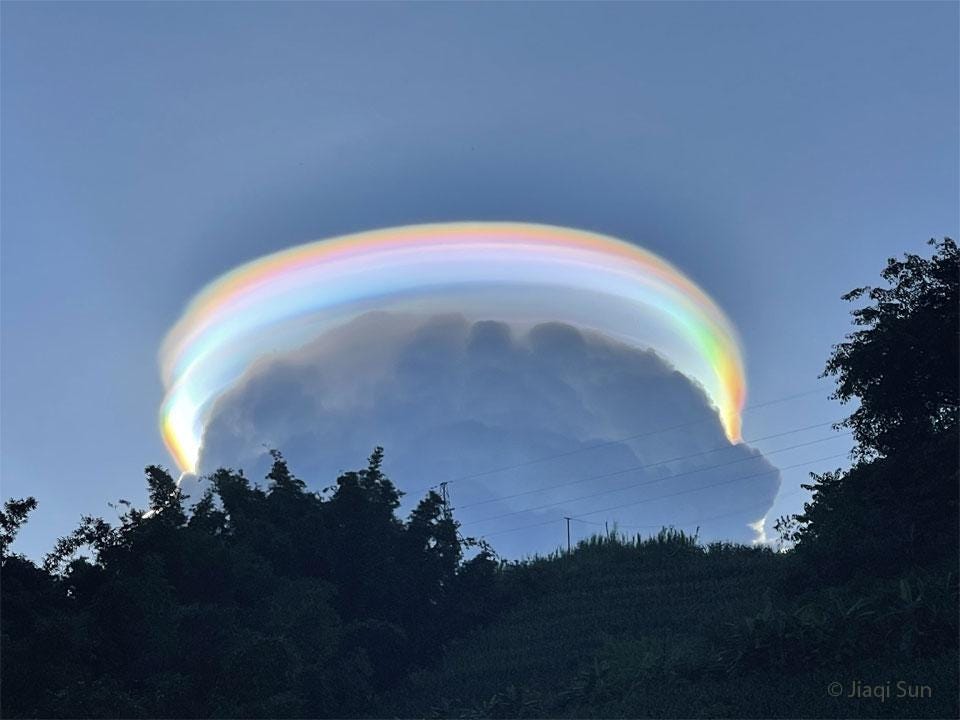
When illuminated by the sun, pileus clouds sometimes display iridescence, with pastel greens, pinks, and violets caused by diffraction through small water droplets.
A History of Pileus Clouds

Luke Howard’s classification in 1803 did not mention pileus explicitly, but later observers like Ralph Abercromby and Hugo Hildebrandsson included them in their cloud atlases of the late 19th century.

Pileus features became a subject of meteorological photography during the early 20th century as cameras captured the fleeting structures above growing thunderstorms.

Further Information

Pileus formation occurs when moist air is lifted over an updraft dome, reaching saturation and forming a condensation layer.

Radiosonde data show that pileus clouds often mark levels of strong stability or humidity.

Their presence indicates that the convective plume is rising rapidly through a moist layer, often preceding the onset of severe convection.

Observers regard pileus as transient but valuable indicators of storm intensification.

Tony S.
Tony is based in Australia and focuses on how false conspiracy theories spread and harm society, with an emphasis on clear facts and critical thinking.

Related

Aerodynamic Wake Contrails, and Why They are Mistaken for Chemtrails

Aerodynamic wake contrails occur when air cools and condenses over aircraft wings, forming brief clouds of ice crystals. Often mistaken for “chemtrails,” these natural phenomena reveal how physics and perception intertwine, as psychological biases can turn ordinary aerodynamic effects into supposed evidence of deliberate atmospheric spraying.

British ARIA SRM Experiments and why Sun Dimming is not on the Agenda

The UK government, via its Advanced Research & Invention Agency (Aria), has launched a research programme worth approximately £56.8 million aimed at small-scale experiments in solar radiation management (SRM). These are explicitly not deployment: the studies are in experimental and modelling phases, with stringent oversight, assessments, and public/community consultations required before any outdoor trial moves forward.

Cumulonimbus Clouds

Cumulonimbus are massive, convective, rain-producing clouds with substantial vertical extent and storm potential. They form in unstable, moist conditions and were formalised in cloud atlases; they appear frequently in art and storm literature.

IceCube: Antarctica’s Earthquake Machine?

IceCube (often stylized “IceCube Neutrino Observatory”) is a scientific research observatory located at the South Pole (Amundsen–Scott Station), Antarctica. Its purpose is to detect high-energy neutrinos originating from outer space, using a cubic-kilometer volume of Antarctic ice as its detection medium.

Why Contrails Can Linger and Spread

Contrails can linger and spread because they are essentially man-made cirrus clouds formed from ice crystals at high altitude. A cloud is made of water vapour, just like a contrail. Therefore if a cloud can linger, so can a contrail. When an aircraft’s hot exhaust mixes with cold, humid air, the resulting condensation freezes, creating thin white trails.

An Overview of Clouds

Clouds are more than just shapes in the sky — they’re important clues about what’s happening in the atmosphere. Scientists classify them into ten main types, grouped by the altitude where they form. Each type has its own appearance and often hints at the kind of weather we can expect.

Featured

Counting the Cost of a Nationwide Chemtrail Programme

What would it actually take to run a nationwide US “chemtrail” operation? Our analysis reveals the staggering logistics — 165 aircraft, thousands of workers, and billions of dollars each year. The numbers tell their own story.

Why Contrails Can Linger and Spread

Contrails can linger and spread because they are essentially man-made cirrus clouds formed from ice crystals at high altitude. A cloud is made of water vapour, just like a contrail. Therefore if a cloud can linger, so can a contrail. When an aircraft’s hot exhaust mixes with cold, humid air, the resulting condensation freezes, creating thin white trails.

The Logistics of Secrecy: The Impossible Scale of a Chemtrail Programme

This article examines the chemtrail conspiracy through physics, engineering, and economics. It shows that a nationwide spraying programme would require hundreds of aircraft, thousands of staff, and billions in funding—leaving clear evidence. The science of contrails fully explains the phenomenon without invoking any secret aerosol operation.

The chemtrail conspiracy would collapse within a few years

Physicist David Grimes’s 2016 mathematical model shows that large conspiracies such as Chemtrails inevitably unravel through leaks. His analysis demonstrates that a secret global spraying programme involving thousands of people over decades is statistically implausible.

Cloud Seeding: You can’t Just Make Rain

It is impossible to manufacture rain, which depends on water vapour in the atmosphere. This is supplied by heat and evaporation from the Earth’s surface. Only when moist air cools and condenses into clouds is there potential for rain. Techniques such as cloud seeding cannot create this water; they can only encourage raindrops to form in clouds that are already primed to produce rain.

Cloud Seeding is Not Chemtrails

Cloud seeding and so-called “chemtrails” are fundamentally different, though often confused in conspiracy circles. Cloud seeding is a small-scale, scientifically documented technique in which aircraft introduce minute amounts of silver iodide into existing clouds to encourage rainfall; it does not involve spraying chemicals into clear skies, nor does it leave visible white streaks. Chemtrails.

Popular Categories

Previous article
Next article