

Geoengineering has become one of the most frequently misunderstood areas of modern environmental science.
Although discussions of future climate interventions appear in academic literature, and although cloud seeding exists as a limited weather modification technique, these realities bear no resemblance to the vast web of conspiracy theories circulating online.
Misunderstanding Environmental Science
Over the past twenty years, the idea that governments or corporations are secretly altering the atmosphere or manipulating the climate has grown into a sprawling set of interconnected narratives.
These claims often draw selectively from legitimate scientific concepts, then extend them into stories that cannot be reconciled with physics, meteorology, or technological capability.
Understanding why these theories persist requires examining both the scientific impossibility of the claims and the sociological patterns that underlie them.
Many originate from misinterpretations of contrails, misunderstandings of atmospheric optics, confusion about naturally occurring phenomena, and misreadings of research proposals.
Others arise from mistrust of authorities, fear of climate change, and anxiety about rapid environmental shifts. What follows is a structured examination of the major geoengineering conspiracy theories.
The goal is to present a clear, evidence based account of each claim, explain its origins, and highlight the scientific constraints that make such theories untenable.
Chemtrail Beliefs and Their Variants

The best known geoengineering conspiracy is the chemtrail theory. This holds that the white trails left by aircraft are not ordinary condensation trails but are chemical or biological agents released intentionally.
While contrails are a well understood atmospheric phenomenon, chemtrail narratives reinterpret them as evidence of covert programmes.
Weather control via aircraft emissions
One common version argues that aircraft spray reflective materials to modify the weather. Proponents claim chemicals are dispersed to create droughts, induce rainfall, or weaken storms.
These theories frequently misunderstand atmospheric dynamics. Weather systems are not susceptible to localised aerosol releases from commercial aircraft. The amount of material required to influence large scale weather would be enormous.
It would require a fleet of tankers comparable to a major air force, along with aviation infrastructure at a global scale. Aviation engineers can readily confirm that commercial aircraft do not contain hidden tanks, plumbing, or spray systems.
The internal structure of airliners is densely packed with fuel lines, hydraulic systems, electrical wiring, insulation, avionics, and structural components. There is no spare space for secret chemical delivery equipment.
Population or fertility control
Another group of theories claims that aircraft emissions contain substances intended to reduce fertility, weaken immune systems, or cause long term illness.
These beliefs often cite increases in chronic disease, overlooking demographic changes, improved diagnostics, and lifestyle factors. Nothing in aviation fuel chemistry allows for the controlled release of fertility altering agents.
Jet fuel exhaust is dominated by carbon dioxide, water vapour, nitrogen oxides, carbon monoxide, sulphur dioxide, and small amounts of unburnt hydrocarbons. These emissions are documented, regulated, and monitored.
Mind control via nanoparticles
Some conspiracy theorists assert that nanoparticles are dispersed to influence cognition or behaviour.
These claims often reference graphene, aluminium, barium, or fictional nano materials. There is no evidence that such particles are present in aircraft emissions. Moreover, the idea that microscopic airborne materials could control human thought lacks any basis in neurobiology.
The brain cannot be manipulated remotely in the manner described. Airborne nanoparticles disperse randomly, dilute rapidly, and follow atmospheric circulation. They cannot target individuals or populations with precision.
Jet fuel additives conspiracy
A common sub variant claims that special additives are mixed into aviation fuel to conduct secret experiments.
This is inconsistent with the stringent specification requirements for fuels such as Jet A-1. Airworthiness regulations demand strict compliance with fuel chemistry standards. Any deviation risks engine failure.
Aviation fuels undergo regular testing for contaminants, density, freezing point, aromatic content, and particulate matter. The presence of unusual additives would be obvious to maintenance staff, fuel suppliers, and laboratory technicians.
Solar Radiation Management and Sun Dimming Myths

A further development in geoengineering conspiracy narratives centres on solar radiation management, often shortened to SRM. In scientific literature, SRM refers to a set of hypothetical ideas for reflecting a small fraction of incoming sunlight to reduce global warming.
These proposals exist only as models and academic debates. They involve theoretical methods such as dispersing reflective particles in the stratosphere or brightening marine clouds. No nation has implemented SRM at any operational scale due to substantial concerns about rainfall disruption, uneven global effects, and ecological uncertainty.
Conspiracy theorists reinterpret SRM quite differently. In these circles, SRM is presented as an active, secretive programme intended to dim the Sun. Believers argue that the sky appears whiter or more diffuse due to aerosol dispersal. They cite days with hazy sunshine as evidence that artificial materials are blocking sunlight.
This narrative ignores well documented atmospheric factors that influence sky brightness, including seasonal humidity, natural aerosols, wildfire smoke, cirrus cloud cover, and varying levels of moisture in the upper troposphere.
Measurements of solar irradiance from meteorological stations, climate observatories and satellite based sensors show no unexplained global dimming that would indicate a covert programme.
UK Atmospheric Research and Innovation Accelerator (ARIA)
In recent years, conspiracy theorists have begun citing the UK’s Atmospheric Research and Innovation Accelerator, often abbreviated as ARIA, as evidence of new weather-modification programmes.
The misconception arises because ARIA funds high-risk scientific research, some of which involves atmospheric physics, aerosol chemistry, or climate modelling. None of its projects involve cloud seeding, weather control, or solar radiation management.
The programme supports laboratory studies, computational modelling, and small scale atmospheric measurements aimed at improving understanding of air quality, particle behaviour and climate processes.
ARIA operates transparently, publishes research openly, and has no mandate to conduct geoengineering trials. Its work is part of routine atmospheric science but is misinterpreted within conspiracy communities due to its technical vocabulary and association with aerosol research.
Operation Cumulus
Supporters of the sun dimming theory often reference historical weather modification experiments to imply continuity between past research and modern conspiracy beliefs. The most frequently cited example is the British rainmaking work carried out during the late 1940s and early 1950s.
These trials, sometimes known as Operation Cumulus, involved releasing small quantities of silver iodide into suitable clouds in an attempt to stimulate rainfall. They were conducted by the UK government and the Royal Air Force during an early period of scientific curiosity about cloud physics.
The experiments were extremely limited in scale, involved only a handful of flights, and produced inconsistent and modest results.
Conspiracy theorists often link these British experiments to the severe flooding that struck the village of Lynmouth in 1952. The idea that the cloud seeding trials caused the disaster is not supported by meteorological evidence. The floods followed a prolonged period of heavy rain associated with a natural Atlantic weather system.
Large scale rainfall over the region began long before the small scale cloud seeding activities were initiated, and the intensity of the Lynmouth event far exceeded anything that cloud seeding could trigger. Investigations by meteorologists found no causal link between the experiments and the flood.
Cloud seeding cannot create storms or generate catastrophic rainfall events, because the quantities involved are minuscule compared to the moisture present in natural weather systems.
These British experiments are significant only because they are genuine examples of mid twentieth century weather modification research. They provide an authentic historical reference point that conspiracy theorists use to argue that governments have engaged in secret atmospheric manipulation.
In reality, the trials demonstrate the opposite. They show the limited effectiveness of cloud seeding and the challenges of influencing weather at even the smallest scales. There was no attempt to alter climate, no effort to change sunlight levels, and no relation to modern SRM proposals.
The scale required to dim the Sun intentionally would be far greater than anything attempted in these early British trials. A real SRM programme capable of reducing global sunlight would need to disperse millions of tonnes of material into the stratosphere every year.
This would require a dedicated air fleet, major industrial production of aerosol compounds, extensive logistical support, and a continuous flow of material into the upper atmosphere. These activities would be obvious to satellite observations, aviation regulators, environmental scientists, atmospheric chemists, and the public. The absence of such evidence is itself decisive.
The link between SRM, the sun dimming narrative, and the British rainmaking experiments therefore represents a pattern common in conspiracy thinking. A real historical event is reinterpreted and amplified until it appears to support claims about modern, large scale global operations.
In practice, neither the physics nor the engineering can support the theories. The British experiments were small, short lived, and scientifically limited. They have no connection to present day discussions of climate intervention, and they provide no evidence for covert SRM or Sun dimming activities.
Weather and Climate Manipulation Narratives
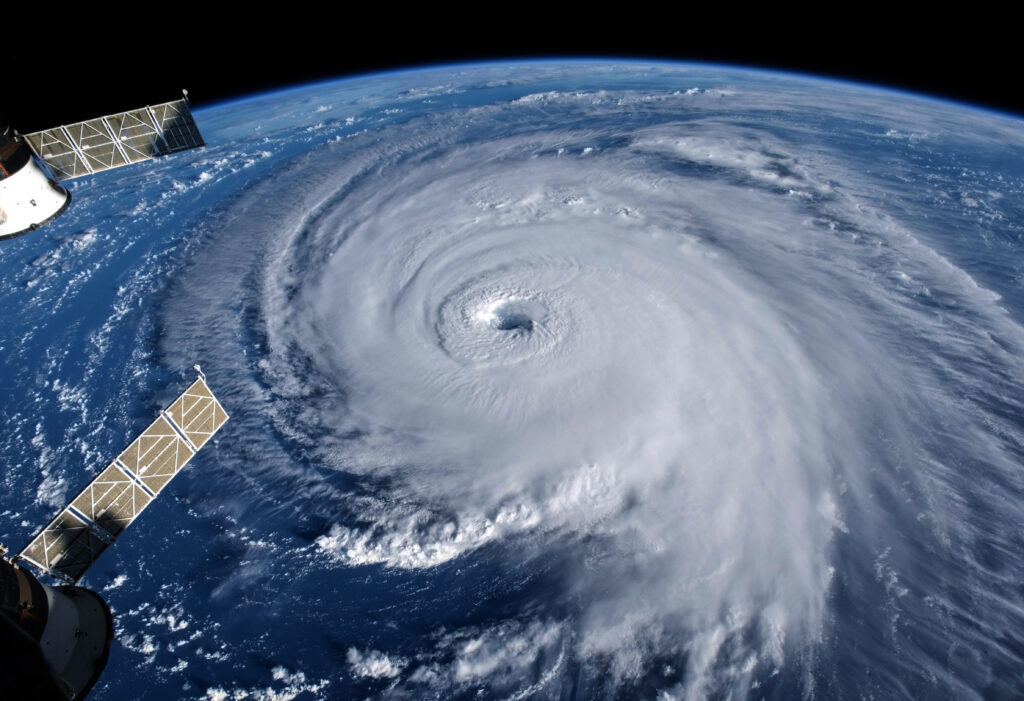
Beyond chemtrails, a wider set of conspiracy theories involves deliberate manipulation of weather systems. These ideas often arise after major storms or periods of drought when public anxiety is heightened.
Storm creation and intensification
Some believe hurricanes or typhoons are artificially strengthened or redirected for geopolitical or economic gain. Yet hurricanes derive their energy from warm ocean surfaces spanning thousands of square kilometres.
No human technology can provide or remove energy at the required scale. To alter a storm’s intensity, one would need to modify a thermal engine comparable to a heat output of around 10¹⁴ watts.
Humanity’s entire energy consumption is approximately 3 × 10¹³ watts. Even if global energy production were channelled into atmospheric manipulation, it would still be insufficient.
Drought engineering
Other claims argue that regional droughts are caused by deliberate interventions. These theories usually misunderstand natural climate variability. Droughts arise from complex interactions involving ocean temperature cycles, atmospheric circulation, soil moisture feedbacks, and land surface changes.
There is no mechanism by which an aircraft or satellite could prevent rainfall across hundreds of thousands of square kilometres.
Excessive cloud seeding myths
Cloud seeding is a real technique that introduces small amounts of silver iodide or salt particles into clouds to encourage the formation of ice crystals. Its effects are modest and often inconsistent.
Cloud seeding cannot generate rainfall from clear skies, control storm tracks, or significantly alter regional climates. Yet conspiracy narratives portray it as a powerful, military grade technology capable of steering weather systems.
This exaggeration ignores decades of research confirming the limited scale and variability of cloud seeding outcomes.
HAARP and Atmospheric Energy Manipulation
The High Frequency Active Auroral Research Program (HAARP) is frequently portrayed as a weather or climate weapon. HAARP consists of an array of antennas that transmit radio waves into the ionosphere to study plasma behaviour.
Its maximum power output is around 3.6 megawatts, comparable to a small broadcast transmitter. Claims that HAARP can heat the atmosphere, direct storms, control climate, or manipulate human behaviour are physically impossible.
The energy HAARP transmits is minuscule compared to the Sun’s influence on the ionosphere, which is many orders of magnitude greater.
Some theorists claim HAARP is used in combination with chemtrails, arguing that metallic particles in the air increase conductivity. This narrative misunderstands ionospheric physics. The ionosphere is located tens to hundreds of kilometres above Earth’s surface.
Particles released from aircraft do not reach those altitudes. They remain in the troposphere and mix with weather systems long before reaching the upper layers of the atmosphere.
Space Based Geoengineering Conspiracies
A newer set of theories involves satellites, orbital mirrors, and artificial light sources claimed to influence weather or sunlight.
Artificial Sun claims
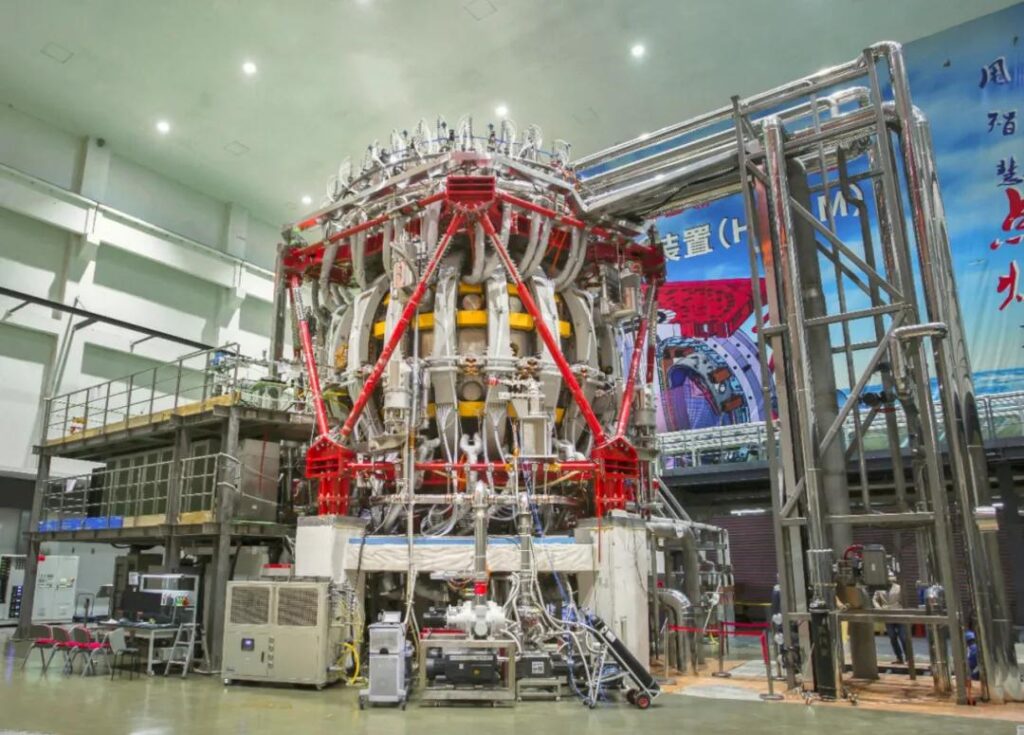
Some claims state that China or another country has launched an artificial Sun into orbit. This myth usually arises from images of solar simulators inside research facilities or from misinterpretations of real proposals for reflective satellites.
Large solar simulators exist on Earth for testing materials and photovoltaic cells, but these devices illuminate areas only a few metres wide. They cannot be placed in orbit due to power requirements and fragility.
Proposals for reflective satellites involve redirecting sunlight to reduce energy use at night. None has been deployed. Importantly, reflective satellites do not produce light. They simply redirect existing sunlight.
The scale required to illuminate a city would be enormous. A mirror in orbit would need to be several kilometres wide and would be instantly visible to astronomers.
Orbital climate control theories
Other theories describe satellites that release chemicals, alter the stratosphere, or heat specific atmospheric layers. These ideas typically misunderstand satellite operation. Satellites cannot carry large quantities of material and cannot release substances into the lower atmosphere. Orbital mechanics also limit how long a satellite can remain positioned over a specific region.
Space based weather grids
Some narratives speak of a grid of satellites that manipulate clouds using lasers or electromagnetic beams. These claims ignore the rapid dispersal of atmospheric moisture, the scale of cloud systems, and the limited power of satellite instruments. No satellite carries the energy capability to alter cloud formation on meaningful scales.
Biological and Health Related Geoengineering Theories
A persistent set of claims argues that geoengineering is used to cause illness, psychological changes, or infertility.
Aerosol induced disease
Some communities attribute chronic symptoms to atmospheric spraying, linking these beliefs to airborne toxins. These ideas are unsupported by environmental sampling, public health data, or chemical analysis.
Air quality monitoring networks around the world track particulate matter, gases, metals, and pollutants. They have never detected unexplained chemical profiles consistent with covert spraying.
Infertility and endocrine disruption
A recurring narrative claims that geoengineering lowers fertility as part of a depopulation strategy. Fertility trends have changed globally due to economic development, education, urbanisation, and lifestyle factors.
There is no evidence of airborne endocrine disruptors dispersed at large scale. Known endocrine disrupting chemicals originate from industrial processes, plastics, agriculture, and household products, not aviation.
Behavioural control myths
Some theories go further and suggest aerosol spraying controls human behaviour or mood. These claims often reference fictional nanotechnology, remote activation mechanisms, or speculative neuroscience.
The human brain cannot be manipulated through dispersed airborne materials. Neurological modulation requires direct interaction with neural circuits or specific pharmacological agents delivered at controlled doses. Airborne dispersal cannot meet either requirement.
Economic and Political Geoengineering Narratives
A different category involves claims that geoengineering is used for economic control or political influence.
Commodity market manipulation
Some believe that droughts or rainfall are engineered to influence agricultural markets or corporate profits. This idea assumes a level of precision and predictability in climate control that is not achievable. Markets themselves are influenced by weather, but no tool exists to alter weather at will.
Energy policy manipulation
A variant of this theory argues that governments intentionally alter climate conditions to make renewable energy appear more or less viable. This narrative misreads climate policy and ignores the complexity of energy systems, which are driven by economics, infrastructure, technology, and international agreements.
Weaponised climate systems
The notion that climate systems can be turned into strategic weapons is a persistent narrative. It draws on the history of small scale cloud seeding experiments during the Vietnam War, although these efforts produced limited results. Modern atmospheric science shows that large scale climate control is far beyond human capability.
Celestial and Astronomical Geoengineering Claims
Some conspiracy theorists believe geoengineering is used to hide astronomical phenomena.
Moon dimming or brightening claims
Some suggest that the Moon’s brightness is manipulated to influence behaviour, citing cultural associations between moonlight and mood. Lunar brightness varies naturally due to atmospheric conditions, lunar phase, angle of illumination, and distance from Earth. No technology exists to alter it artificially.
Planet X concealment theory
A fringe belief suggests that atmospheric aerosols are used to obscure observations of a fictional rogue planet. This idea misunderstands both astronomy and optics. Atmospheric aerosols cannot hide celestial objects. Telescopes observe far above the aerosol layer, and large surveys such as those by the Pan-STARRS and Catalina observatories would easily detect any such body.
Nanoparticle and Technological Geoengineering Myths

Another set of narratives involves advanced materials and speculative technology.
Nano particle dispersal
These claims involve the release of nano materials for tracking, surveillance, or behavioural modification. The theory often references fictional technologies that do not exist. Nanoparticles cannot form coherent networks in the atmosphere and cannot be controlled remotely. Their dispersal would be random and uncontrolled.
Atmospheric reflector grid
Some narratives propose that metallic particles create a reflective grid used with ground based radio waves for surveillance or mind control. This idea misunderstands radio propagation, atmospheric diffusion, and the behaviour of aerosols. Particles disperse rapidly due to turbulence and cannot form stable geometric grids.
Morgellons and Geoengineering
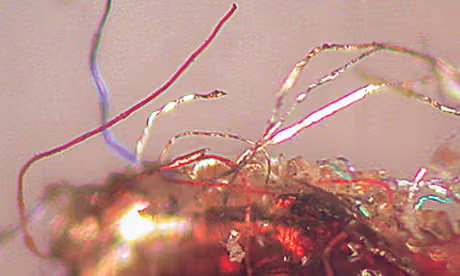
Morgellons disease is described by some as a condition caused by airborne fibres from geoengineering activities. Studies have found that samples attributed to Morgellons contain cellulose, cotton, polyester, or keratin. They are not synthetic bio fibres.
The medical consensus identifies Morgellons as a delusional misinterpretation of normal skin sensations or secondary to unrelated dermatological conditions.
Why These Theories Persist
Although scientifically implausible, geoengineering conspiracy theories flourish because they offer simple explanations for complex issues. Climate change, unpredictable weather, and environmental anxiety create fertile ground for speculation.
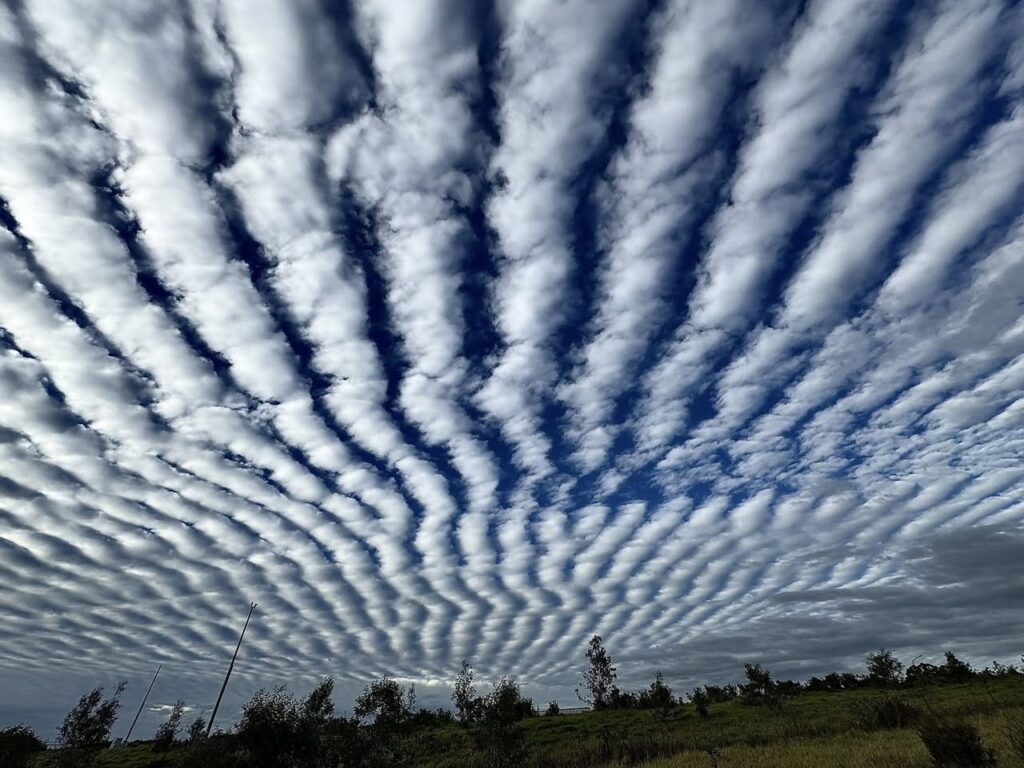
Social media platforms amplify striking images of atmospheric phenomena. Haloes, sun dogs, lenticular clouds, or unusual contrail patterns can appear mysterious when photographed without context. Conspiracy theories offer narratives that provide certainty in uncertain times.
Historical precedent also plays a role. Governments have conducted secret or unethical experiments in the past, such as exposure of populations to radiation or biological agents during the mid twentieth century. Although these events were unrelated to geoengineering, they contribute to mistrust.
Finally, psychological factors are important. Conspiracy theories often appeal to the desire for hidden knowledge. They provide a sense of significance and agency for believers. Communities reinforce each other’s beliefs, creating echo chambers that filter out scientific understanding.
Final Assessment
Geoengineering conspiracy theories represent a broad collection of narratives that misunderstand the atmosphere, physics, energy systems, and basic engineering.
They flourish in environments of mistrust and uncertainty, yet none withstand scientific examination. Weather systems are too large to manipulate with current technology. Aircraft cannot carry the equipment described.
Satellites lack the power to alter climate at scale. Atmospheric monitoring networks and global research programmes show no evidence of covert activities.
Natural optical phenomena explain most unusual sky observations. The persistence of these theories reflects social and psychological needs rather than environmental realities.