
An Examination of Claims and Evidence for Chemtrails, and the Atmospheric Reality
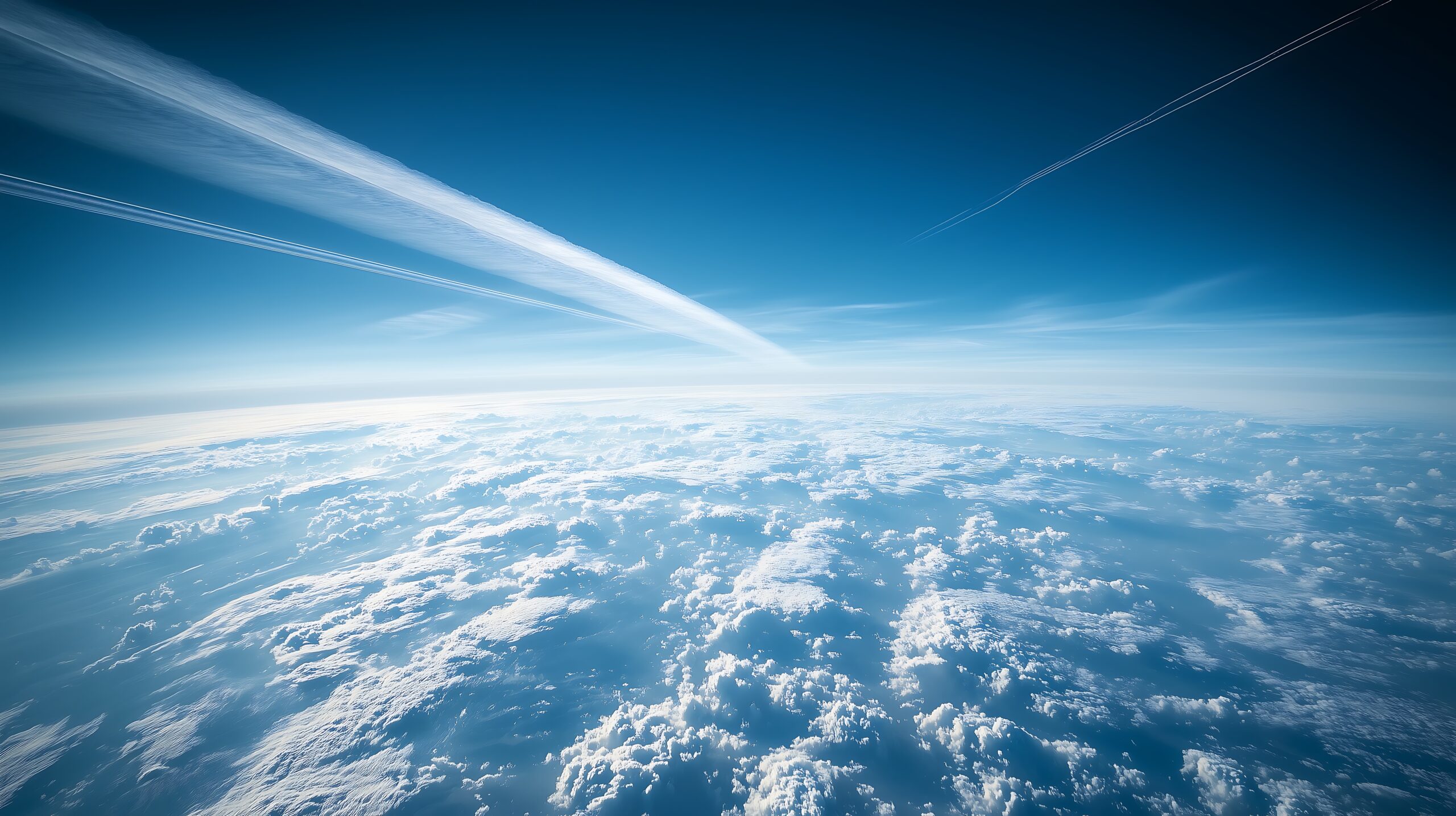
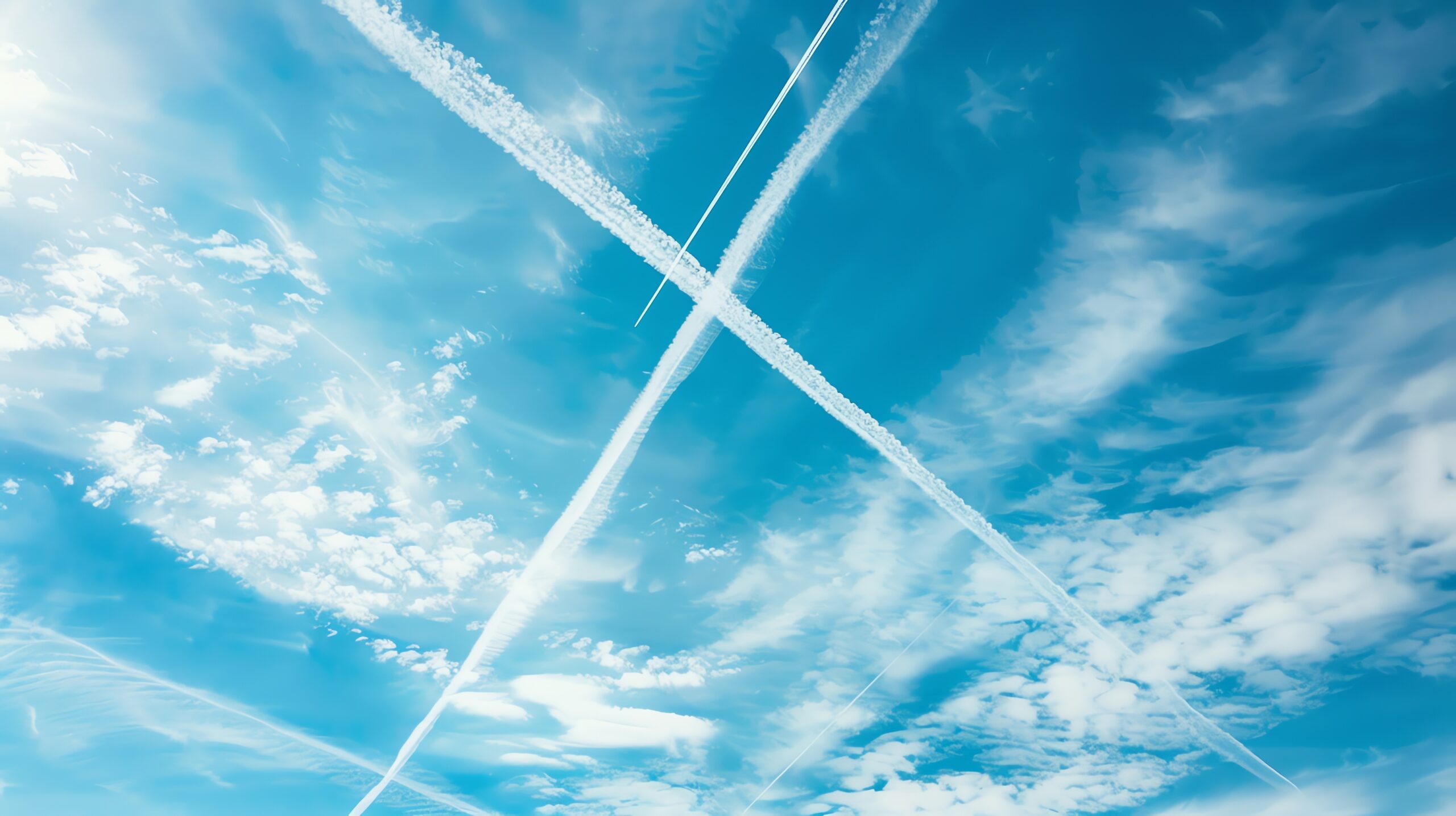
Every now and then, you look up and see aircraft high in the sky leaving long white streaks that linger. To many, these are simply contrails—condensation trails. But to others, they are something more sinister: chemtrails, believed to be trails of chemicals or biological agents deliberately sprayed at altitude for purposes unknown or secret.
1. Contrails: The Scientific Basis
To understand what chemtrails are claimed to be, you first need to know what contrails are. This is well‑understood in atmospheric science, and forms the baseline against which chemtrail claims are judged.
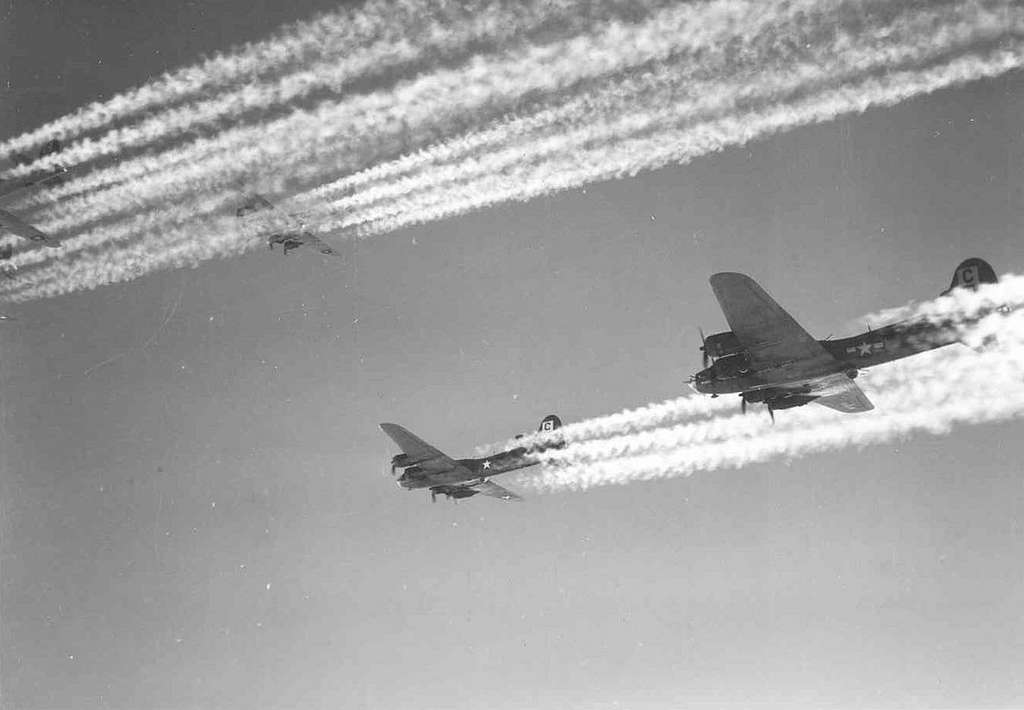
Contrails date back to WW2 and beyond
1.1 What are Contrails?
- Origin: When an aircraft flies at high altitude (typically cruising levels of ~8,000‑12,000 m; roughly 26,000‑40,000 ft), its engines exhaust a hot mixture of gases including water vapour, plus particles (soot, aerosols, etc.). The ambient air up there is very cold (often −40°C or colder). The hot exhaust mixes with this cold air, causing rapid cooling; the water vapour may condense or freeze, forming tiny water droplets or ice crystals. Those form visible streaks behind the aircraft: contrails.
- Duration & Appearance: Depending on atmospheric conditions—especially temperature, humidity, and how saturated the air is with respect to ice—these contrails can dissipate quickly (seconds to minutes), or persist for much longer, spreading out and perhaps contributing to cirrus cloud cover.
- Relevant Physical Parameters: Altitude, ambient temperature, relative humidity (especially relative to ice), and turbulence/airflow after the aircraft pass (vortices) all influence how a contrail behaves. Also the emissions from the engines: amount of water, soot particles that can act as nucleation sites, etc.
- Radiative Effects: Contrails are not just aesthetic—they have climate implications. Persistent contrails can trap outgoing longwave radiation (infrared) emitted by the Earth, contributing to a warming effect. They also reflect some incoming solar radiation. Whether the net effect is warming or cooling tends to depend on time of day, local atmospheric conditions, altitude, etc. Recent studies show contrails can contribute nontrivially to aviation’s climate impact.
2. Definition, Origins and Claims of “Chemtrails”
“Chemtrail” is a portmanteau of chemical + trail, used by people who believe contrails are not what they seem, but rather evidence of deliberate spraying.
2.1 How the Term Chemtrails Has Evolved
- The term “chemtrail” appears in public discourse largely from the late 1990s onwards. It has been used by conspiracy theorists, public interest groups, and sometimes in online/social media contexts.
- The idea: certain persistent trails behind aircraft are not only water vapour/ice crystals, but also contain chemicals or biological agents being released for unknown but often nefarious purposes—weather manipulation, mind control, population control, geo‑engineering without public disclosure.
- Proponents often distinguish between ordinary, short‑lived contrails and persistent / spreading trails, claiming the latter are chemtrails.
2.2 Typical Claims Made by Chemtrail Advocates
These include:
- The trails contain heavy metals or unusual compounds (barium, aluminium, strontium salts, etc.).
- The trails are part of secret government or military programs.
- These chemicals are sprayed for various purposes: weather control, altering climate, controlling populations, testing systems, etc.
- Photographs of long, persistent trails are offered as evidence. The fact that some days the sky is heavily “lined” is taken as proof.
3. Scientific Response and Evidence to Chemtrails
Scientists—atmospheric physicists, chemists, climatologists—have considered these claims and assessed them in light of evidence. The consensus is that there is no credible scientific evidence to support the existence of chemtrails as defined by the conspiracy theory.
3.1 Expert Surveys and Official Evaluations
- A survey of atmospheric chemistry experts and geochemists published in Environmental Research Letters found that the vast majority of experts reject the chemtrail hypothesis. The study concluded that ordinary physical and chemical processes associated with typical aircraft emissions can explain all the observational phenomena that people attribute to secret spraying programs.
- Agencies such as EPA, FAA, NOAA, and equivalents in other countries have published fact sheets explaining contrails, clarifying misunderstandings, and affirming no evidence of chemical spraying at altitude.
3.2 Observational and Atmospheric Data
- Measurements of the composition of air, rainwater, soil etc., do not show anomalous signatures of heavy spraying correlated with flight paths or contrail sightings. If chemtrails were routinely deployed, scientists expect to see patterns of elevated levels of barium, aluminium, etc., in atmospheric deposition; but no credible, peer‑reviewed studies show that.
- Satellite imagery and atmospheric sensors align with predictions of contrail formation models: where conditions (temperature, humidity) are right, trails form; where not, no trails or rapidly dissipating ones. Models can predict which flights are likely to create persistent contrails. Recent work has developed automated detection systems using satellite data to match flights to persistent contrails.
3.3 Explaining Persistent Trail Behaviour
Why do some trails linger and spread out (which is often cited by chemtrail proponents)? There are well‑known atmospheric reasons:
- High humidity (especially relative to ice) in the upper troposphere. If the air is ice‑supersaturated, ice crystals in the contrail can persist, grow, and spread.
- Low temperatures, which reduce sublimation rates of ice crystals, allowing them to exist longer.
- Wind shear, turbulence and vortices behind aircraft can help distribute and spread the trail.
- Meteorological layering, such as stable layers that trap trailing plumes.
These are well‑characterised phenomena—no need to invoke secret chemicals.
4. Why the Chemtrails Hypothesis Doesn’t Hold Up
Given the claims, what are the reasons the scientific community finds the hypothesis implausible or lacking evidence?
4.1 Lack of Physical or Technical Feasibility (at scale)
- Logistics: Deploying chemicals from aircraft at high altitude over wide areas covertly would require massive coordinated operations. The amount of material involved, the aircraft needed, the maintenance, and supply chain would be enormous.
- Detection possibilities: Environmental monitoring (air, soil, plants) is widespread; if such spraying occurred, researchers would likely detect anomalous concentrations of proposed chemicals in multiple places, especially near high‑traffic corridors.
- Engine, fuel, and safety constraints: Adding chemical payloads or unusual compounds to fuel or combustion systems would affect engine performance, maintenance costs, and safety.
4.2 Lack of Evidence from Studies and Sampling
- No peer‑reviewed, reproducible study has confirmed chemical agents in the composition of contrails beyond what is expected from typical combustion by‑products (water vapour, CO₂, nitrogen oxides, soot/particulate matter).
- Trace metal presence in air or soil is usually explained by industrial pollution, dust, volcanic ash, etc., not aircraft spraying.
- Surveys of atmospheric scientists (specialists in condensation trails, aerosol chemistry) have consistently found no support for claims of chemtrail programs.
4.3 Misinterpretations and Cognitive Biases
- Persistent visible trails are more noticeable than short‑lived ones, so people may infer something abnormal.
- Visual perception, selective attention, and memory bias can lead people to attribute significance to patterns (e.g. days when there are many aircraft trails).
- Sometimes legitimate weather modification techniques (cloud seeding, research into geoengineering) are conflated with conspiracy ideas, even when such projects are transparent and regulated.
5. Effects, Impacts, and Real Concerns
While chemtrails are not supported by evidence, the real phenomena around contrails are not trivial, and there are legitimate concerns.
5.1 Climate and Radiative Forcing
- Contrails contribute to climate warming via radiative forcing. Persistent contrails can act like high thin cirrus clouds, trapping outgoing longwave radiation (infrared) from the Earth’s surface (especially at night) more than they reflect incoming solar radiation. Studies suggest their effect may be comparable in magnitude (though with uncertainties) to a portion of aviation’s CO₂ emissions.
- There is ongoing research into how changes in flight paths, altitudes, fuel formulations, and aircraft engine designs might reduce persistent contrail formation.
5.2 Public Anxiety, Misinformation, and Policy
- The persistence of chemtrail beliefs shows how topics at the intersection of visible phenomena, science, and mystery tend to generate misinformation. It has implications for trust in institutions, science communication, and policy.
- Some jurisdictions have had proposed legislation or carried out investigations prompted by chemtrail concerns—even though scientific bodies have repeatedly stated no evidence supports covert chemical spraying.
6. What Would Be Necessary to Demonstrate Chemtrails (if they Existed)
To move a claim of chemtrails from possibility to scientifically credible, one would need:
- Chemical signatures: Samples (air, rain, aerosol) showing elevated levels of chemicals proposed (barium, aluminium, strontium etc.), with patterns correlating to aircraft flights/contrails, and ruling out other sources.
- Removal of atmospheric/industrial confounders: Dust, industrial emissions, volcanic ash, soil dust, agricultural spray are all natural or known sources of many trace metals.
- Verification of delivery mechanism: Evidence that aircraft have been modified or fitted with dispersal equipment, or fuel contains unknown additives, or operations are being carried out.
- Peer‑reviewed reproducible studies: Rigorous data, with controls, published in scientific literature.
To date, no such body of evidence exists. As atmospheric science experts have stated, what is seen in the skies is consistent with known physics of contrail formation, not evidence of large‑scale chemical spraying.
7. Why the Chemtrails Theory Persists
Even though the scientific consensus is clear, chemtrail beliefs persist. Some contributing factors:
- Visible, dramatic images (long trails, lined skies) are striking and memorable.
- Lack of knowledge of atmospheric science: Cold, high altitude humidity, ice‑supersaturation zones are not widely understood.
- Distrust of governmental or military institutions, and history of secret projects, environmental disasters, pollution etc., which create fertile ground for suspicion.
- Social media amplification and misinformation.
- The human tendency to seek patterns, explanations, and to fear the unseen.
Conclusion
- Chemtrails, as defined by the conspiracy theory—that is, secret spraying of chemical or biological agents from aircraft at high altitudes—have no confirmed evidence.
- What people commonly observe are contrails, well‑explained by atmospheric physics: water vapour, temperature, humidity, aerosols, engine exhaust.
- Some contrails persist for a long time, spread out, look cloud‑like; but that behaviour is anticipated under certain atmospheric conditions.
- Real concerns about contrails include their climate impact and radiative forcing effect. These are real, measurable, and of ongoing scientific interest.
- Understanding the science helps demystify observations and reduce the impact of misinformation.