
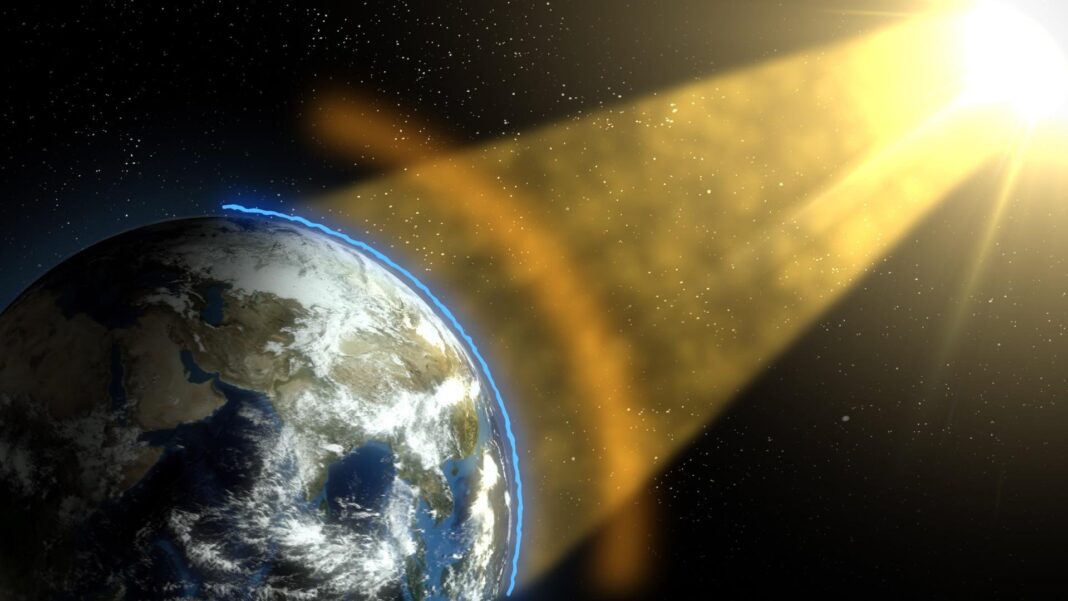

Geoengineering is Humanity’s Gamble with the Planet
Fueled by the perceived climate crisis, scientists and policymakers are confronting an unthinkable question: if we cannot stop climate change through emissions cuts alone, should we take control of the planet’s climate system itself?
This is the core proposition of geoengineering, a field that sits at the intersection of atmospheric science, planetary engineering, and global ethics.
It encompasses a suite of technologies designed to manipulate Earth’s natural processes, either to reduce incoming solar radiation or to remove greenhouse gases from the atmosphere.
Geoengineering is often portrayed as both a potential lifeline and a Pandora’s box. While it may offer ways to cool the planet rapidly or stabilise rising temperatures, it also raises fears of unintended ecological disruption, political weaponisation, and moral complacency.
To understand this contentious field, it is essential to explore its scientific foundations, historical development, key actors, and the implications of its possible deployment.
Current Status: Research, Not Deployment
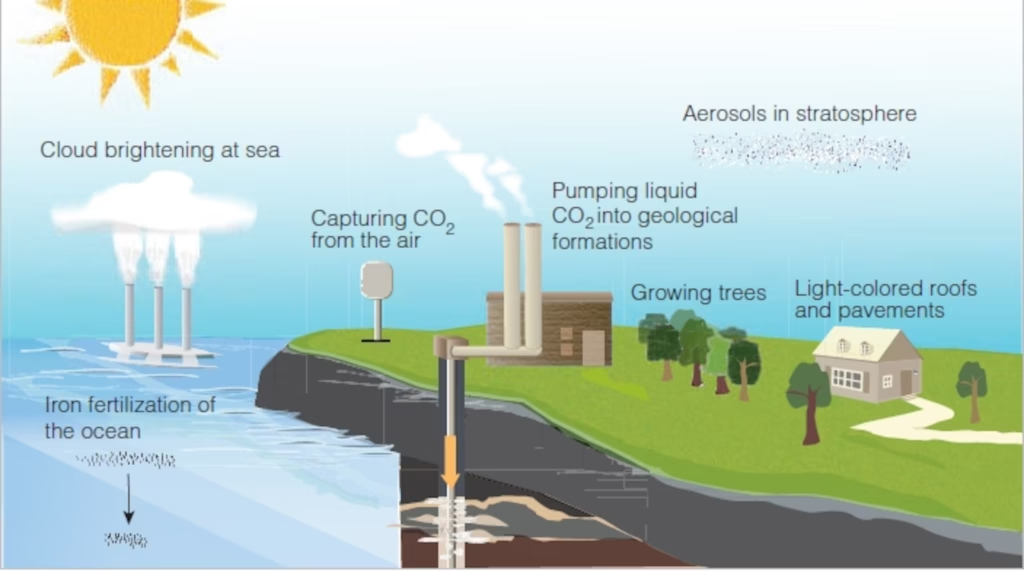
As of 2025, no country has deployed geoengineering at a scale capable of influencing global climate. All known activities are confined to computer simulations, laboratory studies, and small-scale field tests.
The IPCC maintains that while SRM could, in theory, reduce global temperatures, it cannot substitute for emissions mitigation. Furthermore, once deployed, the cessation of SRM could lead to a rapid temperature rebound — a phenomenon known as termination shock —posing catastrophic risks for ecosystems and societies.
CDR, by contrast, is gradually entering the commercial and policy landscape. Several nations, including the UK and Canada, have integrated negative emissions technologies into their net-zero strategies. Yet even optimistic projections suggest that CDR alone cannot offset current emissions trajectories without major reductions in fossil fuel use.
Geoengineering as a Conspiracy Theory
In mainstream science, geo-engineering is considered an experimental and largely theoretical set of interventions. However, beyond academic and policy circles, it has become the subject of a range of conspiracy theories which present it not as an emergent field of climate research but as a covert, ongoing programme.
Origins of the Geoengineering Conspiracy Theories
The idea that governments or powerful private actors are already deploying geo-engineering without public consent has gained traction since the 1990s. Central to these claims is the notion of “chemtrails” — the belief that persistent contrails from aircraft are in fact deliberate dispersals of chemicals or reflective particles intended to alter the weather or control populations.
While atmospheric scientists attribute contrail persistence to humidity and temperature conditions at high altitudes, conspiracy theorists interpret patterns in the sky as evidence of secret spraying programmes.
This narrative is amplified online through photographs of unusual cloud formations, patent filings for aerosol delivery systems, and selective readings of climate policy documents.
Mechanisms of Distrust
At the heart of these conspiracy theories is a mistrust of scientific institutions and governments, particularly in light of past covert experiments such as Cold War biological testing or classified military projects.
This history provides a fertile context for claims that geo-engineering research is a cover for clandestine operations. Social media algorithms further exacerbate the problem by privileging emotive and visually striking content, creating echo chambers where circumstantial evidence appears to confirm the existence of covert activities.
Scientific Position and Public Perception
Despite the prevalence of these claims, no verifiable evidence supports the idea that large-scale geo-engineering is already taking place. Field tests have been limited, highly publicised and small in scope, such as the release of tiny amounts of reflective material to test delivery methods.
However, the mere proposal of solar radiation management by reputable institutions has lent plausibility to conspiracy narratives, which collapse the distinction between theoretical research and active deployment.
In effect, geo-engineering conspiracy theories act as a mirror to public anxieties about technological power and environmental governance, blurring the lines between speculation, mistrust and legitimate ethical concerns about tampering with planetary systems.
Would you like me to extend this with an analysis of who benefits politically and financially from the geo-engineering conspiracy narratives? (That’s often where investigative journalism can dig deeper.)
The Origins of Geoengineering
The idea of controlling weather and climate is older than modern environmental science itself. In the 1940s and 1950s, early meteorologists and military researchers experimented with cloud seeding, using silver iodide or dry ice to induce rainfall.
The most famous example, Project Cirrus (1947), was a collaboration between General Electric, the US Army Signal Corps, and the Office of Naval Research. Though small in scale, it established the conceptual basis for human intervention in atmospheric systems.
By the 1960s, scientific curiosity merged with Cold War ambition. The US Department of Defense explored the potential of weather modification as a strategic tool. During the Vietnam War, Operation Popeye attempted to extend the monsoon season to hinder enemy troop movements. Although the project was limited, it demonstrated that large-scale environmental modification could have geopolitical consequences.
The term geoengineering began to emerge in academic circles during the 1970s. Researchers such as Cesare Marchetti and Mikhail Budyko speculated about climate control through ocean fertilisation and stratospheric aerosol injection.
Budyko, a Soviet climatologist, proposed releasing reflective particles into the stratosphere to offset global warming caused by carbon emissions. His ideas were largely theoretical, but they foreshadowed many contemporary proposals.
Types of Geoengineering
Geoengineering is generally divided into two primary categories: Solar Radiation Management (SRM) and Carbon Dioxide Removal (CDR).
Solar Radiation Management (SRM)
This aims to reflect a portion of sunlight back into space to cool the planet. Techniques under study include:
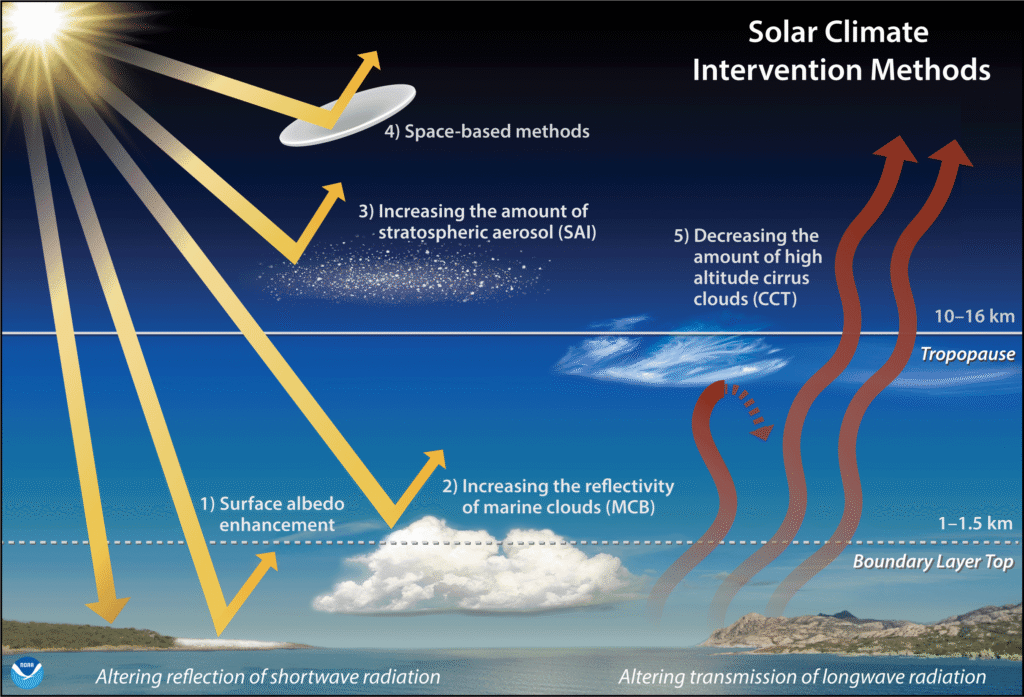
- Stratospheric Aerosol Injection (SAI):
dispersing reflective sulphate or calcium carbonate particles into the upper atmosphere, mimicking the cooling effect of volcanic eruptions. - Marine Cloud Brightening (MCB):
spraying seawater droplets to increase the reflectivity of low-lying clouds. - Space-based reflectors:
placing mirrors or sunshades in orbit to reduce solar input, though this remains theoretical.
Carbon Dioxide Removal (CDR)
CDR seeks to reduce atmospheric concentrations of CO₂ directly. This includes:
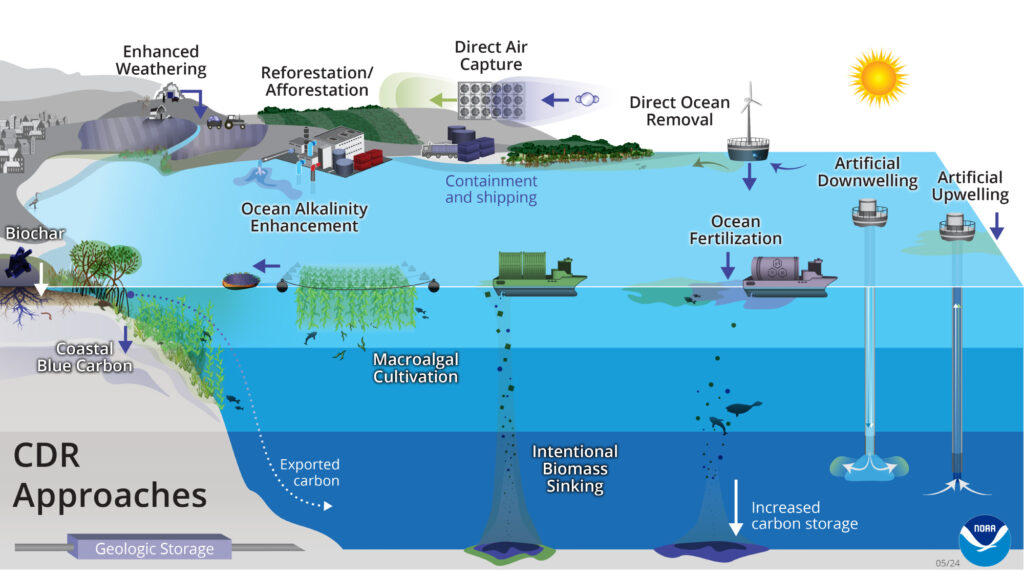
- Afforestation and reforestation.
- Bioenergy with Carbon Capture and Storage (BECCS)
This which captures emissions from biomass energy production and stores them underground. - Direct Air Capture (DAC)
a chemical process that extracts CO₂ from ambient air. - Ocean fertilisation
adds iron to stimulate phytoplankton growth and enhance carbon uptake.
While CDR is often seen as a necessary complement to emissions reductions, SRM remains highly controversial because it alters the planet’s radiative balance without addressing the root cause of greenhouse gas accumulation.
Modern Research and Testing
Over the past two decades, geoengineering has moved from speculative science to an area of active research. The Intergovernmental Panel on Climate Change (IPCC) has included geoengineering in several of its assessment reports, acknowledging that global temperature targets such as 1.5°C or 2°C above pre-industrial levels may not be achievable without some form of climate intervention.
In the United States, the Harvard Solar Geoengineering Research Programme has become one of the world’s leading centres for SRM research. Its SCoPEx project (Stratospheric Controlled Perturbation Experiment) seeks to release a small quantity of aerosols to study their effects on light scattering and atmospheric chemistry.
Although the test has faced public opposition and has not yet proceeded, it represents the first serious attempt to gather empirical data on controlled stratospheric modification.
In the United Kingdom, the SPICE project (Stratospheric Particle Injection for Climate Engineering) was launched in 2010 as a collaboration between the universities of Bristol, Cambridge, Edinburgh, and Oxford, alongside the Met Office.
It planned to test delivery systems for aerosol release but was cancelled following ethical and governance concerns. Nevertheless the UK government, via its Advanced Research & Invention Agency (Aria), has launched a research programme worth approximately £56.8 million aimed at small-scale experiments in solar radiation management (SRM).
These are explicitly not deployment: the studies are in experimental and modelling phases, with stringent oversight, assessments, and public/community consultations required before any outdoor trial moves forward.
China has also emerged as a significant player. The Chinese Academy of Sciences has invested in solar radiation management modelling, while reports suggest large-scale cloud seeding and weather modification efforts are being used domestically for water management and agricultural purposes. Although officially framed as weather control rather than climate engineering, the scale of these activities blurs the line between the two.
Key Actors and Institutions
Geoengineering research is driven by a complex web of universities, private companies, and government agencies.
- Academic Institutions: Beyond Harvard and major British universities, institutes such as ETH Zurich, the Max Planck Institute for Meteorology, and the Indian Institute of Science are contributing to climate intervention modelling.
- Private Sector: Companies such as Carbon Engineering, founded by climate scientist David Keith, are developing commercial direct air capture technologies. Climeworks, a Swiss firm, has operational DAC plants in Iceland using geothermal energy to capture and mineralise CO₂ underground.
- Government Involvement: The US National Oceanic and Atmospheric Administration (NOAA) funds research on stratospheric processes relevant to SRM. In 2022, the European Union proposed a framework for international dialogue on the governance of geoengineering, signalling a move toward regulatory consideration.
- Philanthropic Funding: Organisations such as the Bill Gates Foundation have supported early-stage studies, particularly in solar geoengineering, further complicating public perception of the field’s motivations.
Scientific Mechanisms and Technical Challenges
Stratospheric Aerosol Injection
This method aims to mimic the natural cooling observed after major volcanic eruptions. For instance, the 1991 eruption of Mount Pinatubo in the Philippines released around 20 million tonnes of sulphur dioxide, leading to a temporary global cooling of approximately 0.5°C over two years.
Replicating this artificially would require aircraft or balloons capable of dispersing aerosols at altitudes of 20 kilometres or higher. Model simulations suggest that maintaining a global temperature reduction of 1°C could require several million tonnes of aerosols per year. However, challenges include uneven regional effects, potential ozone layer depletion, and changes in precipitation patterns, particularly monsoon systems.
Marine Cloud Brightening
MCB involves spraying fine sea-salt particles into the lower atmosphere to enhance cloud albedo. Field experiments such as those conducted by the University of Washington’s Marine Cloud Brightening Project have explored spray nozzle technologies and plume dynamics. The approach is technically feasible at local scales but highly uncertain in terms of climatic side effects and cloud formation variability.
Direct Air Capture and Storage
DAC technologies use sorbent materials to bind CO₂ from ambient air, after which it is compressed and stored. Plants like Orca and Mammoth in Iceland demonstrate operational viability, capturing thousands of tonnes of CO₂ annually.
Yet the energy requirements are substantial, often exceeding the carbon savings unless powered by renewables. The cost, estimated between 400 and 600 US dollars per tonne of CO₂ removed, remains a barrier to large-scale adoption.
Ethical and Governance Debates
Geoengineering’s technical feasibility is only part of the debate. The field raises profound ethical questions about human intervention in natural systems. Critics argue that even small-scale experiments could normalise a form of “technological hubris”, reducing the political urgency for emissions reduction.
Governance is equally complex. There is currently no comprehensive international legal framework governing geoengineering. The Convention on Biological Diversity (CBD) has issued a moratorium on large-scale deployment, and the London Convention restricts ocean fertilisation projects. However, these treaties do not explicitly address atmospheric interventions.
Scholars warn of the “free driver problem”, where a single nation or private actor might unilaterally deploy geoengineering for perceived national benefit, potentially destabilising regional climates. As a result, discussions about transparency, consent, and liability have become central to international policy discourse.
Public Perception and the Role of the Media
Public awareness of geoengineering remains limited, and where it exists, it is often shaped by distrust. The association of aerosol injection with so-called “chemtrail” conspiracies has hindered legitimate scientific discussion. Environmental groups such as Greenpeace and Friends of the Earth have called for precautionary bans, citing ecological and ethical concerns.
Media coverage has oscillated between fascination and alarm. Headlines often frame geoengineering as either a last resort or a dangerous gamble, seldom capturing its technical nuance. This polarisation underscores the importance of transparent communication between scientists, policymakers, and the public.
The Geopolitical Dimension
The potential for unilateral deployment introduces a new class of geopolitical risk. Climate engineering could become a tool of foreign policy or even coercion. For instance, if one nation were to deploy SRM to stabilise its climate, others might experience unintended consequences such as drought or flooding. The absence of an international regulatory body leaves such scenarios unresolved.
Some scholars advocate the creation of a Global Climate Intervention Council, modelled after the International Atomic Energy Agency, to oversee research and establish norms. Others argue that decentralised governance, involving scientific transparency and public engagement, would be more resilient to political manipulation.
Future Direction
Scientific interest in geoengineering is unlikely to wane. As global emissions continue to rise and climate impacts intensify, the appeal of a technological backup plan grows stronger. Emerging research focuses on hybrid approaches, combining SRM and CDR to balance cooling effects with long-term carbon reduction. Advances in atmospheric modelling and satellite observation are improving our ability to predict potential consequences, but uncertainties remain vast.
Some researchers have suggested regional or “climate repair” strategies, such as targeted Arctic cooling to preserve sea ice. While less drastic than global interventions, even these require international coordination and careful risk assessment.
Wrapping It Up
Geoengineering embodies both the ingenuity and the hubris of human civilisation. It offers a vision of control at planetary scale, grounded in sophisticated science yet fraught with uncertainty. The technology exists largely on the drawing board, but the debates surrounding it are already reshaping how societies think about responsibility, risk, and the limits of human intervention in nature.
If deployed, geoengineering could alter not just the climate but the geopolitical order, forcing humanity to confront questions of power and accountability on an unprecedented scale. For now, it remains a field of research rather than action, but its shadow looms over the future of climate policy. Whether it becomes salvation or folly will depend not on science alone, but on the collective wisdom—or recklessness—of the global community.


