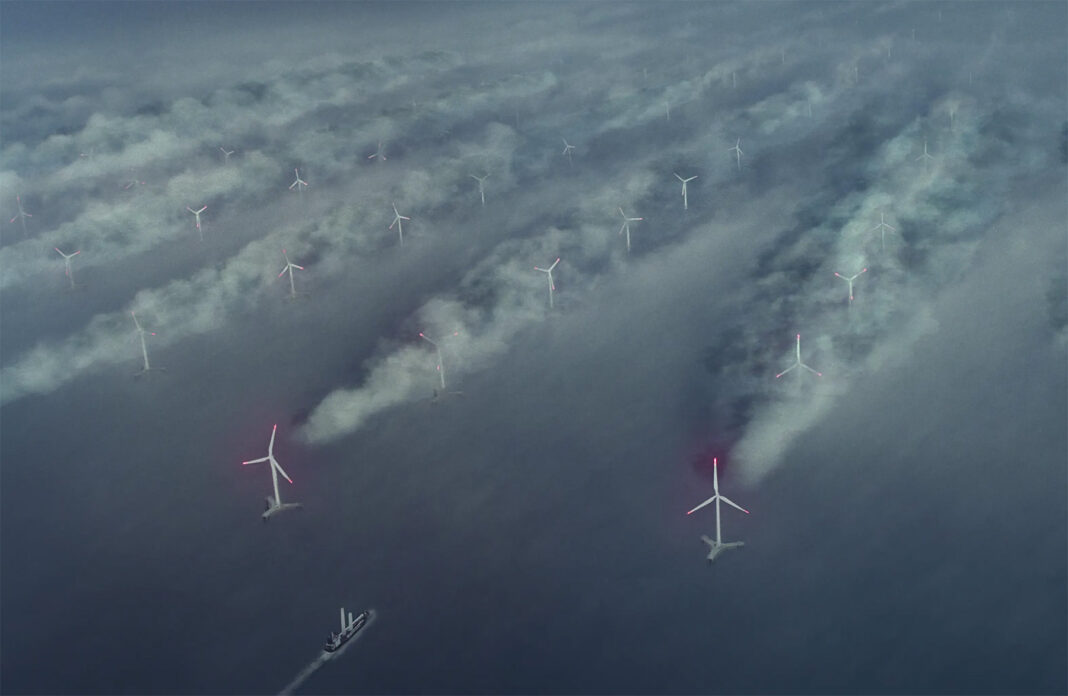

Fog has always carried an air of mystery but recently this natural ambiguity has been re-invented as evidence of technological interference.
Online conspiracy communities now insist that “smart fog” or “fog geoengineering” is being intentionally released to modify weather, influence behaviour or disperse chemicals.
The world’s worst fog-related health crises are explained by pollen rupture, pollution spikes and temperature inversions, not secret weather manipulation.
The claims often centre on video clips of fog moving in peculiar patterns, reports of metallic dust settling on cars, or accounts of people becoming suddenly ill when mist rolls in.
But in reality, the behaviour of fog is already shaped by temperature gradients, humidity, airflow and urban microclimates in ways that can easily be misinterpreted.
Understanding the physics and biology behind these events not only dispels misinformation but reveals a far richer, scientifically grounded story about how the atmosphere works.
Fog forms when air becomes saturated and microscopic water droplets condense near the ground. These droplets scatter light, creating the familiar soft white veil that reduces visibility.
Radiation fog forms on clear nights as the ground loses heat; advection fog develops when warm, moist air moves over cooler surfaces; freezing fog arrives when supercooled droplets freeze on contact with cold objects; and sea fog forms where warm air contacts a cold ocean surface.
Each type behaves according to thermodynamics rather than technology, yet their visual effects often look strangely deliberate. Fog banks can advance like walls, cling tightly to roads or appear sliced at roof height.
Under the orange glow of sodium streetlights or the blue hue of LEDs, fog sometimes glows in sharp blocks of colour, leading some observers to view it as coordinated or artificial.
What appears as “fog that behaves intelligently” is usually the product of familiar processes. Roads retain heat and release it slowly, creating narrow ribbons of condensation above the tarmac.
Buildings generate micro-eddies that channel mist into corridors of moving vapour. Urban heat islands cause fog to avoid specific neighbourhoods while pooling in cooler ones.
Pedestrians themselves produce momentary clearings as body heat evaporates droplets, creating the illusion that fog is retreating from them. Even the sudden appearance of fog in distinct waves along coastlines is simply advection fog arriving along a temperature boundary. The physics requires no hidden machinery.
Metallic Particles in fog
Metallic dust is another recurring claim tied to smart-fog narratives. Photographs often show magnetic specks on car bonnets or window ledges after misty nights, which some interpret as engineered particulates settling out of artificial fog.
Metallic dust on cars is real, but laboratory analyses consistently point to brake wear, minerals and pollen rather than engineered aerosols
Environmental science, however, offers ordinary explanations. Brake dust, rich in iron and copper, accumulates in every major city and becomes more visible when moisture helps particles adhere to surfaces. Windborne soil minerals such as mica, quartz or feldspar can sparkle in direct sunlight. Pollen from pine and eucalypt species forms fine grains with a slightly metallic sheen. Industrial emissions from construction sites, quarries or metalworking facilities add to the mixture, particularly when temperature inversions trap pollutants near the ground.
Whenever such “mystery dust” has been scientifically analysed, it has consistently turned out to be mineral dust, tyre particles, pollen or industrial residue rather than exotic metals.
Smart Fog Causing illness
The idea of harmful engineered fog persists in part because people genuinely do become ill during certain misty episodes. Headaches, sore throats, burning eyes, coughing and shortness of breath are widely reported.
Fog can make people sick, but the mechanisms are biological and environmental, not technological.
Conspiracy narratives claim that these symptoms result from chemical fog spraying. The truth is more subtle. Fog itself is not harmful, but the conditions in which fog forms can magnify the risks posed by pollen, pollution, industrial emissions and fine particulates. Humidity causes pollen grains to rupture into tiny fragments that penetrate deep into the lungs.
Fog droplets help airborne pollutants remain suspended at breathing height. Temperature inversions trap smoke, exhaust fumes and volatile organic compounds near the ground, intensifying exposure and creating fog that smells or feels “chemical”. These interactions are well documented in atmospheric science and public health.
Incidents Claimed to be Chemical Fog
The 2016 Melbourne thunderstorm asthma disaster
One of the most dramatic examples is the 2016 Melbourne thunderstorm asthma disaster, which conspiracy theorists frequently cite as evidence of “chemical fog”.
On 21 November, a hot, dry spell gave way to an approaching thunderstorm over Melbourne. Airborne ryegrass pollen levels were extremely high. As the storm’s outflow boundary passed across the city, the sudden increase in humidity caused pollen grains to absorb water and burst into microscopic particles small enough to bypass the nose and lodge deep within the lungs.
Melbourne’s thunderstorm asthma disaster is a lesson in how nature can imitate conspiracy myths
Winds pushed this cloud of allergenic fragments ahead of the storm front in a pale haze that many residents described as a “strange fog”. Within minutes thousands of people experienced acute respiratory distress.
Emergency services were overwhelmed. Ten people died and more than 9,000 sought medical care. Nothing about the event required geoengineering. It was a deadly intersection of meteorology, plant biology and human vulnerability.
The mist-like gust front was not chemical dispersion but a visible boundary of dust, moisture and airborne pollen fragments driven ahead of the storm.
The 2023–24 fog and haze episodes
More recently, Melbourne experienced several 2023–24 fog and haze episodes that some residents reported as smelling “chemical” or causing respiratory irritation.
Again, these events have been misrepresented online as smart-fog operations. In reality, air-quality monitors recorded sharp increases in PM2.5 particulates, volatile organic compounds and nitrogen oxides; consistent with industrial emissions, wood-heater smoke and vehicle exhaust trapped by temperature inversions.
Fog forming within such polluted air appears denser and more pungent, not because it contains engineered chemicals but because moisture interacts with pollutants already present. Hospitals often see an uptick in respiratory complaints during these periods, yet the cause is environmental pollution amplified by weather conditions, not deliberate weather modification.
1952 Great Smog of London
The 1952 Great Smog of London remains the deadliest air-pollution disaster in history, killing an estimated 12,000 people.
Thick, yellowish fog blanketed the city as coal smoke met cold, still air under a strong inversion. Residents described it as oily, metallic and choking; a description remarkably similar to modern “smart fog” anecdotes.
The actual culprit was simply particulate pollution.
Beijing Fogs
In Beijing, winter haze events combine fog with high concentrations of PM2.5 from traffic, coal combustion and industry. Visibility drops to a few hundred metres and many residents suffer burning eyes, sore throats and respiratory irritation. Again, no secret spraying is required.
Kuwait and Iraq
In Kuwait and Iraq, moisture mixing with desert dust produces rolling brown fogs that travellers describe as unnatural. These events are driven by mineral dust, not engineered aerosols.
United States and Canada
In parts of the United States and Canada, wildfire smoke trapped by cold, moist air produces smoke-fog combinations that look like thick artificial clouds and cause widespread respiratory symptoms. The underlying mechanisms are always the same: pollen, dust, smoke or pollution interacting with humidity and temperature layers.
Smart-fog theories continue to flourish
Despite the repeated pattern, smart-fog narratives continue to flourish online because atmospheric physics is complex and human perception struggles with ambiguity. Fog conceals distance, warps light, and muffles sound.
Its movement is often counterintuitive. A fog bank that stops abruptly at a suburban fence line looks suspicious, yet a minor temperature difference or warm structure is enough to evaporate droplets locally.
Fog appearing only on certain streets can feel targeted, yet slight variations in ground temperature or airflow routinely produce such patterns.
Snow-like fog, often seen during freezing conditions, is simply rime ice or diamond dust: tiny ice crystals formed from supercooled fog droplets, not evidence of solidified chemicals. The atmosphere constantly produces visually dramatic phenomena that require no technological explanation whatsoever.
Current Geoengineering research
Geoengineering research does exist, but not in the form imagined by conspiracy communities. Scientists study theoretical proposals such as injecting aerosols into the stratosphere to reflect sunlight, brightening marine clouds with seawater droplets, or enhancing carbon capture.
These studies are small-scale, heavily monitored and controversial. None involve releasing substances at ground level, none involve “smart fog”, and none resemble the patchy, localised mists that trigger online speculation. Ground-level fog would be profoundly ineffective as a climate tool because its impacts are local and transient.
What fuels smart-fog myths?
What fuels smart-fog myths is not the atmosphere itself but psychology. Humans excel at recognising patterns, even when none exist. In an age of drones, sensors and automation, the idea of programmable mist feels plausible.
Fog behaves strangely because the atmosphere is complex, not because someone is controlling it
People who experience symptoms during fog naturally seek explanations, and conspiracy theories offer tidy, emotionally satisfying narratives that attribute uncertainty to intentional action.
Historical anxieties about chemical weapons and industrial pollution further prime the mind to interpret odd atmospheric behaviour as a threat.
The evidence-based reality of unusual fogs
A scientifically literate approach sees a different, evidence-based reality. Fog can carry pollen fragments deep into the lungs, as Melbourne tragically demonstrated. It can amplify pollutant exposure during inversion events, as Beijing and London illustrate.
Fog can mix with dust, wildfire smoke or industrial emissions and become irritating or hazardous. Fog deserves respect, but not suspicion. Understanding its behaviour empowers communities to respond appropriately; whether by monitoring pollen forecasts, reducing pollution, or recognising the signs of an inversion.