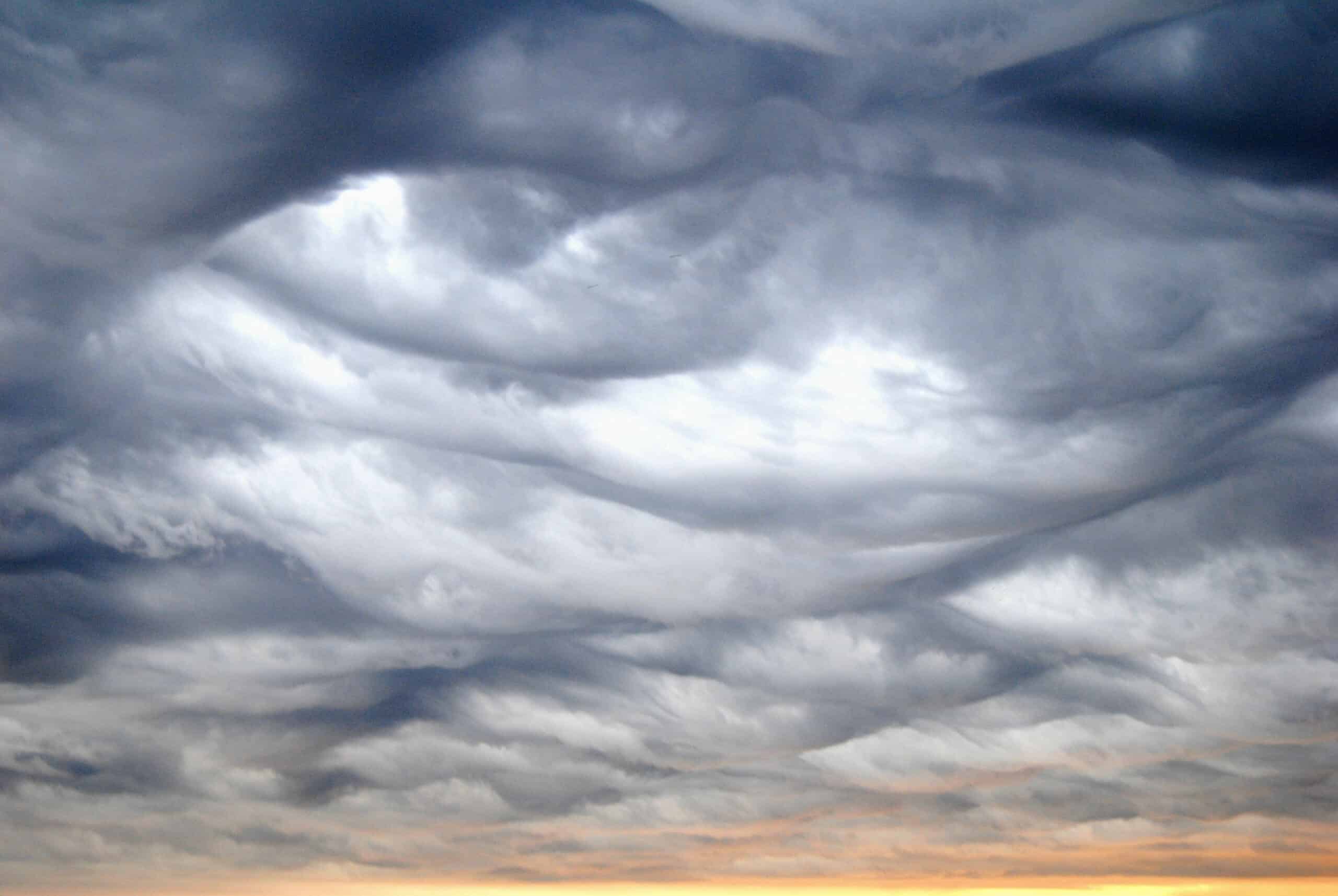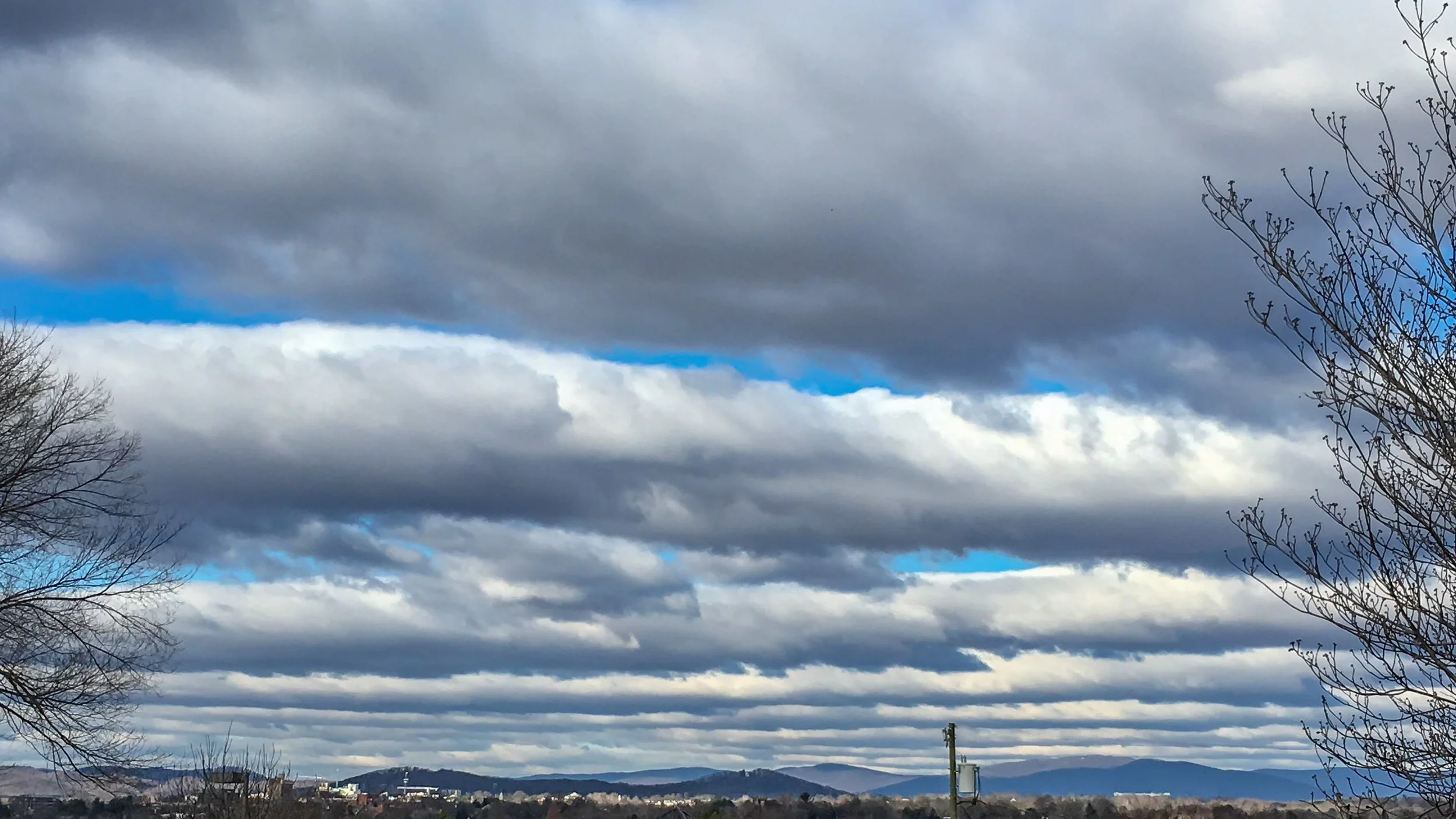

Stratocumulus clouds are low, lumpy layers of cloud that often cover the sky in patches. They look more textured than stratus, but less towering than cumulus.
- Height: Ground level to ~6,500 ft
- Look: Lumpy, gray or white patches in layers
- Name meaning: Stratus = spread out, Cumulus = heap
- Rain: Rare, but may bring light drizzle
What do Stratocumulus clouds look like?
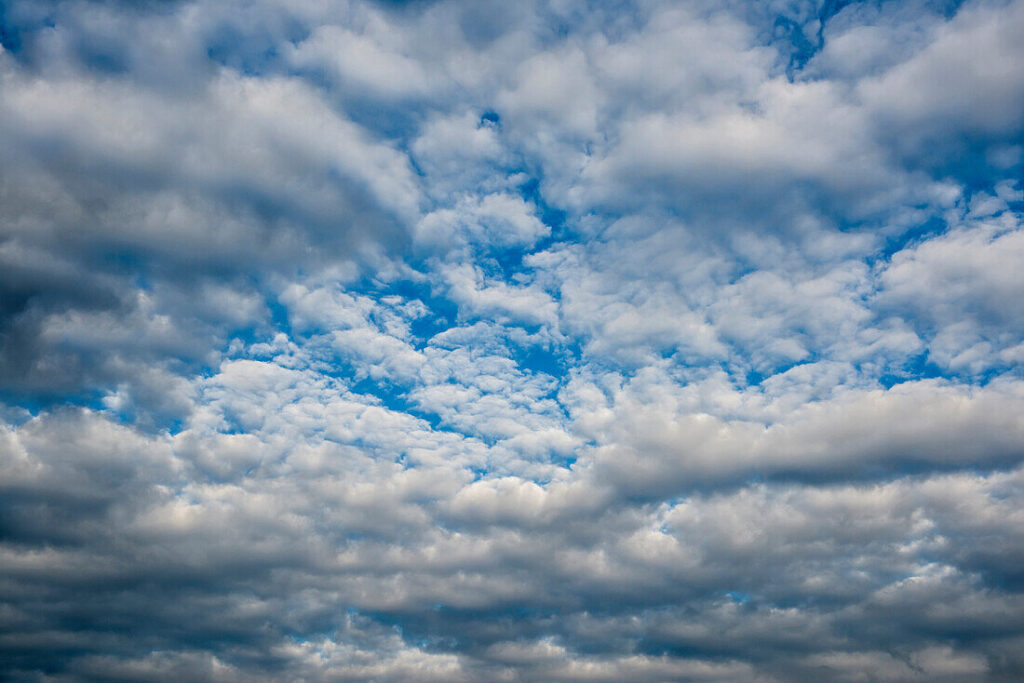
Stratocumulus often form a sky full of rounded rolls or clumps, usually gray with some brighter gaps where sunlight peeks through. Unlike higher altocumulus, the clumps are much bigger and closer together.
How do they form?
They typically develop when a layer of stratus clouds breaks up, or when rising warm air mixes with cooler air above. This mixing creates the lumpy, rolling look.
What weather do they bring?
Stratocumulus rarely lead to heavy rain. At most, they might produce a little drizzle or light snow. Often, they’re just a sign of settled, cool weather.
A history of Stratocumulus clouds
The common name is stratocumulus (Sc). They are frequently seen in overcast, but non-rainy conditions.
Again, the name derives from Howard’s cumulo / strato naming tradition extended by meteorologists.
The WMO cloud atlas further codified it. In everyday language, these are often called “low broken clouds” or “lumpy overcast” in weather forecasts; in photography and painting, stratocumulus layering is common in seascapes or moody skies, though I did not find a precise first citation.