
Luke Howard and the Birth of Cloud Classification
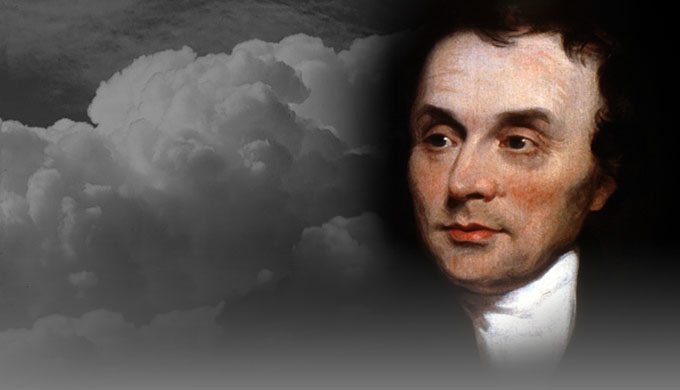
Few scientific contributions have so profoundly changed the way we look at nature as Luke Howard and his classification of clouds.
Before his work in the early nineteenth century, clouds were seen as transient, poetic, or mystical phenomena, admired but not analysed.
Howard’s achievement lay not only in giving clouds names but in showing that their forms follow observable rules and are governed by physical processes.
His system, proposed in 1802 and published in 1803, introduced a taxonomy based on form and behaviour, establishing a language that remains the basis of modern meteorology.
Howard’s work united art and science, linking the aesthetic appreciation of the sky with an empirical understanding of weather.
His influence reached far beyond science, shaping art, literature, and philosophy during the Romantic era and beyond.
Early Life and Scientific Context
Luke Howard was born in London in 1772 to a Quaker family. His upbringing in that rational and industrious community encouraged both discipline and curiosity.
He was educated at a Quaker school in Burford, Oxfordshire, where his interest in natural phenomena was encouraged, particularly in chemistry and meteorology, fields in which systematic observation was beginning to take form.
The late eighteenth century was a period of rapid scientific development. Natural philosophers were exploring electricity, magnetism, and chemistry, but meteorology remained largely descriptive.
Weather records were kept, but no consistent framework linked visible sky phenomena to measurable physical processes. Clouds, ever-changing and elusive, defied formal study.
Howard’s profession as a pharmaceutical chemist provided him with both the tools and the mindset of an observer.
His daily work required precision, record keeping, and an understanding of physical change, qualities that he brought to his atmospheric studies.
The laboratory and the sky became parallel fields of inquiry, both demanding careful attention to transformation.
The Problem of Clouds Before Howard
Before the nineteenth century, clouds were treated more as subjects for art or symbolism than as scientific entities.
Aristotle had speculated about vapours and exhalations, and by the seventeenth century, scholars such as René Descartes and Robert Hooke had made observations of optical phenomena like halos and rainbows. Yet clouds themselves were rarely classified.
Naturalists like Jean-Baptiste Lamarck attempted early systems of naming clouds, but his 1802 scheme, written in French, used descriptive phrases such as en forme de voile (veil-shaped) and rassemblés (gathered).
His work failed to gain traction outside France, partly due to the lack of universality in the terms.
Howard’s breakthrough was to combine Latin terminology, which was international and scientific, with a structural understanding of how clouds form and evolve.
He proposed that all clouds could be grouped into a few fundamental types, each corresponding to a distinct physical process.
The Essay on the Modification of Clouds
In December 1802, Howard presented his ideas in a paper to the Askesian Society in London, a group of amateur scientists and intellectuals. The paper, later published in 1803 as On the Modification of Clouds, outlined his classification system.
Howard argued that, although clouds appear infinitely varied, their changes follow identifiable laws.
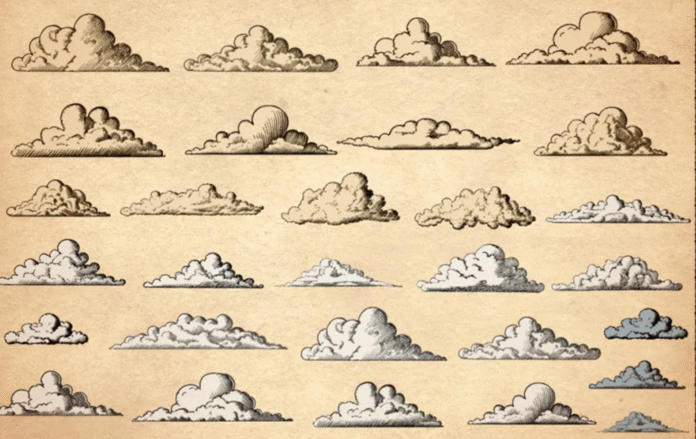
By careful observation, one could discern a limited number of principal forms that transform from one to another. He defined three main cloud types and one composite:
- Cirrus — from the Latin for “curl” or “lock of hair,” denoting the delicate, fibrous clouds that form at high altitudes.
- Cumulus — meaning “heap” or “pile,” describing the rounded, heaped clouds typical of fair weather.
- Stratus — meaning “layer” or “sheet,” referring to the low, uniform cloud layers that cover the sky.
- Nimbus — meaning “rain cloud,” representing clouds that produce precipitation.
From these, Howard showed that intermediate forms could arise, such as cirrostratus, stratocumulus, and cumulostratus, illustrating that clouds were modifications of a few fundamental states rather than random shapes.
His choice of the word “modification” was deliberate. It suggested a natural process of transformation, governed by physical principles, what we would now call thermodynamics and fluid dynamics.
Observational Method and Scientific Approach
Howard’s approach was both systematic and empirical. He observed clouds at specific times each day, recorded temperature, wind direction, and barometric pressure, and correlated these with cloud type and weather outcomes.
His practice anticipated the methods later formalised in meteorological observation networks.
He also developed a language for describing transitions between cloud forms, recognising that the sky was a dynamic system. A stratus could evolve into a cumulus as the day warmed, or a cirrostratus might precede rain-bearing nimbus.
By noting these transitions, Howard began to link cloud morphology with atmospheric motion.
Importantly, he treated clouds as indicators of invisible air currents. Long before the discovery of the jet stream or the formalisation of air masses, Howard’s writings implied a stratified and mobile atmosphere, with different layers moving at different speeds and directions.
The Scientific Significance of Classification
Howard’s classification provided a common vocabulary that transformed meteorology. It allowed observers to describe the sky in consistent, comparable terms. The system spread rapidly through scientific circles in Britain and Europe.
By the mid-nineteenth century, his terms had been adopted by national meteorological services and incorporated into international communication.
This paved the way for the development of synoptic weather maps, where cloud types helped infer the position of pressure systems and fronts.
His work also laid the foundation for later studies on atmospheric thermodynamics.
The recognition that cumulus clouds form through convection, while stratus forms through stable lifting, became key to understanding vertical motion and stability.
Modern cloud physics, which examines droplet formation, ice nucleation, and precipitation processes, can be traced conceptually back to the distinctions that Howard first made.
Influence on Art and Literature
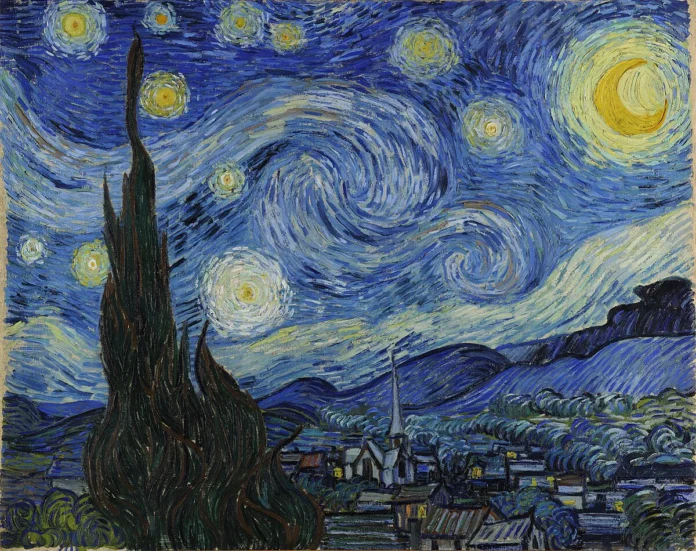
Howard’s influence was not confined to science. The early nineteenth century was also the era of Romanticism, when nature was seen as a source of emotion and insight. His system provided a bridge between the precision of science and the imagination of art.
Johann Wolfgang von Goethe, the German poet and polymath, was deeply impressed by Howard’s work. In 1821 he wrote a series of poems, In Honour of Howard, celebrating the classification as an example of the human ability to bring order to natural beauty.
Goethe saw Howard as a kindred spirit, someone who observed with both intellect and feeling.
In Britain, painters such as John Constable studied Howard’s writings closely. Constable’s cloud studies, painted between 1820 and 1822, show the direct influence of Howard’s taxonomy.
The artist treated clouds as structured phenomena, carefully observing the form and behaviour of cumulus and cirrus in the changing light of the English sky.
Howard thus contributed to the merging of scientific and aesthetic perception, a defining feature of nineteenth-century thought. Clouds became not just symbols of emotion but examples of physical law in action.
The Climate Observer and Data Collector
Beyond classification, Howard continued to collect meteorological data for decades. He maintained detailed records of temperature, rainfall, and pressure from 1806 to 1830, publishing them in The Climate of London (1818–1820).
This two-volume work was among the first attempts to describe urban climate effects, noting how London’s built environment influenced temperature and fog formation.
Howard’s measurements showed that London’s air was warmer and moister than the surrounding countryside, an early recognition of what is now called the urban heat island effect.
His systematic daily observations contributed to the emerging idea that local climate could be quantified and compared over time.
In The Climate of London, Howard combined instrumental data with qualitative descriptions of the sky.
His integration of cloud observation with meteorological measurement helped bridge the gap between qualitative weather lore and quantitative science.
Relationship to Other Scientists
Howard’s work gained recognition across Europe. The French physicist Jean-Baptiste Biot and the Swiss naturalist Jean de Charpentier cited his classifications in their meteorological writings. His correspondence reached as far as Italy and Russia.
At the same time, his system influenced the work of Luke Howard’s contemporary, William Scoresby, who applied the classification to Arctic observations, helping to describe weather and visibility conditions in polar regions.
Later scientists, such as Ralph Abercromby and Hildebrandsson, refined Howard’s work into the ten principal cloud genera that were officially adopted by the International Meteorological Committee in 1896.
The 1896 International Cloud Atlas, still maintained by the World Meteorological Organization, remains fundamentally based on Howard’s original scheme.
Philosophical and Cultural Significance
Howard’s classification appeared at a moment when the boundaries between art, science, and philosophy were porous.
His work was consistent with the Romantic ideal of natural law; the belief that understanding nature’s order revealed both its beauty and its rationality.
He did not claim to have discovered immutable categories but rather a language of observation. In his view, naming clouds was not an act of control but of comprehension. The clouds, though ephemeral, followed rules that could be known.
In an age when industrialisation was transforming both landscape and society, Howard’s work served as a reminder that even the sky followed natural principles.
His modest and observational approach stood in contrast to the grand theories of his time, embodying the empirical spirit that would later characterise modern science.
The poet John Ruskin later described clouds as “the first, the simplest, and the most awful forms of natural order.”
This sentiment echoed Howard’s own conviction that to observe the sky was to witness law and variation combined, a dynamic equilibrium between chaos and structure.
Later Life and Recognition
Howard continued his meteorological and chemical work throughout his life. He was elected a Fellow of the Royal Society in 1821, an exceptional honour for someone without a formal university education. Despite his contributions, he remained modest and largely outside the public eye.
He retired to Tottenham, where he maintained an extensive meteorological garden and observatory. His later years were spent in quiet study, though his influence persisted in both science and art.
He died in 1864, aged 92, having witnessed the transformation of meteorology from amateur pursuit to organised science.
In 2003, two centuries after his essay, the Royal Meteorological Society commemorated the bicentenary of On the Modification of Clouds, reaffirming his role as the “Father of Cloud Classification.”
Howard’s Legacy in Modern Meteorology
Today, Howard’s ideas continue to underpin the WMO International Cloud Classification System, which recognises ten genera, divided into species and varieties based on form, height, and structure.
The genera — cirrus, cirrostratus, cirrocumulus, altostratus, altocumulus, stratus, stratocumulus, nimbostratus, cumulus, and cumulonimbus — all stem from his original four categories.
The enduring relevance of his system lies in its balance between observation and interpretation.
While satellite data, radar imagery, and numerical models now provide immense detail, the visual classification of clouds remains an essential skill for meteorologists.
It links the human observer to atmospheric processes in a direct and intuitive way.
Howard’s legacy also persists in climate science. His emphasis on detailed, continuous observation resonates with modern efforts to document long-term atmospheric change.
His careful, consistent record keeping anticipated the data-driven methods that underpin global climate monitoring today.
The Enduring Human Connection
Beyond its scientific value, Howard’s work continues to shape how people perceive the sky.
His classification gave humanity a shared vocabulary for the shifting forms overhead.
It made possible a dialogue between meteorologist, artist, pilot, and lay observer.
In naming the clouds, Howard revealed that even transient beauty could be studied with precision and respect.
The clouds were no longer mere symbols or omens but participants in the planet’s physical and climatic systems. Yet they remained, as he understood, objects of wonder.
The English poet Goethe captured this balance of knowledge and reverence when he wrote of Howard:
“He first the wild, the fleeting vapours bound,
And classified the forms that rove the sky.”
This was not merely a poetic tribute. It expressed the enduring truth of Howard’s vision, that understanding nature deepens, rather than diminishes, its beauty.
A Final Word
Luke Howard’s contribution to meteorology cannot be measured solely in the Latin names he gave the clouds.
His achievement was to demonstrate that the most transient elements of nature obey discernible laws, and that disciplined observation can reveal order in apparent chaos.
Through his classification, Howard bridged the worlds of empiricism and imagination, of science and art.
He provided a system that remains both practical and poetic; a framework that continues to inform meteorology while inspiring generations to look upward and see not confusion, but structure.
More than two centuries later, when scientists use satellite imagery to map global cloud cover or artists depict the play of light on a cirrus veil, they are, knowingly or not, following in the tradition begun by a modest London chemist who taught the world how to name the sky.